
-
Please try to be as accurate as possible with your search.
-
We can quote you on 1000s of specialist parts, even if they are not listed on our website.
-
We can't find any results for “”.
Emergency Servo Drive Parts Delivery: Urgent Motion Control Solutions
When a servo drive fails in the middle of a production run, you do not have a component problem, you have a business problem. As someone who has spent years integrating and commissioning motion control systems in plants that run around the clock, I have learned that emergency servo drive parts delivery is not a luxury service. It is a risk-control tool that sits alongside good design, maintenance, and spare parts strategy.
This article looks at emergency servo drive parts through the lens of a veteran systems integrator and project partner. It explains why drives fail at the worst possible time, what downtime really costs, how to use urgent parts delivery intelligently, and how to build a practical plan that keeps your lines moving without turning every breakdown into a five‑figure event.
Why servo drives fail when you can least afford it
Servo systems combine a servo motor and a servo drive in a closed-loop arrangement. The drive is the power interface that converts low-power commands from a controller into high-power voltage and current for the motor while using feedback devices such as encoders or resolvers to regulate position, speed, and torque. Servo technology underpins high-precision automation in CNC machining, robotics, packaging, printing, automotive production lines, and medical equipment, as noted by sources such as DriveFix Electronics and Advanced Motion Controls.
Because servo drives sit at the heart of precision motion, they are exposed to almost every abuse the plant can throw at them. BIN95’s guidance on servo drive repair and maintenance highlights familiar failure causes. Overheating comes from blocked airflow, failed cooling fans, poor ventilation, high ambient temperature, or simply running drives at their limits for too long. Power disturbances such as surges and brownouts stress the power section, rectifiers, and IGBTs. Dust, oil mist, and moisture infiltrate enclosures, cause contamination, and accelerate aging of capacitors and circuit boards.
Mechanical and electrical connections are another weak point. UpFix emphasizes that loose or oxidized cables and connectors, frayed encoder leads, and worn power or signal cables are all common precursors to failure. Incorrect drive parameters, software or firmware mismatches, and communication issues can trigger trips that production staff initially misread as “drive failures,” even though the root cause sits in configuration or the wider control system.
In other words, the typical servo drive failure is not a random lightning strike. It is the endpoint of heat, contamination, electrical stress, and connection issues accumulating over months. Unfortunately, the endpoint often arrives in the middle of a big order, just before a shipping cutoff or a holiday.
Failure patterns from the plant floor
The symptoms plant teams see before a drive finally quits are remarkably consistent across sectors.
Maintenance and service resources such as TSL, Advanced Motion Controls, and ACO Repair Solutions describe a cascade that starts with nuisance trips, strange noises, or subtle positioning errors. Motors may run hotter than usual, vibration increases, and the drive logs intermittent overcurrent or overtemperature faults. Encoder issues appear as drift, vibration, or sudden loss of position. Over time, bearing wear, shaft misalignment, and mechanical imbalance feed back into the drive as elevated current demand and thermal stress.
Eventually, you see hard faults: overvoltage or undervoltage trips, overcurrent shutdowns, encoder errors, or complete loss of power. BIN95 stresses the importance of reading drive fault codes and consulting the technical manual rather than guessing. The right interpretation of “overcurrent,” “DC bus undervoltage,” or “encoder loss” often distinguishes a failing drive from a failing motor, power supply, or mechanical load.
What makes this pattern so dangerous is that the final failure rarely happens during a quiet shift. Drives spend most of their life working hardest when the line is at maximum throughput, which is exactly when both mechanical and electrical stress peak. That is also when outages cost the most.
The real cost of waiting for a drive
Industrial Automation Co. calls unplanned downtime a profit killer, and they are not exaggerating. When a servo drive fails on a critical asset, you do not just lose production. You also pay people to wait, pay overtime later to catch up, pay emergency freight, and potentially pay penalties for missed deliveries.
They break the cost into four categories. Lost production value is the most visible. Their example is simple: units per hour multiplied by margin per unit multiplied by downtime hours. A line generating $10,000.00 per hour loses about $30,000.00 in only three hours of stoppage. It does not take a week‑long outage to do damage.
Labor costs keep running in the background. Operators, technicians, and supervisors remain on shift while the machine is idle, and catching up often requires overtime or extra shifts, especially in unionized or tightly scheduled facilities. Emergency sourcing adds another layer: overnight freight, inflated prices from third‑party marketplaces, and riskier purchases from unknown sellers with limited or no warranty.
The most underestimated cost is reputation and contractual risk. Late shipments erode customer trust and can trigger penalties when service levels are written into contracts. Industrial Automation Co. cites cases where a five‑day outage would have cost roughly $125,000.00 in lost revenue, and another where about a week of downtime avoided thanks to a quickly supplied replacement drive was worth more than $100,000.00. Those numbers only consider lost output; the impact on customer relationships can be larger and longer lasting.
In that context, the difference between waiting a week for a drive versus having it on site tomorrow is not a shipping question. It is a risk management decision measured in tens or hundreds of thousands of dollars.
What “emergency servo drive parts delivery” really means
When people hear “emergency parts delivery,” they often think about a phone call and a tracking number. In practice, it is a coordinated process involving diagnostics, compatibility checks, logistics, and startup support.
Specialized partners such as Industrial Automation Co. and Neutronic Technologies combine deep product knowledge with logistics capability. Industrial Automation Co. highlights thousands of tested in‑stock legacy and current drives, PLCs, HMIs, power supplies, modules, and motors from major brands, backed by a two‑year warranty and same‑day shipping. Neutronic emphasizes more than two decades of industrial repair experience, UK‑wide coverage, and a dual‑purpose workshop handling both mechanical and electronic work under one roof, with 24/7 emergency response.
In a real emergency, the sequence looks like this. Maintenance staff isolate the faulted drive and gather information: exact part number, firmware version if relevant, fault codes, and details about the connected motor and feedback device. A qualified technician or integrator confirms whether the drive is truly at fault rather than a motor, cable, or power issue.
With that information, the emergency parts partner checks inventory for the exact drive or a drop‑in compatible equivalent. Their engineering team verifies ratings, options, firmware compatibility, and whether any parameter or communication settings will need adjustment. Tested units are prepared, often with basic functional verification already complete, and shipped using the fastest appropriate method, aiming to compress downtime from days into hours.
The real value is not only the box in transit. It is the combination of tested hardware, known provenance, warranty coverage, and technical support that helps the on‑site team get the line back up safely and quickly.
Which parts truly justify emergency delivery
Not every component in a motion control system warrants emergency shipping. Industrial Automation Co. argues that a spare parts strategy should focus on high‑impact spares whose failure would halt production or have long lead times. In practical terms, that means drives, controllers, and key interface hardware.
Drives come first. That includes servo drives, AC drives (VFDs), and DC drives. A failed drive on a main axis, robot, or critical conveyor will usually stop a line. PLCs and motion controllers are next: a dead central controller brings down the entire cell even if all drives and motors are intact. Legacy HMIs and specialized OEM modules deserve attention because replacements may be scarce or discontinued.
Servo system specialists such as Neutronic also call out servo motors, encoders, feedback devices, and critical cables as parts that can be supplied rapidly or kept on hand. When a motor is specific to a machine, having a tested spare ready can be the difference between swapping a motor in one shift versus waiting for a rewind or an overseas shipment. In high‑precision applications such as CNC or semiconductor equipment, feedback components are equally critical because a failed encoder can disable an otherwise healthy motor and drive.
Emergency delivery is most justified when the failed item is both production‑critical and not easily sourced locally. For commodity contactors or general‑purpose sensors, local distribution usually covers the need. For specialized drives and motion components, emergency shipping from a dedicated motion control supplier is often the most rational choice once downtime costs are taken into account.
Repair, replace, or rely on spares: comparing strategies
Emergency parts are only one lever. Plants also choose between repairing existing units and stocking spares. Different situations call for different strategies, and they can coexist.
A practical way to compare options is to look at when each strategy fits, and what its strengths and limits are.
| Strategy | When it fits best | Main advantages | Main drawbacks in an emergency |
|---|---|---|---|
| Emergency replacement drive delivery | Critical asset is down, no spare on site, and downtime cost is high | Fast recovery using tested hardware, backed by warranty and technical support | Still limited by shipping time, and availability depends on market and inventory |
| In‑house or partner repair of failed drive | Failure is not time‑critical, or a spare covers the immediate need | Often lower cost than new, retains existing wiring and integration, supports sustainability | Repair turnaround may be days or weeks, and repeated failures can erode savings |
| Stocking on‑site critical spare drives and related components | Line is highly critical, lead times are long, or drives are older | Near‑instant swap capability, eliminates emergency sourcing risk, supports controlled maintenance windows | Ties up capital, requires proper storage, and can lead to obsolescence if not reviewed |
TSL’s servo motor maintenance guidance suggests using a cost threshold: if repair exceeds roughly fifty to sixty percent of replacement value or failures are recurring, replacement becomes more economical. BIN95 notes that typical servo drive lifespan under normal conditions is about eight to fifteen years, with well‑maintained drives tending toward the upper range. Once a drive is past roughly ten years and experiencing frequent issues, replacement and modernization usually deserve serious consideration.
Mitchell Electronics takes a broader view, arguing that building an in‑house servo motor repair environment is a strategic investment. A dedicated workspace, appropriate tools, test stands, and trained staff can dramatically shorten repair cycles and cut outsourcing costs. However, that strategy makes the most sense when there is enough installed base to justify ongoing investment.
The most resilient plants blend these approaches. They stock one spare for each critical legacy drive or controller, partner with a specialist who can deliver tested replacements quickly when gaps appear, and develop either in‑house or trusted external repair capability for non‑urgent failures and lower‑priority assets.
Using emergency delivery without letting it become the default strategy
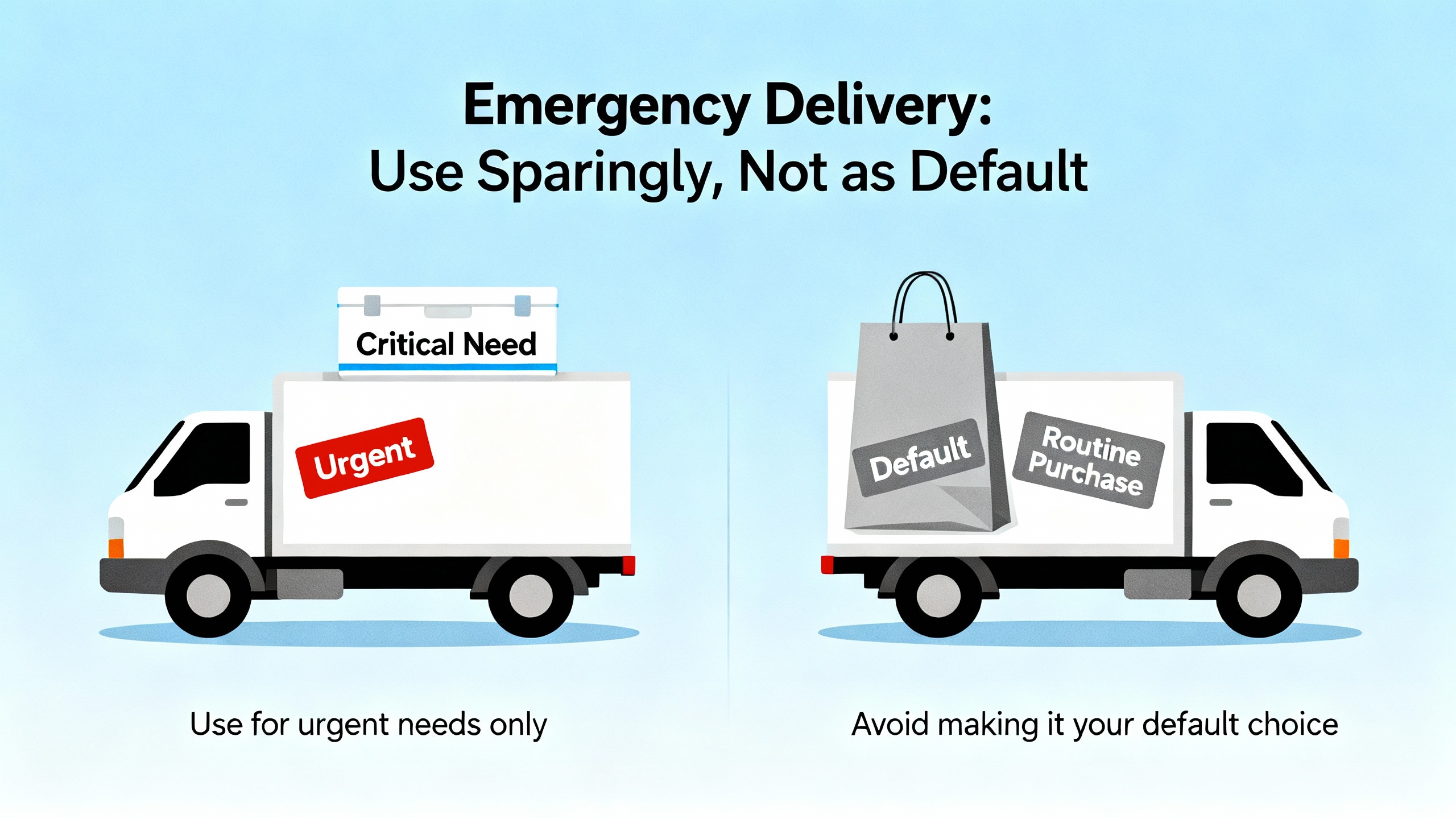
Emergency parts delivery should be your safety net, not your day‑to‑day sourcing plan. Industrial Automation Co. warns that relying on ad‑hoc, as‑needed ordering from random marketplaces leads to inflated prices, questionable warranty coverage, and higher risk. The goal is to use urgent delivery strategically while steadily reducing how often you need it.
One effective approach described in their guidance is the critical spares audit. Rather than trying to stock everything, maintenance and engineering teams identify a small set of red‑flag components. Typically, this means five to ten parts whose failure would shut down high‑value equipment or that have long lead times and limited alternatives. For each of these, the plant adopts a “buy one, not five” mindset: one tested spare of each critical legacy component, not a closet full of inventory.
Those targeted spares are supported by a basic spare parts log, which may be digital or physical, recording part numbers, locations, warranty status, and whether each spare has been periodically powered up or tested. BIN95 points out that storing servo drives properly and powering them up every six to twelve months to reform capacitors can significantly extend their useful life. Drives should be kept in sealed anti‑static bags in dry, temperature‑stable spaces, away from dust and direct sunlight.
In that model, emergency delivery covers the surprises you could not reasonably stock for, plus the gap between a failure and the arrival of a new spare. The more you refine your spare list, the less often you need to pick up the phone for an emergency drive.
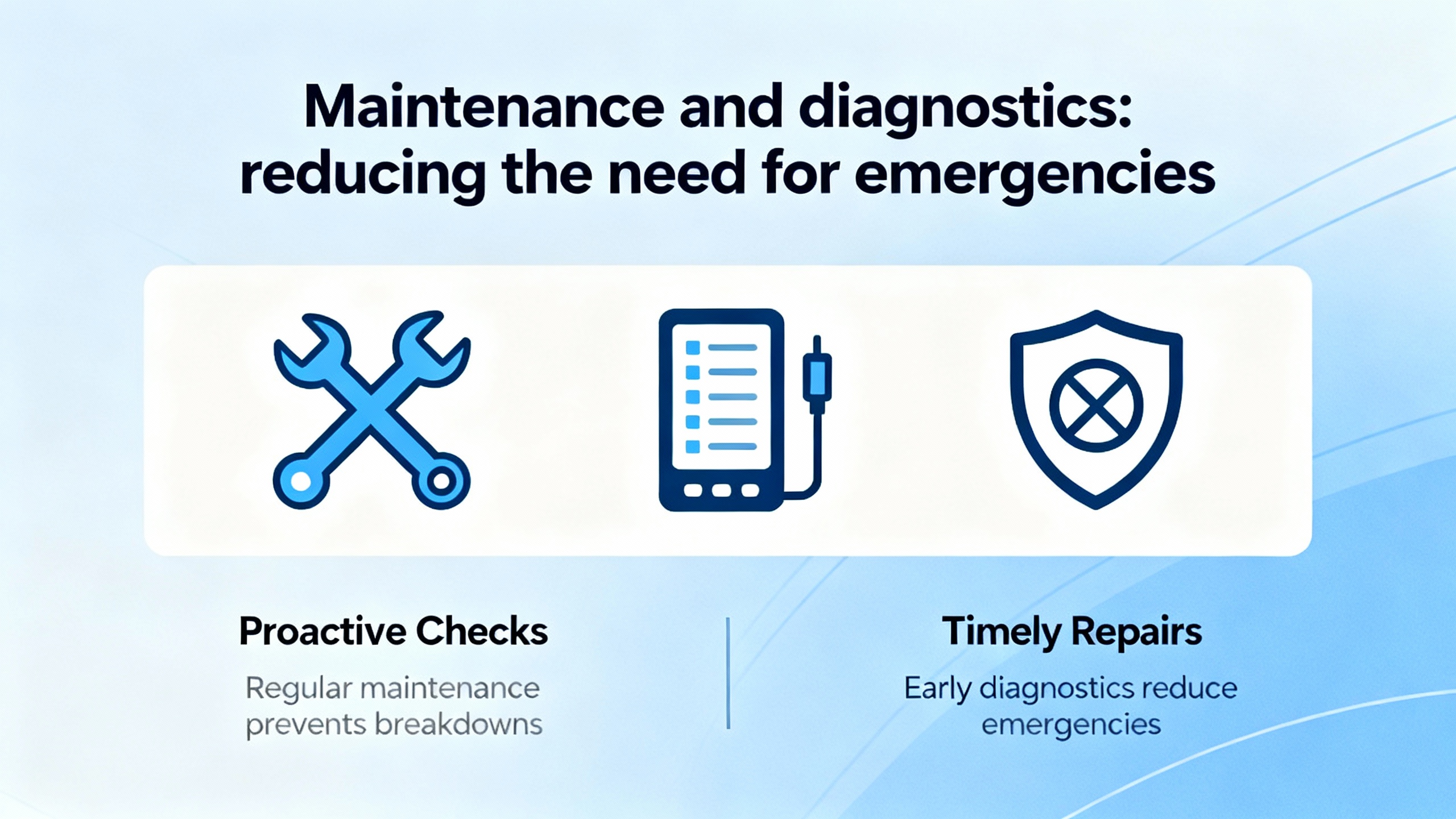
Maintenance and diagnostics: reducing the need for emergencies
Regular maintenance does not eliminate failures, but it changes their timing and severity. UpFix, BIN95, TSL, and ACO Repair Solutions all emphasize that servo drives and motors require structured preventive and predictive maintenance if you want to keep uptime high and emergency calls rare.
BIN95 suggests service intervals based on duty and environment. Light‑duty drives in clean, dry conditions might be inspected every twelve months. Drives in shift‑based operation in light industrial environments may need checks every six to nine months. Drives in 24/7 operation in harsh or dusty settings often merit three to six month intervals, always adjusted according to the original equipment manufacturer’s recommendations.
A typical preventive sequence includes disconnecting and locking out power, visually inspecting components and cabling, cleaning with non‑static tools, checking and re‑torquing connectors and terminals, and looking for heat or burn marks. Technicians measure insulation resistance with a megohmmeter, review fault logs, and verify cooling and airflow. UpFix adds that maintenance logs should capture dates, replaced parts, and discovered issues to support trend analysis and future planning.
TSL and Advanced Motion Controls detail common issues: overheating, encoder faults, mechanical vibration, bearing wear, electrical insulation breakdown, brake problems, and control chain issues. They recommend using vibration analysis, thermal imaging, oscilloscopes, and drive diagnostic software to identify emerging problems early. ACO Repair Solutions further stresses continuous temperature monitoring, proactive bearing maintenance when noise or vibration changes, and systematic cable inspection.
On the front end, troubleshooting should be disciplined and repeatable. BIN95’s troubleshooting guidance starts with reading fault codes, consulting the technical manual, verifying input and output voltages, checking motor wiring and load conditions, and using diagnostic software for live data. Swapping components should be done carefully and only after simpler checks have been exhausted, to avoid compounding faults or creating dangerous conditions.
Finally, modern servo systems increasingly integrate predictive technologies. BIN95 notes the use of OEM tools such as Allen‑Bradley DriveTools, Siemens STARTER, Yaskawa SigmaWin+, and Mitsubishi configurators, combined with vibration and thermal sensors, current deviation monitoring, and Industry 4.0 dashboards. ACO points out that AI and IoT‑based monitoring can detect anomalies and support predictive maintenance, further reducing unplanned downtime.
The upshot is straightforward: the more rigor you put into maintaining and monitoring your servo drives, the less you will need to rely on emergency parts delivery. But no maintenance plan is perfect, which is why a solid emergency strategy still matters.
Coordinating the response on the day a drive fails
When a critical drive fails, the clock starts immediately. The first priority is safety. BIN95 and others stress following formal lockout and tagout procedures, discharging capacitors before working on drives, using proper ESD protection, and ensuring drives are securely mounted when reinstalled. No emergency is worth bypassing safety rules.
Once the equipment is safe, diagnostics begin. Maintenance leads review recent fault logs, talk with operators about what was happening when the failure occurred, and perform basic checks on incoming power, fuses, and visible cabling. Where on‑site expertise allows, they may swap in a known‑good motor or cable to isolate whether the drive is truly the failing element.
If a replacement drive or motor is already on the shelf, the next step is a controlled swap and startup following OEM guidance. If no spare is available, this is the point to engage your emergency parts partner. Providing complete information on the drive model, options, firmware, communication settings, and the surrounding system reduces back‑and‑forth and avoids the risk of receiving a similar but incompatible unit.
While the replacement is in transit, maintenance staff can use the downtime for related checks: cleaning enclosures, inspecting other drives for early signs of trouble, and verifying that documentation and backups for drive parameters and controller programs are up to date. That preparation pays for itself when the new hardware arrives, because the installation proceeds more quickly and with fewer surprises.
Meanwhile, operations leadership should quantify the impact using simple models such as those from Industrial Automation Co., combining lost production, labor, emergency sourcing, and contractual risks. That discipline not only clarifies the urgency of the current event but also informs how much the plant should invest in future spares and maintenance improvements once the crisis passes.
Example scenarios where emergency delivery paid for itself
The case studies summarized by Industrial Automation Co. and others illustrate how a modest upfront investment can avert large losses.
In one example, a manufacturer pre‑purchased a spare drive from the PowerFlex family based on a critical spares audit. When the installed drive failed, the team swapped in the spare and then sent the failed unit out for repair or replacement. That decision avoided a five‑day outage that would have cost about $125,000.00 in lost revenue alone.
In another case, a plant avoided roughly a week of downtime worth more than $100,000.00 by installing a tested replacement drive shipped the same day from a specialist inventory. Because the replacement had already been bench‑tested and carried a warranty, the team could trust it and focus on commissioning rather than hunting for problems in new hardware.
ACO Repair Solutions describes a case where an overheated servo motor, caused by poor maintenance and insufficient cooling, brought a production line down. The immediate response was to remove the motor, send it for structured diagnostics, and implement corrective actions on cooling and lubrication. The lesson was not only about repair quality. It was about recognizing that reactive fixes are more expensive than preventive inspections and targeted spares.
These scenarios show why emergency parts delivery matters, but they also show that it delivers the most value when part of a broader strategy rather than a stand‑alone service.
Building a spare parts and support ecosystem around servo drives
A robust emergency parts plan depends on the ecosystem around your motion control assets, not just on individual transactions.
Mitchell Electronics highlights seven requirement areas for a serious in‑house repair capability: sufficient, clean workspace; diagnostic and test tools; skilled personnel; standardized procedures; inventory management; safety; and continuous improvement. Plants that invest here can handle a significant share of servo motor and encoder issues internally, reducing both cost and response time. However, even these shops benefit from external partners for complex drive repairs, firmware issues, and obscure legacy units.
Neutronic Technologies differentiates itself by combining mechanical and electronic repairs in a single workshop, providing load testing, rotor balancing, encoder calibration, and long‑term guarantees on repaired units across major brands. That type of integrated service is particularly valuable when a failure spans motors, drives, feedback devices, and cabling rather than a single component.
Industrial Automation Co. positions itself as a stocking partner with thousands of tested legacy and current drives, PLCs, HMIs, and related modules available under a two‑year warranty, plus technical support to match the right part. From an integrator’s standpoint, that combination of inventory and expertise is crucial when you are trying to keep mixed‑generation systems running without rewriting entire control architectures.
The motion control vendors themselves also play a role. Companies such as IBT Industrial Solutions, Eascan, Allied Motion, and GAM supply not only components but engineered systems and mechanical power transmission elements. Their ability to align drives, motors, actuators, and mechanical components matters when you are specifying new equipment or modernizing existing assets to reduce future emergency risk.
The common thread is partnership. Plants that build long‑term relationships with trusted repair shops, parts suppliers, and integrators have far more options when something fails on a holiday weekend than plants that treat every purchase as a one‑off transaction.
Short FAQ on emergency servo drive parts
Should I stock a spare servo drive for every axis?
Blanket stocking of every drive is rarely economical. Industrial Automation Co. suggests focusing on a small set of high‑impact parts. In practice, that usually means one spare for each distinct drive type used on truly critical equipment, especially legacy models with long lead times or limited availability. Less critical axes can often rely on rapid emergency delivery combined with good repair partners.
What if my drive is obsolete or more than about ten years old?
BIN95 notes that drives over roughly ten years old are often better candidates for planned replacement, especially if failures are becoming more frequent. For truly obsolete units, it can still make sense to keep one known‑good spare on hand while you plan a controlled migration to current hardware. A specialized reseller or integrator can help identify compatible replacements and assess the impact on your PLC or motion controller software.
How often should I revisit my servo drive spares strategy?
A good rule of thumb, aligned with maintenance practices from UpFix and Mitchell Electronics, is to review your spares list whenever you make significant equipment changes and at least annually. During that review, update your critical spares audit, check the condition and age of existing spares, verify that records and labels are accurate, and adjust priorities based on actual failure history and downtime costs.
Closing thoughts from a systems integrator
Emergency servo drive parts delivery is not a silver bullet. It will not compensate for neglected maintenance, incomplete documentation, or a total absence of spares planning. But when it is combined with disciplined maintenance, a targeted spare parts strategy, and the right repair and supply partners, it turns catastrophic breakdowns into manageable disruptions.
From one project partner to another, treat emergency servo drive parts as a carefully chosen safety net, backed by hard data on downtime cost and a realistic view of your plant’s risks. If you build that capability now, the day a critical drive fails will still be stressful, but it will not be a crisis that threatens your schedule, your margins, and your reputation all at once.
References
- https://www.alliedmotion.com/
- https://www.bluebayautomation.com/motion-control-mechanics-distributor
- https://emievans.com/motion-control-automation
- https://www.gamweb.com/products.html
- https://www.mfcp.com/
- https://motion-control.wittenstein-us.com/
- https://www.a-m-c.com/mechanical-servo-motors-failures-and-faults/
- https://www.acorepairsolutions.com/post/when-servo-motors-fail-navigating-production-line-downtime-and-recovery-strategies
- https://drivefixelectronics.com/blog/why-servo-drives-and-motors-are-essential-for-high-precision-automation
- https://www.hayawin.com/resources/what-are-servo-drives-for-agvs-top-5-benefits.html
Keep your system in play!


Related articles Browse All
-
 amikong NewsSchneider Electric HMIGTO5310: A Powerful Touchscreen Panel for Industrial Automation2025-08-11 16:24:25Overview of the Schneider Electric HMIGTO5310 The Schneider Electric HMIGTO5310 is a high-performance Magelis GTO touchscreen panel designed for industrial automation and infrastructure applications. With a 10.4" TFT LCD display and 640 x 480 VGA resolution, this HMI delivers crisp, clear visu...
 -
 BlogImplementing Vision Systems for Industrial Robots: Enhancing Precision and Automation2025-08-12 11:26:54Industrial robots gain powerful new abilities through vision systems. These systems give robots the sense of sight, so they can understand and react to what is around them. So, robots can perform complex tasks with greater accuracy and flexibility. Automation in manufacturing reaches a new level of ...
 -
 BlogOptimizing PM Schedules Data-Driven Approaches to Preventative Maintenance2025-08-21 18:08:33Moving away from fixed maintenance schedules is a significant operational shift. Companies now use data to guide their maintenance efforts. This change leads to greater efficiency and equipment reliability. The goal is to perform the right task at the right time, based on real information, not just ...


- Q&A
- Policies How to order Part status information Shipping Method Return Policy Warranty Policy Payment Terms Email Marketing Policy VAT and Import Information
- Asset Recovery
- We Buy Your Equipment. Industry Cases Amikong News Technical Resources Why choose us
- Registered Address
-
32D Guomao Building, No.388, Hubin south Road, Siming district, Xiamen,Fujian, China

Leave Your Comment