
-
Please try to be as accurate as possible with your search.
-
We can quote you on 1000s of specialist parts, even if they are not listed on our website.
-
We can't find any results for “”.
Urgent DCS Spare Parts Supplier: Minimizing Production Losses
A distributed control system is the heartbeat of a continuous process plant. When a DCS hiccups, throughput falls off a cliff, quality goes sideways, and the safety case starts to wobble. That reality doesn’t leave much patience for two-week lead times, part-number confusion, or “we can ship next quarter.” As a systems integrator who has commissioned, migrated, and rescued DCSs for two decades, I’ve learned that the difference between a blip and a catastrophe often comes down to one quiet capability: immediate access to the right spare, proven compatible, and in your hands before the hour is out. This article is a pragmatic playbook for operations leaders, maintenance managers, and reliability engineers who need an urgent DCS spare parts partner—and the stocking, quality, and process discipline behind them—to protect uptime and revenue.
Unplanned downtime from missing spares is not a theoretical risk. Industry surveys show most manufacturers have suffered shutdowns because a needed component wasn’t available; one widely cited data point puts that figure at seventy-eight percent of respondents, underscoring the systemic nature of the problem, not an edge case (SDI). In parallel, dynamic stocking research and case studies show seven-figure savings when organizations move from reactive scrambling to proactive, data-driven spare parts programs (Reliabilityweb). The lesson is clear: urgent suppliers shorten the repair window, but enduring savings come from combining urgency with sound inventory strategy, data governance, and quality control.
What “Urgent” Really Means in DCS Operations
Urgency, in this context, is not a marketing adjective. In a live DCS environment, it means a supplier can confirm stock on an exact revision of an I/O card or CPU within minutes, verify firmware and backplane compatibility, produce test results on demand, and initiate same-day shipping with appropriate ESD-safe packaging. It means having technicians who can translate cryptic label codes and help you decide if a different series revision is a drop-in, a compatible substitute with caveats, or a non-starter. It also means escalation paths across time zones, because a midnight trip point rarely waits for office hours.
From the plant side, urgency demands that you know your own installed base at a granular level. The best urgent supplier in the world can’t solve a situation where your CMMS lists “analog input card” without the series code or keying information. The combination of a supplier with deep inventory and a plant discipline that ties parts to assets, firmware, and control modules is the difference between a one-hour fault and a day-long outage.
The Financial Case for Immediate Access
The economics of downtime tend to be understated. A published scenario from Ajax CECO Erie Press shows the direct financial swing when spare parts availability reduces outage duration from six weeks to three days. While their example references forging equipment, the arithmetic generalizes cleanly to DCS-controlled continuous processes. The analysis assumed daily revenue of $20,000, daily operating cost of $10,000, a $30,000 emergency procurement cost without stocking, and a $5,000 annual stocking program fee. The result was a reduction in total loss from $1,290,000 to $90,417 by shrinking the outage window, netting approximately $1,199,583 in avoided cost (Ajax CECO Erie Press).
Here is that contrast at a glance:
| Scenario | Downtime | Revenue Lost | Operating Costs | Other Costs | Total Impact |
|---|---|---|---|---|---|
| No stocking (emergency scramble) | 42 days | $840,000 | $420,000 | $30,000 | $1,290,000 |
| Stocked, proactive availability | 3 days | $60,000 | $30,000 | ~$417 | $90,417 |
If you operate a refinery unit, a cereal dryer, or a power block, your daily value-at-risk may be higher. The precise numbers vary, but the directional logic holds: every hour shaved by rapid access to correct parts drops straight to the bottom line.

What Fails First: Field-Proven Realities in DCS Spares
In brownfield plants, the failure pattern is predictable. Power supplies with aging capacitors, fan modules with tired bearings, and network infrastructure that has lived too long in hot electrical rooms lead the parade. After that, it is common to see intermittent misbehavior in communication and bus interfaces. The lesson is that urgent availability must align with real-world failure modes rather than abstract BOM lists.
Controllers and CPUs deserve special attention. They rarely fail outright in a well-maintained system, but when they do, the time to recovery is painful if you lack a like-for-like spare on site or within same-day reach. Compatibility checks matter here: backplane slotting, keying, firmware minor versions, and redundancy configurations all drive whether a replacement is truly plug-and-play.
I/O modules are the muscle of the system and the most frequent site of attrition. Those that bridge to harsh field environments, such as analog input cards wired to long runs across noisy plant floors, carry higher risk. An urgent supplier should be ready to cross-verify module series identifiers, terminal base types, and conformal coating variants so you don’t discover a mismatch after you have pulled the old unit.
Power supplies have a known wear-out mechanism. Electrolytic capacitors age faster in heat, and load transients expose marginal performance. Prioritize spares for each unique rack voltage and form factor, and insist on test certification data from your supplier to prove load and ripple performance.
Human-machine interface panels and industrial PCs fail less spectacularly but can be a source of long delays due to images and licenses. A practical mitigation is to keep current images vaulted and validated. When you buy urgent HMI hardware, ask for a pre-ship image load, or at minimum, a bench test that confirms touch response, resolution, and network interfaces.
Networking hardware elevates risk when it is treated as generic IT gear. Switches and routers in control networks often rely on managed features, time sync behavior, and industrial temperature ratings. Confirm that the urgent replacement preserves exact feature sets and firmware behavior; what seems like a minor difference can surface as a determinism or multicast issue.
Finally, plan for the humble consumables that silently cause downtime. CMOS batteries on CPUs, real-time clock modules, and removable storage often age out in predictable cycles. Maintaining a small cache of approved replacements alongside the critical electronics is a simple, high-return hedge.
Sourcing Models That Actually Reduce Risk
Not every plant needs a room full of spares. The right sourcing model depends on sites, geography, outage tolerance, and finance posture. Practical models and their trade-offs are well-documented in the power sector, where control parts are mission critical (GE Vernova). The pattern translates directly to DCS environments.
| Model | Typical Access | Capital Burden | Strengths | Watchouts |
|---|---|---|---|---|
| Onsite critical stock | Immediate | High | Fastest recovery, under your control | Warranty clock starts at purchase; carrying cost and possible inventory tax; obsolescence if unmanaged |
| Centralized in-country depot | Within a few days | Moderate | Pooled efficiency across sites; avoids international customs lag | Not suitable for ultra-critical parts without a minimal onsite kit |
| Vendor-managed inventory | About one to two weeks | Low | Preserves warranty value; reduces carrying cost and obsolescence | Longer lead time; ensure clear SLAs and a small emergency cache onsite |
| Specialist urgent broker | Same day to next day | Variable per transaction | Useful for rare or discontinued parts; flexible sourcing | Vet authenticity rigorously; prices fluctuate; require test reports and return rights |
When the cost of even a short outage is high, blend the models. Keep a minimal emergency kit for unique controllers, common I/O types, and every power supply variant onsite. Pool second-tier parts in a national depot. Use vendor-managed programs for lower-criticality items and life-cycle refreshes. Maintain a shortlist of urgent brokers for discontinued modules, and require authenticity and test documentation as a condition of sale.
Forecasting What You Rarely Consume
Spare parts demand is intermittent: long stretches of zero pulls punctuated by abrupt needs that are driven by failure, not sales seasonality. Traditional finished-goods forecasting underperforms here. Best practice is to use intermittent-demand models like Croston’s method and probabilistic simulation to quantify uncertainty, then set reorder points and min–max levels that achieve target service levels with minimal excess (Wolters Kluwer). A dynamic approach that refreshes inputs as lead times, failure behavior, and criticality evolve outperforms static formulas, particularly for custom or obsolete parts (Reliabilityweb).
Service level deserves a plain definition. It is the probability of having the part available when requested. In a DCS context, the parts that gate restoration should carry the highest service-level targets. Safety stock is the buffer you hold to absorb demand and lead-time variability at that target. Tuning both by asset criticality, failure frequency, and supplier reliability aligns money with risk.
Digital tooling helps. A CMMS or EAM integrated with inventory gives real-time visibility, automates reservations and issues, and captures usage history tied to assets (Tractian). Clean, deduplicated master data and disciplined naming prevent phantom stock and order errors (Verdantis, Partium). Organizations that integrate order processing with inventory systems report measurable productivity and space gains alongside better stock utilization, with published improvements of roughly twenty-five percent in productivity, twenty percent in space usage, and thirty percent in utilization in representative programs (Sophus Technology). Those numbers are not universal guarantees, but they illustrate the upside when process and tooling align.

Building a Practical “Gold Kit” Without Wasting Capital
The most effective DCS emergency kit is not a warehouse; it is a precise set of spares that reflect your installed base and failure risk. For controllers and CPUs, maintain a like-for-like spare for each unique family and redundancy role, with a current image vault and license plan. For power, ensure every rack voltage and form factor has a tested spare with the correct connectors and mounting. For I/O, mirror the most common types in your cabinets and the ones that feed safety-related functions. For networks, keep at least one managed switch that matches your feature requirements and time sync behavior. For HMIs and industrial PCs, decide whether a warm standby unit or image-ready spare best balances risk and cost.
The key is to tie each kit item to a precise asset and testing routine. A simple practice is a quarterly bench validation: power up the spare controller, confirm firmware version and clock, verify configuration load, and tag the unit with the validation date. The same cadence works for switches, where you can confirm VLAN and time sync configurations on a bench network. For I/O, a loopback test to verify channel behavior is usually sufficient. These rituals eliminate the unpleasant surprise of a shelf spare that no longer boots.
Quality, Compatibility, and Counterfeit Risk
The DCS domain is not immune to counterfeit or misrepresented parts. Build your supplier criteria around traceability and verification. Ask for photographs of labels and boards before shipment when crossing series boundaries. Require power-on and basic functional tests with results. Where possible, verify firmware minor versions; small differences can change determinism or security behavior. Treat “pulls” and “refurbished” units with caution unless the refurbisher provides a documented process, test results, and a return-rights window.
Storage and handling matter. Insist on ESD-safe packaging and climate-aware shipping. Batteries embedded in modules have a shelf life; plan to maintain or replace them on a recurring cadence based on vendor recommendations. Document storage conditions and shelf times in your CMMS against each spare, so the maintenance team can rotate inventory before age becomes failure.
Compatibility is not a guess. Your supplier should help you interpret keying codes, series identifiers, and backplane constraints. A trustworthy partner will tell you when a proposed substitute is risky and propose a safer path rather than hustling a sale.
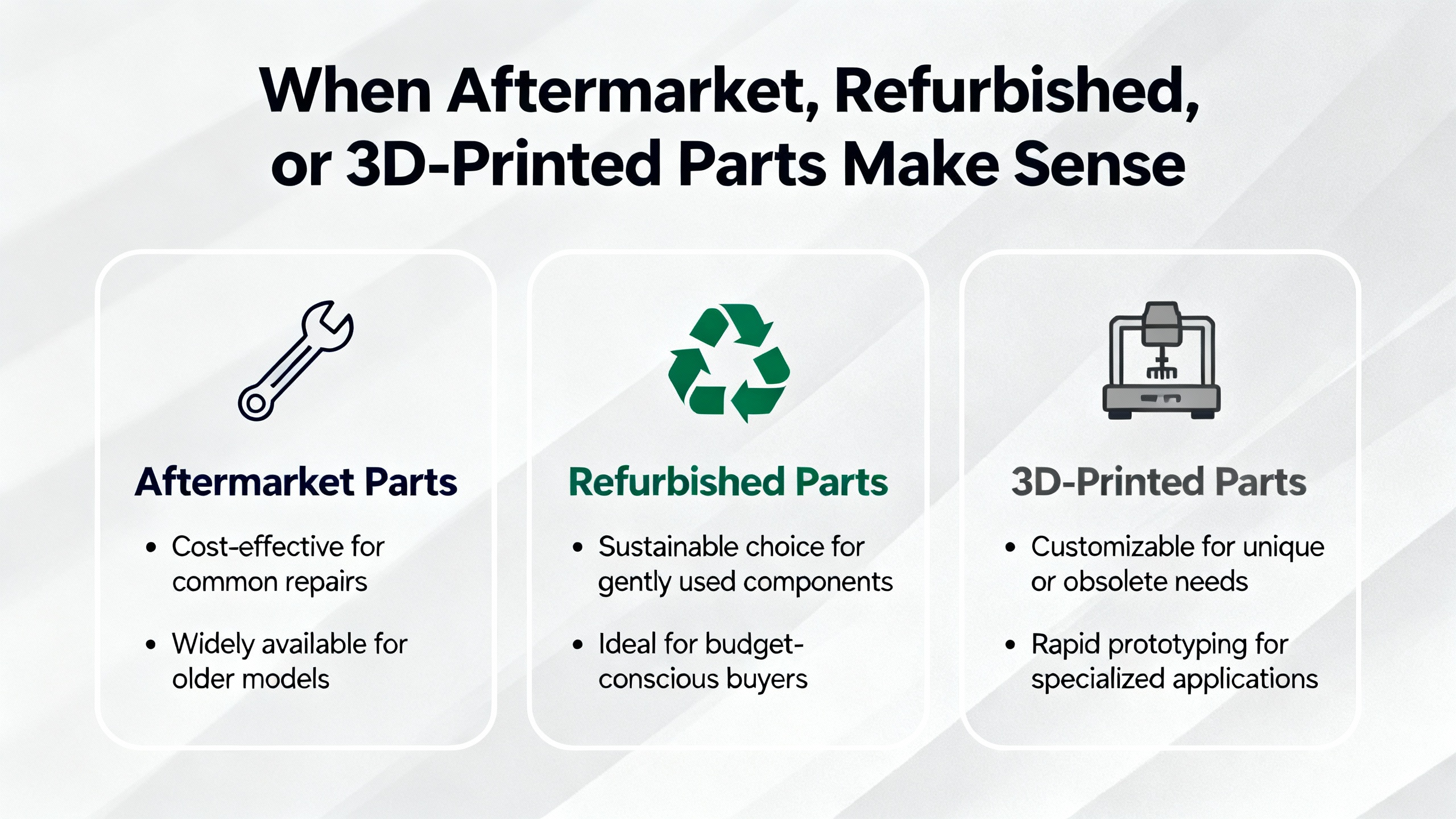
When Aftermarket, Refurbished, or 3D-Printed Parts Make Sense
Not every item in a DCS spare catalog demands new, OEM-only procurement. Refurbished electronics are viable when backed by rigorous testing and traceable provenance. Aftermarket can be appropriate for non-safety-critical components where the functional equivalence is clear. For mechanical and cosmetic items that support the DCS ecosystem—HMI bezels, brackets, cable retainers—digital warehousing and additive manufacturing offer speed and flexibility without minimum order quantities (Formlabs). Companies large and small have reported success with hundreds of printed components supporting production, indicating that on-demand fabrication is now a mainstream option for the right categories (Formlabs). Maintain a bright line: do not substitute printed or aftermarket parts into safety systems or certified functions without engineering validation and compliance review.
Logistics and Service Levels That Don’t Blink
An urgent supplier should offer more than inventory. Look for round-the-clock response, the ability to pre-label shipments to your dock conventions, and multi-carrier options that balance cost and speed. International shipments demand customs experience; if your network spans borders, discuss pre-brokered processes before an emergency arises. On returns, insist on a sensible RMA that allows you to bench-validate in plant conditions without penalty. These service-level expectations reduce friction in the worst moments and create a calm, repeatable recovery path.
Data, Process, and KPIs That Keep You Honest
Data hygiene is a reliability tool. Standardize part names and attributes, enrich manufacturer and vendor part numbers, and remove duplicates. Tie each part record to the assets and work orders that use it. A simple, spreadsheet-based criticality scoring model that combines asset impact, lead time, failure rate, and part cost can produce stocking recommendations that reduce risk without bloating inventory (Reliabilityweb). Monitor service-level performance, stockout events, lead-time variability, and the value of excess and obsolete stock. Use those KPIs to tune policies rather than set-and-forget.
Automating the flow from technician request to manager approval to purchase order streamlines replenishment and introduces an audit trail. Mobile access reduces search time and mistakes on the floor, while QR labels and location codes speed issuance and cycle counts (Maintainly, Partium, Tractian). In multi-site organizations, enable intersite transfers and central governance to avoid duplicate buys and to exploit pooled inventory where sensible.

Choosing an Urgent DCS Spares Partner
The partner you want has inventory depth in control parts, proven authenticity controls, and people who understand backplanes and bus timing, not just catalog numbers. They can read out module keying from a cellphone photo, check firmware, and admit when a proposed swap is risky. They maintain regional depots or reliable broker networks, and they put test benches between acquisition and resale. They will set realistic SLAs and pick up the phone at three in the morning with the same composure as three in the afternoon. Finally, they will help you build the stocking policy that eventually makes their emergency calls rarer, not more frequent.
Case Signals From the Market
Organizations that institutionalize dynamic, data-driven stocking consistently report fewer emergency orders, lower expediting costs, and stronger service levels even while carrying less inventory (ToolsGroup, Reliabilityweb). Cloud inventory platforms that support probabilistic forecasting for intermittent demand, including Croston’s and Monte Carlo approaches, are now mainstream and practical to deploy across storerooms and depots (Wolters Kluwer). On the shop floor, plants that integrated order processing with inventory management documented double-digit gains in productivity and space efficiency, demonstrating the operational benefit of clean data and automation (Sophus Technology). Meanwhile, hybrid stocking models in power generation and process industries continue to validate a blended approach: maintain a minimal onsite emergency kit for critical recovery, pool secondary items in-country, and rely on vendor-managed stock and urgent brokers for everything else (GE Vernova).
A Practical Path Forward
Start by making your installed base visible. Clean the parts master, bind each part to an asset, and record firmware and series identifiers. Identify the handful of parts that gate recovery in a control failure and align your emergency kit accordingly. Next, rationalize your sourcing model to your outage tolerance: onsite for the true showstoppers, depot for the rest, vendor-managed for lower-criticality items, and trusted brokers for discontinued modules. In parallel, configure forecasting that respects intermittent demand and set service levels and safety stock by criticality. Build simple test and rotation routines so your spares are proved, not presumed. With those foundations in place, authorize an urgent partner to act within clear SLAs when the rare but inevitable failure arrives.

Buying and Care Tips That Save Hours
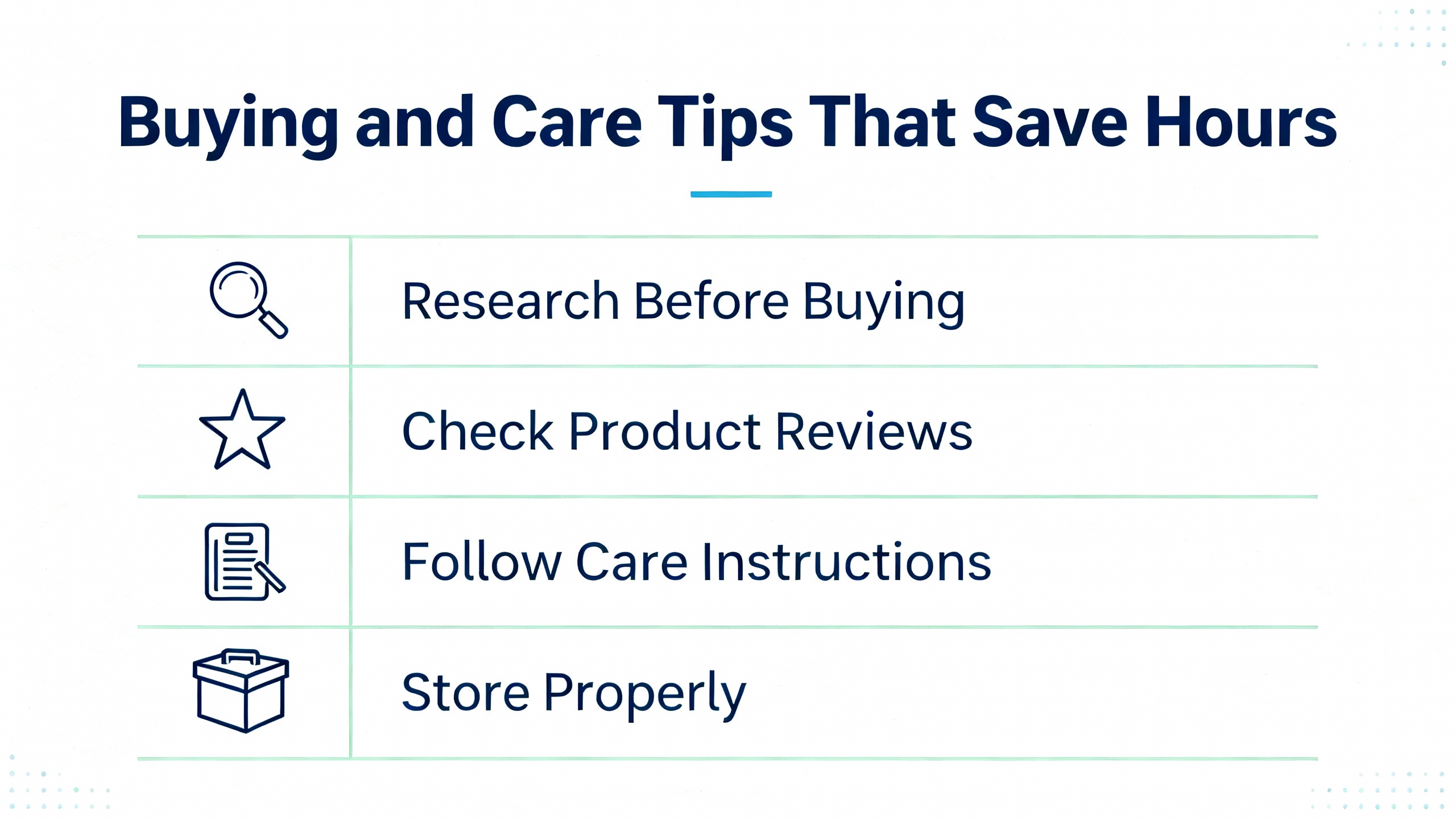
When purchasing controllers or CPUs, confirm exact model and series, firmware minor version support, redundancy compatibility, and licensing transfer policies. Ask for powered test verification and configuration load proof before shipment. For I/O modules, confirm terminal base type, coating, and keying; request a channel loopback test. For power supplies, insist on a recent load and ripple test with serial traceability. For network hardware, verify that managed feature parity and time synchronization behavior match your control network, not just basic port counts. Upon receipt, bench-test in a controlled environment, log results, and tag the unit with a validation date and responsible technician. Store all electronics in ESD-safe packaging, in climate-stable conditions, and track shelf age, especially for battery-backed modules.
If you must source discontinued parts, lean on suppliers with test benches and verifiable origin. Avoid unclear provenance, even in a crunch. The hour you save with a questionable module can disappear when you are troubleshooting a ghost fault introduced by a counterfeit or marginal part.
Short FAQ
What are the most critical DCS spares to keep within immediate reach?
The truly critical items are those that gate restoration after a failure. In most plants, that includes a like-for-like controller or CPU for each unique family, the power supply variants used in your racks, the most common analog and digital I/O modules, and the managed switches that underpin your control network. The exact list should come from your installed base and criticality analysis rather than a generic catalog.
How do I forecast demand for spares I rarely consume?
Use methods designed for intermittent demand. Croston’s approach and probabilistic simulation translate sparse, bursty histories into service-level aware stocking policies. Combine that with live lead-time data and asset criticality to set reorder points and safety stock. General-purpose finished-goods forecasting is a poor fit for failure-driven consumption (Wolters Kluwer, Reliabilityweb).
Is vendor-managed inventory a safe choice for DCS parts?
It is effective for lower-criticality items and for preserving warranty value, because the warranty clock starts when you receive the part, not when the supplier acquired it. However, any site with tight outage tolerance should still keep a minimal emergency kit onsite for unique controllers, power supplies, and common I/O so you can recover within hours rather than waiting days (GE Vernova).
Can I use refurbished or aftermarket parts?
Yes, with discipline. Refurbished is viable when the supplier provides test evidence, traceability, and a sensible return window. Aftermarket can work for non-safety-critical functions where equivalence is clear. Do not use substitutes in safety systems or regulated functions without engineering validation and compliance review. For mechanical accessories and non-functional covers or brackets, on-demand fabrication can be a practical option (Formlabs).
How do I prevent counterfeit or incompatible modules from entering my storeroom?
Require test reports, serial traceability, and photos before shipment, especially for discontinued items. Verify firmware and series codes against your installed base. Use suppliers who understand DCS specifics and will advise against risky substitutions. On receipt, bench-test and log results, then store in ESD-safe packaging with clear labels tied to your CMMS.
Takeaway
Urgent access to the right DCS spare, proven compatible and shipped now, is the fastest way to collapse downtime. But the biggest economic gains come from combining that urgency with a disciplined stocking strategy that reflects intermittent demand, a clean data backbone that binds parts to assets, and a sourcing model that blends onsite kits, pooled depots, vendor-managed stock, and trusted urgent brokers. The evidence from industry cases is consistent: service levels rise, emergency spend falls, and operations stabilize when organizations marry rapid response with smart inventory practice. If you do one thing this week, align your emergency kit with your actual installed base and verify those spares on a bench. Then, bring an urgent supplier into a clear SLA framework so when the call comes at three in the morning, the answer is yes—and recovery is measured in hours, not weeks.
References: Ajax CECO Erie Press; Wolters Kluwer; GE Vernova; Reliabilityweb; SDI; Formlabs; ToolsGroup; Tractian; Maintainly; Partium; Verdantis; Smartcorp; AZO Inc.; Sophus Technology.
References
- https://www.academia.edu/96824365/Assessment_of_Spare_Parts_Requirement_by_Reliability_A_Case_Study
- https://repository.rit.edu/cgi/viewcontent.cgi?article=12938&context=theses
- https://dspace.mit.edu/bitstream/handle/1721.1/126495/scm2020-vasa-a-forecasting-face-off-for-oil-and-gas-spare-parts-capstone.pdf?sequence=1&isAllowed=y
- https://www.mdi.org/blog/post/spare-part-inventory-management-best-practices/
- https://reliabilityweb.com/optimizing-spare-parts-management-for-modern-manufacturing-a-dynamic-approach
- https://ajaxerie.com/how-parts-inventory-solves-operations-downtime/
- https://www.azo-inc.com/blog/downtime-reduction-strategies-using-spare-parts
- https://www.fcbco.com/blog/spare-parts-inventory-management-best-practices
- https://www.linkedin.com/pulse/spare-parts-strategy-hidden-lever-operational-efficiency-tde8c
- https://maintainly.com/articles/managing-a-spare-parts-warehouse-essential-components-and-best-practices
Keep your system in play!


Related articles Browse All
-
 amikong NewsSchneider Electric HMIGTO5310: A Powerful Touchscreen Panel for Industrial Automation2025-08-11 16:24:25Overview of the Schneider Electric HMIGTO5310 The Schneider Electric HMIGTO5310 is a high-performance Magelis GTO touchscreen panel designed for industrial automation and infrastructure applications. With a 10.4" TFT LCD display and 640 x 480 VGA resolution, this HMI delivers crisp, clear visu...
 -
 BlogImplementing Vision Systems for Industrial Robots: Enhancing Precision and Automation2025-08-12 11:26:54Industrial robots gain powerful new abilities through vision systems. These systems give robots the sense of sight, so they can understand and react to what is around them. So, robots can perform complex tasks with greater accuracy and flexibility. Automation in manufacturing reaches a new level of ...
 -
 BlogOptimizing PM Schedules Data-Driven Approaches to Preventative Maintenance2025-08-21 18:08:33Moving away from fixed maintenance schedules is a significant operational shift. Companies now use data to guide their maintenance efforts. This change leads to greater efficiency and equipment reliability. The goal is to perform the right task at the right time, based on real information, not just ...


- Q&A
- Policies How to order Part status information Shipping Method Return Policy Warranty Policy Payment Terms Email Marketing Policy VAT and Import Information
- Asset Recovery
- We Buy Your Equipment. Industry Cases Amikong News Technical Resources Why choose us
- Registered Address
-
32D Guomao Building, No.388, Hubin south Road, Siming district, Xiamen,Fujian, China

Leave Your Comment