
AMIKONG EXCESS CONTROL SYSTEM PARTS
Specializing In:Automation Spares(DCS, PLC, CNC) Servo Drives HMI Power supplies Controllers
-
Please try to be as accurate as possible with your search.
-
We can quote you on 1000s of specialist parts, even if they are not listed on our website.
-
We can't find any results for “”.
SEE PRODUCTS IN SEARCH PAGE ()
Engineering & Maintenance

-
01. Optimizing Maintenance Strategies: Data-Driven Lifecycle Management of Automation Products
Moving away from the traditional separation of engineering and maintenance toward data-driven lifecycle management represents a significant transformation in modern industrial operations. Companies now leverage automation products such as embedded control systems, programmable logic controllers, and smart sensors to achieve efficient collaboration between the engineering and maintenance phases. This shift not only enhances equipment reliability but also establishes a complete management from design to decommissioning.
What is Lifecycle Management of Automation Products and Why Optimize It?
Lifecycle management of automation products is a systematic approach that enables continuous optimization from engineering design, manufacturing, and installation to operation and maintenance through deep integration of intelligent equipment and systems. Its primary objectives are to front-load maintenance requirements into the engineering phase, establishing the foundation for full lifecycle management at the system architecture level, while improving the efficiency and precision of maintenance execution through data-driven processes. Optimizing this process is crucial for building a new generation of autonomous maintenance ecosystems.
Traditional engineering and maintenance management follows a segmented model, where the engineering design phase often fails to adequately consider subsequent maintenance needs, resulting in limited efficiency during the operational phase. Equipment may lack necessary monitoring capabilities from the installation stage, or maintenance decisions may be compromised due to information gaps. Optimization shifts engineering and maintenance from separate operations to collaborative development, utilizing automation products and digital twin technologies to enhance overall system effectiveness.
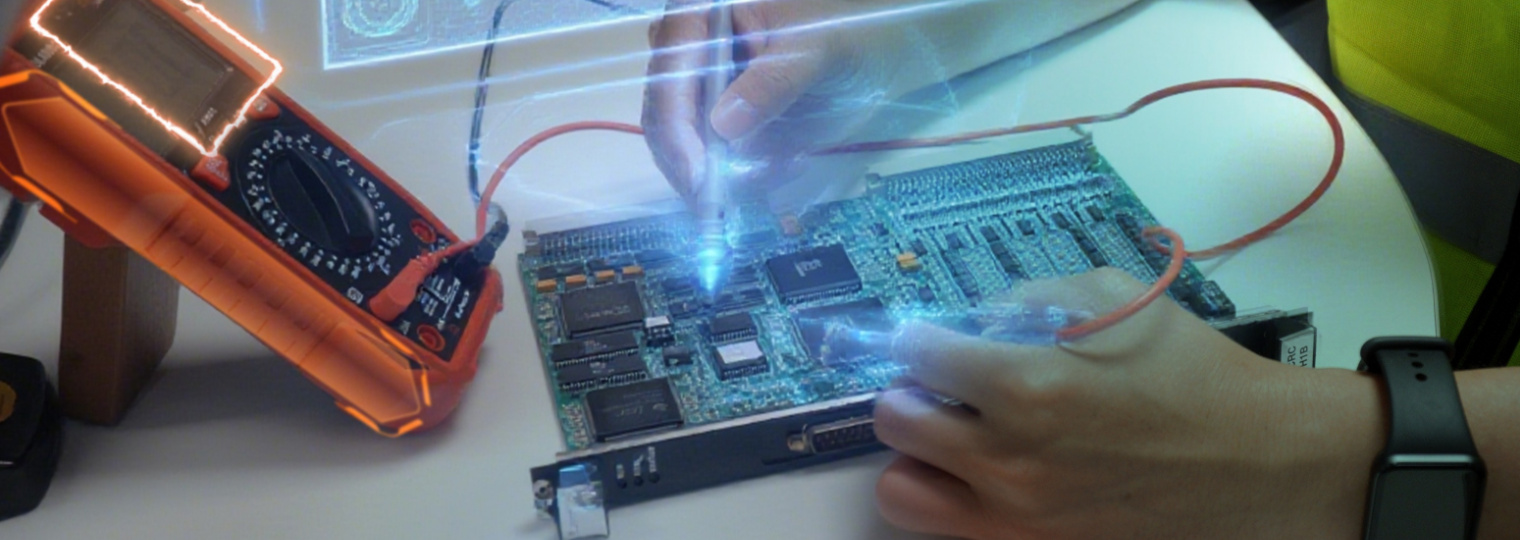
Traditional methods relying on manual intervention and segmented management show clear deficiencies in addressing modern demands such as complex system integration, real-time state perception, and predictive decision-making. These limitations lead to disconnects between engineering and maintenance, inefficient resource utilization, and insufficient system resilience, creating an urgent need for smarter lifecycle management strategies. -
02. Optimizing Engineering-Maintenance Collaboration Through Automation Products

The core issues in traditional engineering-maintenance models lie in information gaps and system isolation. Engineering decisions often lack maintenance perspectives, while maintenance execution struggles to trace back engineering information, leading to two main challenges: first, "design flaws," where maintainability is not fully considered during the engineering phase; second, "maintenance delays," where response times are extended due to lack of real-time data and intelligent tools.
Introducing Data-Driven Lifecycle Management: The Future of Engineering-Maintenance
Data-driven lifecycle management provides a modern pathway to address traditional engineering-maintenance challenges. It enables more precise and efficient engineering-maintenance decisions by deploying IoT platforms, digital twin technologies, and intelligent diagnostic tools.
This advanced approach transforms engineering-maintenance from separate, human-led activities into integrated, data-driven processes. The system relies on several core technologies to achieve this: embedded control systems endow equipment with monitoring and regulation capabilities during the engineering design phase; industrial robots and drones perform inspection and maintenance tasks in hazardous environments; AI-based predictive maintenance platforms analyze historical data and real-time parameters to automatically generate maintenance plans.
Key Data Points for Smarter PM Scheduling Across Engineering & Maintenance
PLC/SCADA: power-supply ripple trend, I/O card temperature, CPU load variance SMART PUMPS: bearing temperature orbit, suction-pressure decay, VFD current signature INTELLIGENT VALVES: actuator torque repeatability, position-feedback drift, solenoid-current ramp ROBOTS: spindle-position repeatability, tool-wear acoustic emission, servo-motor temperature EDGE SERVERS: CPU fan speed, storage-disk temperature, cyber-security patch compliance -
03. Specific Applications of Automation Products
Deep Integration in the Engineering Phase During the engineering phase, automation products integrate components such as smart sensors and intelligent valves into equipment design and manufacturing through the "design for maintenance" philosophy. For example, in large pumping stations or energy facilities, pre-installed vibration sensors enable equipment to possess real-time health perception capabilities from the construction stage, laying the foundation for full lifecycle management. Precision Applications in Intelligent Maintenance Scenarios At the maintenance execution level, automation products significantly enhance operational efficiency through data-driven processes and intelligent decision-making. Industrial robots autonomously perform equipment inspection and component replacement in high-temperature or high-risk environments; drone fleets conduct comprehensive inspections of infrastructure such as bridges and power transmission lines; intelligent spindle units monitor tool wear in real-time and automatically trigger replacement processes when thresholds are reached, reducing unplanned downtime to near zero.
-
Optimizing Maintenance Strategies: Data-Driven Lifecycle Management of Automation Products
-
Optimizing Engineering-Maintenance Collaboration Through Automation Products
-
Specific Applications of Automation Products

Industries
Hot recommendation


- Q&A
- Policies How to order Part status information Shipping Method Return Policy Warranty Policy Payment Terms Email Marketing Policy VAT and Import Information
- Asset Recovery
- We Buy Your Equipment. Industry Success stories Amikong News Technical Resources Why choose us FAQs
- Registered Address
-
32D Guomao Building, No.388, Hubin south Road, Siming district, Xiamen,Fujian, China