
AMIKONG EXCESS CONTROL SYSTEM PARTS
Specializing In:Automation Spares(DCS, PLC, CNC) Servo Drives HMI Power supplies Controllers
-
Please try to be as accurate as possible with your search.
-
We can quote you on 1000s of specialist parts, even if they are not listed on our website.
-
We can't find any results for “”.
SEE PRODUCTS IN SEARCH PAGE ()
Semiconductors and Electronic Components

-
01. Optimizing Electronics Manufacturing: Data-Driven Semiconductor and Battery Production
Moving away from traditional fixed production models toward data-driven smart manufacturing represents a crucial strategic transformation for the electronics manufacturing industry. The manufacturing processes for semiconductors, lithium-ion batteries, and other electronic components involve substantial resource consumption, high costs, and complex technologies. Companies now leverage automated solutions and data analytics to optimize production processes. This shift not only increases yield and ensures operational safety but also maintains strong competitiveness in the challenging global market.
What is Modern Electronics Manufacturing and Why Optimize It?
Modern electronics manufacturing is a highly integrated systems engineering approach that achieves high efficiency and quality output through precise medium control, reliable process regulation, and intelligent production management. Its primary objectives are to enhance product performance, reduce unit costs, and accelerate innovation cycles while ensuring production safety. Optimizing this process is crucial for meeting growing market demands and the pace of technological iteration.
Traditional electronics manufacturing relies on manual intervention and segmented control. While capable of completing basic production tasks, it struggles to meet the high requirements of modern processes for precision, consistency, and safety. Semiconductor production may experience yield losses due to imprecise gas control, while battery manufacturing might suffer from performance issues due to welding process variations. Optimization shifts manufacturing from experience-dependent to data-driven, utilizing real-time monitoring and intelligent analysis to enhance overall operational effectiveness.
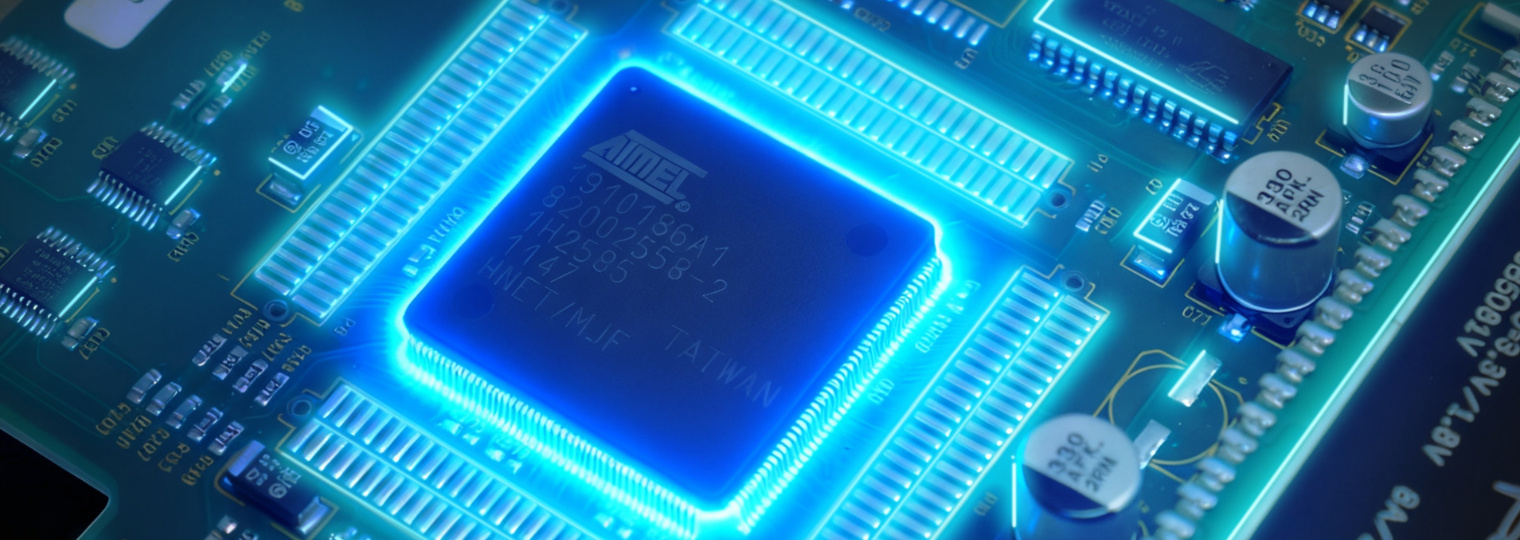
Traditional methods dependent on fixed parameters and manual experience show clear deficiencies in addressing complex chemical environments, precision process requirements, and rapid product iterations. These limitations lead to yield fluctuations, safety hazards, and persistently high production costs, creating an urgent need for smarter manufacturing strategies. -
02. Optimizing Electronics Manufacturing Through Professional Solutions

The core issues in traditional electronics manufacturing lie in process isolation and data fragmentation. Production decisions are often based on offline testing or local parameters, leading to two main challenges: first, "over-control," where unnecessary resources are invested in non-critical steps; second, "under-control," where failure to capture process deviations in real-time results in batch quality issues.
Introducing Smart Manufacturing: The Future of Electronics Manufacturing
Smart manufacturing provides a modern pathway to address traditional electronics manufacturing challenges. It enables more precise and efficient production decisions by deploying automated control systems, precision sensing technologies, and data analytics platforms.
This advanced approach transforms electronics manufacturing from isolated, fixed-parameter activities into collaborative, condition-adaptive processes. The system relies on several core technologies to achieve this: high-precision sensors monitor key process parameters such as temperature, pressure, and gas concentration in real-time; AI algorithms analyze data streams to identify potential factors affecting yield and performance; automated actuators adjust production parameters in real-time based on these insights, ensuring stable process output.
Key Data Points for Smarter PM Scheduling in Semicon & Li-Ion Facilities
PLASMA ETCH: RF forward/reflected power ratio, chamber wall temperature, endpoint optical emission drift LITHO: stage positioning repeatability, laser energy stability, reticle clamp pressure decay CVD: gas-panel pressure drop, shower-head temperature uniformity, pump-current signature BATTERY COATING: roll-vibration RMS, coating-weight variance, dryer IR temperature profile ULTRASONIC WELD: horn amplitude drop, weld force repeatability, cell thickness SPC trend -
03. Specific Applications in the Electronics Industry
Semiconductor Assembly and Manufacturing In manufacturing environments containing corrosive and flammable gases, semiconductor manufacturers must continuously improve yield while ensuring worker safety. We provide precise medium control and reliable pressure regulation solutions, ensuring stable and reliable gas delivery during manufacturing processes, offering key technological support for enhancing yield and ensuring safe operations. Lithium-ion Battery Manufacturing and Assembly To meet the demand for lighter, more compact, and higher energy density batteries in electric vehicles and consumer electronics, we provide advanced ultrasonic welding solutions. This technology utilizes metal and hybrid film materials to achieve thin, precise, and robust battery structure manufacturing, helping manufacturers optimize production costs while enhancing product performance.
-
Optimizing Electronics Manufacturing: Data-Driven Semiconductor and Battery Production
-
Optimizing Electronics Manufacturing Through Professional Solutions
-
Specific Applications in the Electronics Industry

Industries
Hot recommendation


- Q&A
- Policies How to order Part status information Shipping Method Return Policy Warranty Policy Payment Terms Email Marketing Policy VAT and Import Information
- Asset Recovery
- We Buy Your Equipment. Industry Success stories Amikong News Technical Resources Why choose us FAQs
- Registered Address
-
32D Guomao Building, No.388, Hubin south Road, Siming district, Xiamen,Fujian, China