
-
Please try to be as accurate as possible with your search.
-
We can quote you on 1000s of specialist parts, even if they are not listed on our website.
-
We can't find any results for “”.
Dairy Plant Process Automation Components Supply: A Systems Integrator’s Playbook


Why Components Decide Whether Dairy Automation Delivers
When you walk into a dairy plant that actually runs as designed, the first thing you notice is not the robot or the shiny control room. You notice the silence around the problems that never happen. Pasteurizers stay on spec, filler changeovers are predictable, traceability reports appear when auditors ask, and night-shift operators do not live on the phone with maintenance.
In my experience, the difference between that plant and the one next door is rarely a buzzword. It is the quality and coherence of the automation components that have been specified, supplied, and supported over time.
Global dairy demand is still expanding. One industry analysis put the dairy market at roughly $826.10 billion in 2023, with strong growth expected through 2028 as consumers shift toward value‑added, high‑protein, and functional products. At the same time, processors face tighter margins, harsher labor constraints, tougher food‑safety rules, and pressure to document sustainability. Multiple sources, including work from Idaho Milk Products, HART Design & Manufacturing, and Food & Beverages Processing, describe automation as the backbone of the response: better hygiene, higher throughput, more consistent quality, and stronger traceability, from raw‑milk intake through final packaging.
Yet Knobelsdorff Enterprises points out that dairy processing remains one of the least automated manufacturing sectors. That means every dollar a plant invests in industrial automation and control hardware potentially has a disproportionate impact. For component suppliers and systems integrators, the question is not, “Can we sell a robot or a PLC?” The real question is, “Can we design, supply, and support the component stack in a way that stands up to dairy’s hygiene, data, and uptime demands over the next decade?”
This article walks through that stack, drawing on field experience and the research base from organizations such as Tetra Pak, the University of Wisconsin–Madison Extension, ifm, Flexware Innovation, and RML Machinery. The intent is practical: to help you decide what to supply, how to specify it, and how to keep it running in real plants with real constraints.
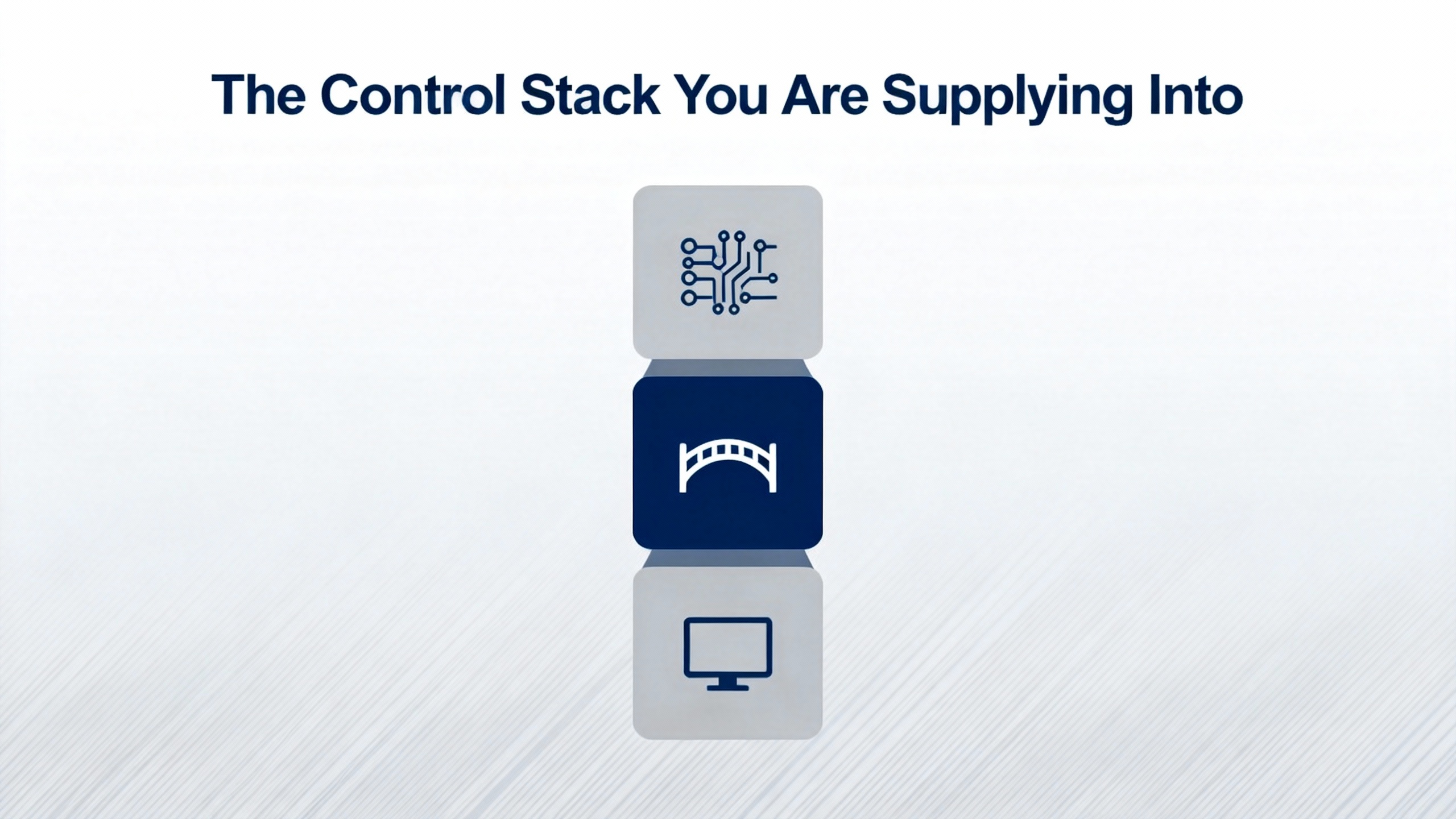
The Control Stack You Are Supplying Into
Four Layers That Shape Component Requirements
The Tetra Pak Dairy Processing Handbook describes industrial control systems in four layers, and this model maps well to most dairy plants.
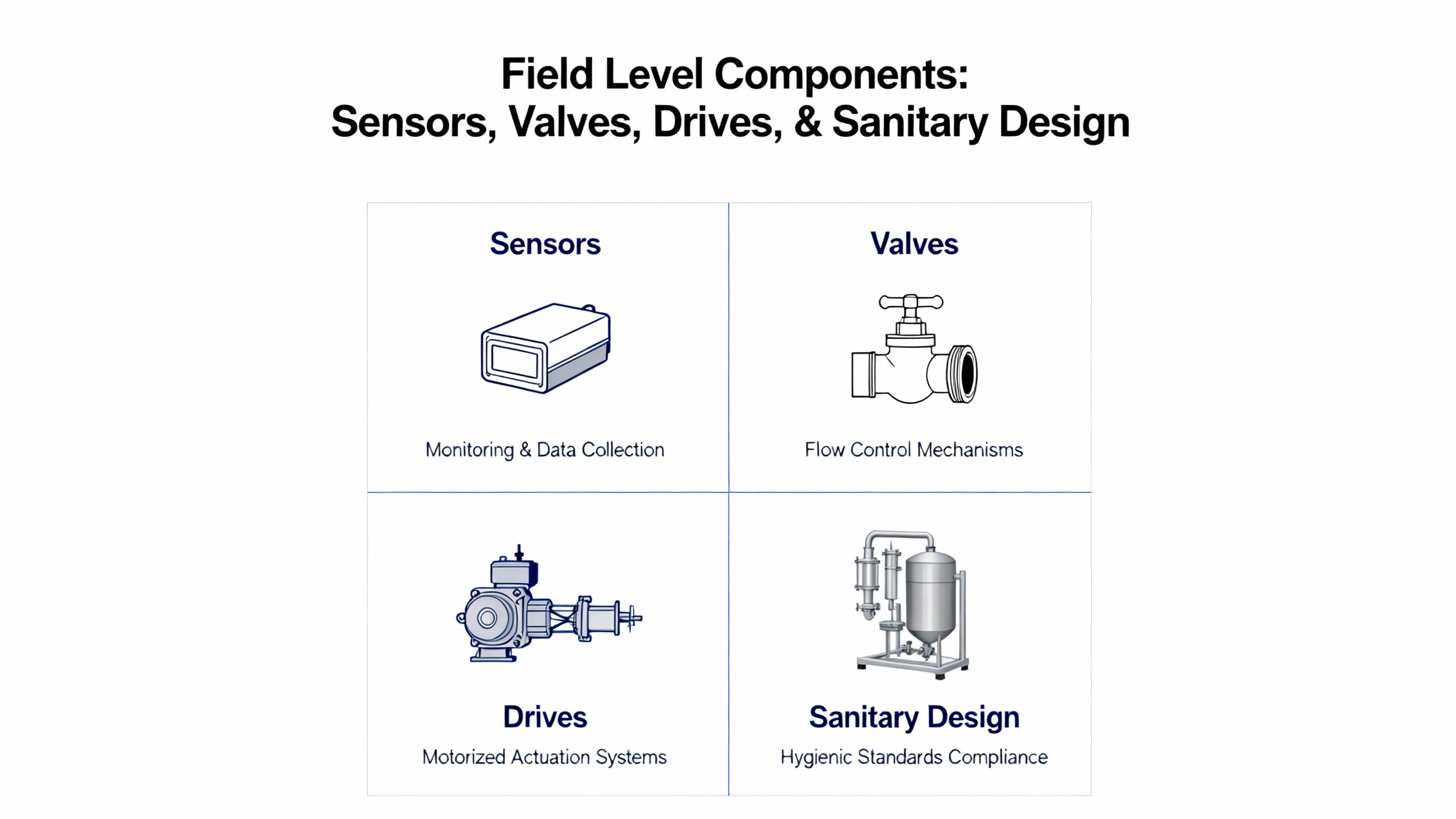
At the field layer sit sensors and actuators. These are the temperature probes on pasteurizers, flowmeters on raw‑milk lines, level instruments on balance tanks, and the valves, pumps, and drives that physically move product and cleaning solutions.
The automation layer contains PLCs, safety controllers, and SCADA systems. These orchestrate sequences such as raw‑milk receiving, pasteurization, separation, standardization, homogenization, cleaning‑in‑place, and packaging, with local safety and redundancy built in.
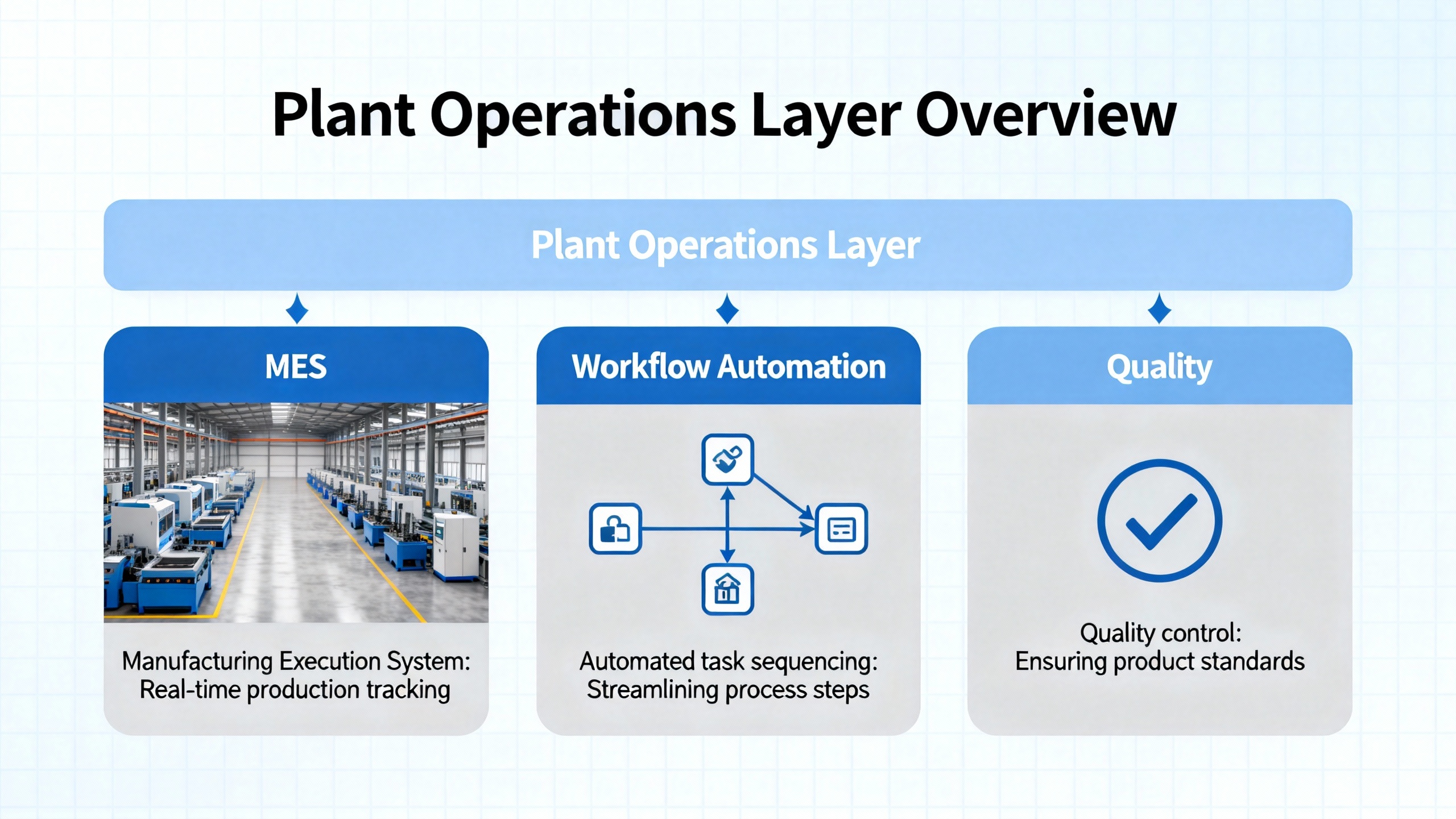
Above that, the MES or manufacturing operations management layer runs production scheduling, batch management, quality monitoring, inventory tracking, downtime analysis, and traceability. Tetra Pak emphasizes that MES is the bridge between the plant floor and enterprise systems, aggregating data from PLCs, SCADA, lab systems, and warehouses.
At the top, ERP handles purchasing, inventory valuation, order management, and accounting, using live updates from MES to keep plans synchronized with reality.
As a component supplier, you need to understand which layers you are influencing. A smart IO‑Link sensor from a vendor such as ifm does more than measure temperature. It also affects MES data resolution, CIP validation, and how easily an ERP system can reconcile inventory losses. A robot that handles cheese cartons is not only a piece of mechatronics; it has implications for SKU management, recipe execution, and traceability workflows.
Functional and Non‑Functional Requirements
Tetra Pak and other sources highlight two groups of requirements that should shape component specifications.
Functionally, a dairy plant’s ICS must deliver precise control of process variables like temperature, pressure, and flow; consistent product quality and food safety; full traceability and regulatory compliance; robust batch and order management; inventory visibility; energy‑efficient operation of refrigeration and heat treatment; and asset management for critical equipment.
Non‑functional requirements matter just as much. Security is now fundamental, given Industry 4.0 connectivity and cyber‑risk. Reliability and availability are essential because unplanned downtime during pasteurization or filling is costly and can compromise safety. Performance, maintainability, scalability, connectivity, and operator usability all influence whether a system can evolve over time and remain operable by real people working rotating shifts.
Component supply decisions either support or undermine these requirements. A cheap, non‑hygienic sensor might read accurately in a catalog, but if its sealing fails under repeated cleaning‑in‑place cycles, you lose both reliability and food safety. A proprietary fieldbus device without clear data access might function today but become a bottleneck when the customer wants MES‑level analytics tomorrow.
Field Level: Sensors, Valves, Drives, and Sanitary Design
Smart Sensors as the Foundation
In dairy processing, small deviations in temperature or flow can create unsafe product. Tetra Pak’s guidance and ifm’s documentation converge on the same point: precision instrumentation is not optional.
Ifm describes smart process sensors designed specifically for hygienic food environments, with digital IO‑Link outputs instead of only analog signals. The digital interface increases measurement accuracy and resolution and supports richer diagnostics. In practical terms, that means tighter pasteurization control, better homogenization consistency, and more reliable monitoring of parameters such as temperature and level during batches.
For component suppliers, three aspects are critical.
First, hygienic design must be baked in. That means surfaces that can be effectively cleaned, appropriate process connections, and certificates that resonate with dairy QA teams. Multiple sources underline that contamination control and cleaning‑in‑place are core to automation value; any field device that complicates hygiene quickly becomes a liability.
Second, digital capability is now a differentiator. Data analytics and AI‑driven quality systems rely on rich, real‑time measurements. The Tetra Pak handbook, GAO’s work on precision agriculture, and dairy automation articles all emphasize that digital data is becoming as important as the product itself for optimization and traceability. Sensors must feed that data reliably.
Third, sensors need to survive dairy conditions. Ifm notes that their sensors are designed and tested for long service life in demanding applications. That is not marketing fluff in this sector. Between constant washdowns and thermal cycling, cheap instrumentation fails quickly. As a systems integrator, I have seen projects where the cost of repeated replacement and downtime far exceeded the small savings on initial sensor price.
Actuators, Pumps, and Drives in Hygienic Service
On the actuator side, raw‑milk receiving, pasteurization, separation, and CIP all depend on reliable valves and pumps with variable‑speed drives. Hart Design & Manufacturing, drawing on Idaho Milk Products’ operations, describes automated pipelines and CIP systems that reduce human contact, manage temperature and flow precisely, and ensure tanks and lines are cleaned to stringent hygiene standards.
Supplying these components is not only about pressure and flow ratings. For dairy applications, you need to consider cleanability, material compatibility with cleaning chemicals, dead‑leg reduction, and how easily valve and pump status can be wired into PLCs and SCADA. Drives must maintain tight speed control to keep flow and pressure within recipe tolerances, and they need clear diagnostics for predictive maintenance programs.
Robust feedback devices, limit switches, and positioners on valves matter as much as the valves themselves, because MES and quality systems increasingly rely on proof of valve state during key process steps. If the plant wants to prove that a particular batch of milk saw the correct heat treatment and line routing, field components must support that evidence.
Robotics and Material Handling
Hart, Idaho Milk Products, and RML Machinery all highlight how robotic handling has become central in dairy packaging and downstream handling. Robots now load and case‑pack cheese or ice cream at high speeds, palletize mixed SKU orders, and handle ingredient powders with minimal human contact.
RML describes a New Zealand project where a well‑known brand required a robotic line capable of packing 300 ice creams per minute into multiple carton sizes and shipper configurations. That kind of flexibility places very specific demands on grippers, conveyors, sensors, and safety systems. High‑speed carton detection, reliable code reading, and hygienic robot designs are all component‑level issues, not abstract automation trends.
When supplying robots and associated hardware into dairy plants, flexibility for SKU changeovers is crucial. RML notes that manual changeovers between many SKUs are slow and error‑prone. Modular tooling, vision‑guided picking, and recipe‑driven changeovers are not luxuries; they are how plants stay competitive when marketing teams continuously add new pack sizes and flavors.
Control Layer: PLCs, Safety, and SCADA
Integrated but Distributed Control
Modern dairy plants, according to Idaho Milk Products and HART Design & Manufacturing, increasingly rely on distributed process control architectures. PLCs, microprocessor‑based systems, and distributed control systems provide local autonomy for unit operations such as pasteurizers or fillers, while a plant‑wide control strategy coordinates overall production.
From a component supply perspective, this means PLC families and remote I/O systems must support both fine‑grained unit control and seamless integration into the broader SCADA and MES environment. The University of Wisconsin–Madison Extension’s work on automatic milking systems emphasizes that automation raises technical complexity and demands higher skill levels. The same is true inside plants: opaque or overly complex PLC setups are a barrier to adoption and support.
Knobelsdorff stresses that there is no one‑size‑fits‑all solution; each plant needs control systems tailored to its processes. However, some principles are consistent.
Controllers should provide clear diagnostics, structured program organization, and documentation so that plant staff and local partners can troubleshoot safely. Safety functions must be integrated in ways that match dairy’s risk profile, from high‑pressure pasteurization to robotic palletizing. And control hardware should remain supportable for at least a full lifecycle of the process equipment.
SCADA and Operator Interfaces
SCADA systems are where operators live. HART and Idaho Milk Products underline how automation shifts much of the operator workload from manual handling to monitoring, responding to alarms, and adjusting parameters. Poorly designed HMIs create new hazards, while well‑designed ones reduce stress and help retain skilled staff.
Component suppliers influence that outcome through their choices of operator panels, industrial PCs, thin clients, and networking gear. Usability, highlighted by Tetra Pak as a non‑functional requirement, includes screen legibility in bright washdown areas, glove‑friendly input, and appropriate enclosure ratings. HMIs should present critical information from field devices and PLCs without overwhelming the operator with raw data.
Connecting all of this requires well‑considered industrial networking: switches, media converters, and cables that withstand dairy conditions and support the necessary bandwidth and segmentation. Cybersecurity via network design is not a theoretical issue. GAO’s assessment of precision agriculture technologies notes concerns around data security and governance. As plants connect more devices and begin to experiment with AI‑driven optimization, those concerns land squarely on the automation stack.
Plant Operations Layer: MES, Workflow Automation, and Quality
MES and Traceability
Tetra Pak describes MES as the bridge between ERP and the plant floor, handling production orders, batch tracking, quality checks, traceability, workforce management, and maintenance. In dairy, this layer is where process data becomes compliance evidence, and where planners see whether they can promise a rush order of lactose‑free high‑protein yogurt or a particular cheese.
For component suppliers, MES might seem beyond scope, but your hardware decisions either make MES integration straightforward or painful. Standardized, well‑documented data models in PLCs, accessible digital sensor values, and time‑synchronized event logging from robots and drives all make MES projects more feasible.
Workflow Automation for Food Safety and Quality
Flexware Innovation points out that many dairy and cheese plants still rely on paper‑based workflows for quality, sanitation, and business processes. They describe dairy workflow automation platforms that connect directly with equipment to capture data and trigger workflows automatically, covering HACCP and SQF Level 3 requirements, inventory movements from receiving to finished goods, master sanitation schedules, operator check sheets, preventive maintenance, and lab testing.
When those workflows are tied into the control system, components must support reliable time‑stamped data capture and event signaling. For example, a quality workflow that logs temperature readings and valve states during each batch is only as good as the underlying sensors, I/O, and time synchronization.
Flexware also notes that failed quality tests can trigger escalation workflows and corrective actions automatically. From a supplier standpoint, that means any device generating quality‑related measurements must provide trustworthy data and clear diagnostics when something goes wrong. With regulators and customers expecting rapid, precise traceability, poor instrumentation can quickly erase any value from higher‑level workflow automation.
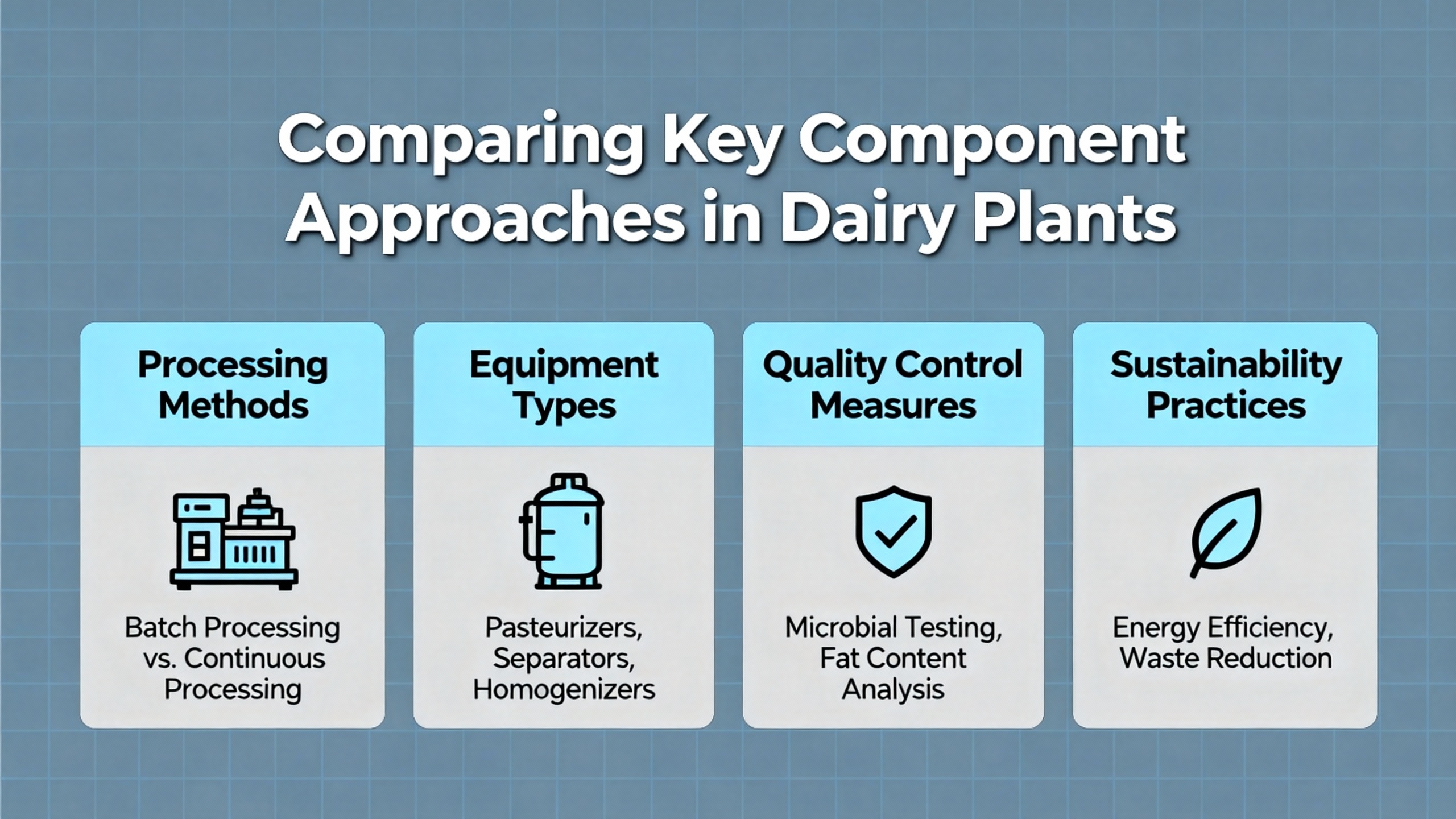
Comparing Key Component Approaches in Dairy Plants
The table below summarizes some of the practical choices dairy plants face and how they play out in practice.
| Component approach | Typical use in dairy plants | Practical advantages | Practical drawbacks |
|---|---|---|---|
| Conventional analog sensors | Legacy temperature, level, and pressure measurements on pasteurizers, tanks, and lines | Familiar to maintenance; often lower unit cost; compatible with existing PLC I/O | Limited data resolution; harder to integrate into advanced analytics and MES; fewer diagnostics; potential signal degradation over distance |
| IO‑Link smart sensors and other digital instruments | New or upgraded process lines, especially where tight tolerances and traceability are critical | Higher accuracy and resolution, as ifm emphasizes; rich diagnostics; easier device parameterization; better support for digitalization initiatives | Requires digital‑capable I/O and configuration tools; higher initial complexity; demands stronger networking and data management |
| Hard‑wired stand‑alone equipment control | Isolated units such as small pumps or stand‑alone skids in older plants | Simple and robust; minimal integration work; straightforward for single functions | Difficult to coordinate across lines; limited data visibility; becomes a constraint when implementing plant‑wide automation or MES |
| Integrated PLC and SCADA architectures | Modern pasteurizers, fillers, ingredient handling, and CIP, as described by Idaho Milk Products and others | Plant‑wide visibility; consistent control strategies; easier recipe changes; foundation for traceability and optimization | Higher design and commissioning effort; requires skilled automation staff; needs disciplined standards to avoid complexity |
| Conventional mechanical case packers | Older packaging lines with few SKUs and stable formats | Proven technology; lower technical skill required; often less sensitive to network or software failures | Limited flexibility when marketing adds SKUs; manual changeovers can be slow and error‑prone, as RML notes; hard to integrate into automated traceability |
| Robotic case packers and palletizers | High‑mix, high‑speed packaging such as ice cream and cheese lines | Fast, flexible SKU changeovers; reduced labor and ergonomic risks; easier to adapt to new products, according to RML and HART | Higher capital cost; integration complexity; requires strong maintenance and programming capability; vulnerable to supply chain delays for parts |
These are not either‑or choices. Most plants operate a mix, and the real challenge for integrators and suppliers is to build a coherent architecture around them.
Lessons from Dairy Automation Research for Component Strategy
Automation Delivers Value, but Only with Good Management
The University of Wisconsin–Madison Extension reports that automatic milking systems have spread rapidly worldwide, although still adopted by only a minority of farms in regions like Wisconsin. Farmers report improved milk production, better cow comfort, and reduced labor, but also higher production costs and greater technical complexity.
A systematic review of automatic milking systems over twenty years found that automation can increase milk yield and shift labor from manual milking to more flexible herd supervision. At the same time, a welfare study from Germany showed that while higher automation levels can improve specific welfare indicators such as lameness and cleanliness, overall welfare still depends heavily on housing design and management.
Inside the factory fence, Idaho Milk Products, HART, Knobelsdorff, and others make similar points. Automation improves consistency, safety, traceability, and throughput, but it does not fix poor process design or weak management. For component suppliers, this means your offer cannot stop at a catalog. You need to support practical integration, clear documentation, and training so that plants can realize the benefits the research describes.
Flexibility, SKU Variety, and Changeovers
RML’s work with New Zealand and Australian plants highlights a structural challenge in dairy: a large variety of SKUs with different packaging, labels, and quality parameters. Equipment must handle quick changeovers with minimal downtime and low risk of product mix errors.
From a component perspective, that pushes you toward modular hardware, recipe‑driven configurations, clear feedback from sensors and encoders, and automation platforms that can manage many product variants without code rewrites each time marketing invents a seasonal flavor. Robots, modular conveyors, and camera‑based inspection systems are particularly valuable here, but they must be specified and supplied with SKU flexibility explicitly in mind.
Capital Cost, Integration Risk, and Supply Chain Disruptions
GAO’s analysis of precision agriculture technologies identifies high upfront costs as a major barrier to adoption, and the same pattern appears in dairy processing. RML notes that even when automation clearly reduces labor and waste, plants struggle to justify capital spending when margins are tight.
RML also describes integration challenges: outdated legacy systems, resistance to change, and supply chain disruptions when equipment suppliers are overseas. These are not only customer problems; they are component supply problems. Long lead times on specialized hardware, proprietary protocols that complicate integration, and limited local support all feed risk into an automation project.
Knobelsdorff recommends engaging experienced automation providers early, to map processes, design control panels, and develop clear operating narratives with customers. That advice is equally relevant for component suppliers. When you help define a realistic, phased roadmap that matches budget and risk tolerance, you are more likely to see your hardware installed, commissioned, and kept in service.
Data, AI, and Sustainability
Multiple sources, including Tetra Pak, DFA’s innovation programs, and Dairy 4.0 commentaries, point toward a data‑rich future. Smart sensors, IoT gateways, and AI‑driven analytics are already being used to optimize feeding, predict maintenance, and support sustainability reporting.
GEA’s analysis of feeding automation shows that better feeding strategies increase per‑cow milk yield and reduce greenhouse gas emissions per unit of milk when the whole farm output is considered. Connecterra and other data‑platform providers argue that AI‑supported management can significantly improve farm productivity and help capture sustainability incentives.
For component suppliers, the implication is unambiguous. Hardware must not only control processes; it must also expose clean, reliable data in ways that analytics tools can consume. Data ownership, interoperability, and security are no longer abstract IT topics but part of the value proposition of a sensor, a drive, or a controller.

Managing Component Supply: From Specification to Spares
Standardize on Modular, Integration‑Ready Platforms
Plants that succeed with dairy automation are rarely the ones that bought the most exotic hardware. They are the ones that standardized where it counts. That often means a consistent PLC family across process areas, a coherent instrumentation strategy that favors a small set of proven hygienic sensors, and a robot platform with widely available parts and local support.
Standardization makes MES integration easier, simplifies operator and maintenance training, and reduces spares inventories. It also makes future digitalization projects more manageable. When devices speak consistent data languages and are known quantities under cleaning‑in‑place conditions, you can connect them to analytics and AI tools with less risk.
Plan for Lifecycle and Obsolescence
Dairy processing equipment often runs for decades; automation hardware typically does not. Component suppliers need to be honest about lifecycle and obsolescence. Plants are better served by a clear roadmap than by surprise product discontinuations.
That means choosing hardware families with published lifecycle policies, designing panels with space and wiring provisions for future upgrades, and documenting configurations so that replacements and migrations are predictable. It also means collaborating with integrators and plant engineers on transition plans that minimize downtime.
Build Resilience into the Supply Chain
RML explicitly notes that supply chain disruptions, especially for overseas equipment, complicate automation rollouts. Plants have seen that lesson reinforced in recent years. Component suppliers can mitigate this by maintaining regional inventories for high‑criticality spares, qualifying secondary sources where appropriate, and designing systems that do not depend on a single proprietary component that is difficult to replace.
Local or regional service capability also matters. Automation experts from Knobelsdorff and others stress that plants do not have the headcount to reverse‑engineer poorly documented systems. Suppliers who can field skilled technicians, even on a limited basis, can de‑risk projects significantly.
Treat Training and Documentation as Part of the Product
The University of Wisconsin–Madison Extension’s work on automatic milking systems highlights the need for more advanced technical skills and employee training when farms adopt automation. Dairy plants are no different. When a new sensor type, drive platform, or robot arrives, someone has to learn how to configure, maintain, and troubleshoot it.
Component suppliers who invest in concise, use‑case‑focused documentation and repeatable training packages provide a competitive advantage. Operators need to understand not only the button presses but why a device behaves as it does under upset conditions. Maintenance needs fault trees, not just wiring diagrams. Integrators need clear parameter descriptions and data structures. That support often makes the difference between a plant that quietly expands its use of your components and one that starts replacing them during the next shutdown.
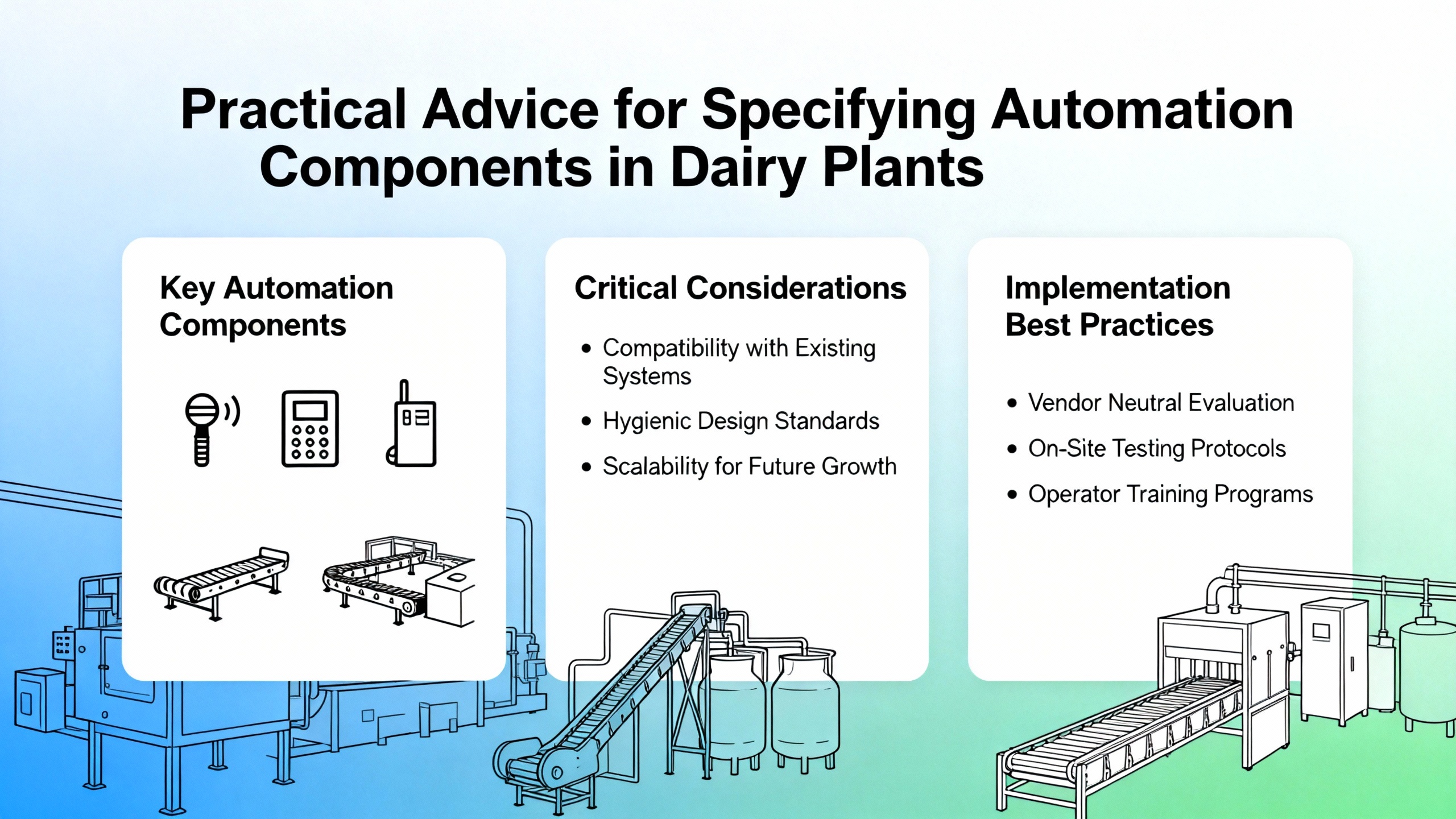
Practical Advice for Specifying Automation Components in Dairy Plants
When I sit down with a dairy client to plan a process automation project, we do not start with part numbers. We start with the process and work backward.
First, we define the process envelope and risks. Where in the plant could a control failure compromise safety or compliance, such as pasteurization, separation, or allergen changeovers? Those steps demand the most precise, reliable instrumentation and control hardware, and often redundant sensors and interlocks.
Second, we prioritize hygiene and cleanability. Any field component in a washdown or product‑contact area must have appropriate hygienic design, proven compatibility with cleaning‑in‑place, and certificates that will satisfy audits. If a device looks innovative but has not been proven in dairy hygiene, it belongs in a pilot, not at the heart of the main line.
Third, we match component sophistication to operational maturity. A plant that still runs most paperwork manually, as Flexware describes, may not be ready to exploit the full capabilities of the latest smart instrumentation. That does not mean avoiding modern devices, but it does suggest a staged path where the plant first gains visibility and basic automation before layering on AI or advanced optimization.
Fourth, we check integration pathways before ordering hardware. Does the sensor family expose all needed signals to PLCs and SCADA? Can robot controllers publish the data MES expects? Are there any proprietary gateways that could become single points of failure? RML’s and GAO’s discussions of interoperability challenges are reminders that integration issues are much easier to resolve on paper than once equipment is on the floor.
Finally, we build in maintainability. Panels must allow safe access for technicians. Spare parts must be available in reasonable timeframes. Critical configurations must be backed up and version‑controlled. Good automation does not eliminate the need for human intervention; it makes that intervention more predictable and less heroic.
Brief FAQ
How should a mid‑size dairy plant prioritize its first major automation component investments?
Most plants see the fastest, safest returns by focusing first on critical process control and hygienic instrumentation. That means upgrading weak links in temperature and flow control on pasteurization and standardization, adding reliable sensors and valves for CIP, and modernizing PLCs and HMIs where operators struggle to keep the line within spec. Packaging robotics and workflow automation can deliver major benefits as well, but are easier to justify and integrate once the core process is stable and measurable.
Does it always make sense to choose the most advanced sensor or robot available?
Not necessarily. Research from Wisconsin and others makes clear that management quality and process design are at least as important as the automation level. The most advanced device will underperform if it is poorly installed, misunderstood, or impossible to maintain. It is usually better to choose components that are advanced enough to support the plant’s foreseeable digitalization roadmap, but still well understood, well supported, and consistent with existing platforms.
What should a component supplier emphasize when working with a dairy plant that is cautious about automation?
Emphasize transparency on lifecycle and support, realistic ROI examples like those RML shares (including phased deployments and documented savings), and a clear integration plan that addresses staff training and change management. Show how the components you propose will help with the plant’s immediate concerns, such as margin pressure, SKU complexity, or audit readiness, not just future Industry 4.0 aspirations.
Closing Thoughts
Dairy plants do not buy automation components for the sake of technology. They buy them to keep product safe, lines running, and businesses viable in a market that demands more variety, more proof, and more efficiency every year. As a veteran systems integrator, I have seen that when suppliers and plant teams treat sensors, controllers, robots, and workflows as parts of a single, long‑lived system, automation becomes a reliable project partner rather than a risky experiment. If you align your component supply strategy with that mindset, you will not just ship hardware; you will help build dairies that can grow, adapt, and keep delivering the quality their customers expect.
References
- https://www.gao.gov/products/gao-24-105962
- https://pmc.ncbi.nlm.nih.gov/articles/PMC11672561/
- https://dairy.extension.wisc.edu/articles/introduction-to-the-understanding-automatic-milking-systems-article-series/
- https://nyanimalag.org/the-role-of-technology-on-new-york-dairy-farms-transforming-the-industry/
- https://www.choicesmagazine.org/choices-magazine/theme-articles/dairy-theme/labor-constraints-and-automation-trends-in-california-and-wisconsin-dairy-farming
- https://www.agproud.com/articles/57543-automation-holds-the-key-for-a-better-milking-environment
- https://brightpathassociates.com/rise-of-robotics-in-dairy-farming/
- https://www.connecterra.ai/blog/challenges-and-opportunities-dairy-industry-2025
- https://www.dairyfoods.com/articles/96318-dairy-plants-benefit-from-process-automation
- https://www.flexwareinnovation.com/the-7-benefits-of-dairy-workflow-automation/
Keep your system in play!
Top Media Coverage
Categories

Related articles Browse All
-
 BlogImplementing Vision Systems for Industrial Robots: Enhancing Precision and Automation2025-08-12 11:26:54Industrial robots gain powerful new abilities through vision systems. These systems give robots the sense of sight, so they can understand and react to what is around them. So, robots can perform complex tasks with greater accuracy and flexibility. Automation in manufacturing reaches a new level of ...
 -
 BlogOptimizing PM Schedules Data-Driven Approaches to Preventative Maintenance2025-08-21 18:08:33Moving away from fixed maintenance schedules is a significant operational shift. Companies now use data to guide their maintenance efforts. This change leads to greater efficiency and equipment reliability. The goal is to perform the right task at the right time, based on real information, not just ...
 -
 BlogThe Evolution of Steam Turbine Control Systems2026-03-31 08:33:35CALL US:+86-18020776786 | E-MAIL:INFO@AMIKON.CN In-depth analysis of the GE Mark VIe control system Mark VIe: A Modern Mainstay for Industry 4.0 Mark VIe's core concepts are "high availability, open connectivity, and intelligent readiness." It utilizes comm...


- Q&A
- Policies How to order Part status information Shipping Method Return Policy Warranty Policy Payment Terms Email Marketing Policy VAT and Import Information
- Asset Recovery
- We Buy Your Equipment. Industry Cases Amikong News Technical Resources Why choose us FAQs
- Registered Address
-
32D Guomao Building, No.388, Hubin south Road, Siming district, Xiamen,Fujian, China

Leave Your Comment