
-
Please try to be as accurate as possible with your search.
-
We can quote you on 1000s of specialist parts, even if they are not listed on our website.
-
We can't find any results for “”.
Modicon Quantum Legacy Parts: Supporting Classic Schneider Systems
Legacy control systems do not owe anyone favors. They reward the plants that respect their constraints, maintain them with discipline, and plan honestly for change. As a systems integrator who has supported Schneider Electric’s Modicon Quantum platforms for decades, I have learned that keeping a classic system reliable is less about nostalgia and more about rigor. This article explains how to support Modicon Quantum installations with legacy parts, the software and documentation that keep them serviceable, and the practical decisions that separate a well-managed installed base from a fragile one. Where helpful, I reference guidance from Schneider Electric, Honeywell Intelligrated, and an industry case study to ground the advice in reputable sources and field-proven practice.
Why Quantum Still Matters
Across process, water, materials handling, and discrete manufacturing, Modicon Quantum systems continue to run production safely and profitably. When the footprint is broad, the I/O count is high, and the process is critical, “rip and replace” is rarely the first, best answer. The hard truth is that plants are not museums; they are living systems that depend on stable controls, spare parts readiness, and a workforce that knows how to care for the equipment they have. Keeping Quantum in reliable production is often the most economical path while a mature migration plan is assembled.
From an availability perspective, the business case remains straightforward. If uptime is paramount and the existing process is well understood, maintaining a disciplined inventory of replacement modules, power supplies, communication cards, and selected CPUs can sustain performance while you reduce technical debt at a responsible pace. That stewardship approach requires knowing which parts to hold, how to verify them, and which vendors can support you with short lead times and credible refurbishment, not just the lowest headline price.
What “Legacy” Means for Quantum
“Legacy” does not mean “dead.” In control, the lifecycle standard is measured in decades. Experienced practitioners often plan for service and support horizons of twenty to thirty years. That horizon matches the guidance industrial specialists give when discussing migrations from older Modicon families and is a sensible anchor for Quantum as well. The practical implication is that you can expect an extended period where parts availability becomes tighter, software toolchains consolidate around fewer versions, and the pool of technicians who have hands-on experience narrows. None of that is a crisis if you manage it with foresight.
In a legacy phase, the winning playbook balances three tracks. The first is stabilizing the installed base with proper spares, disciplined storage and handling, and preventive maintenance. The second is documenting software, firmware, and network dependencies so changes are controlled. The third is planning, proving, and funding migration segments so modernization can occur without gambling with production.
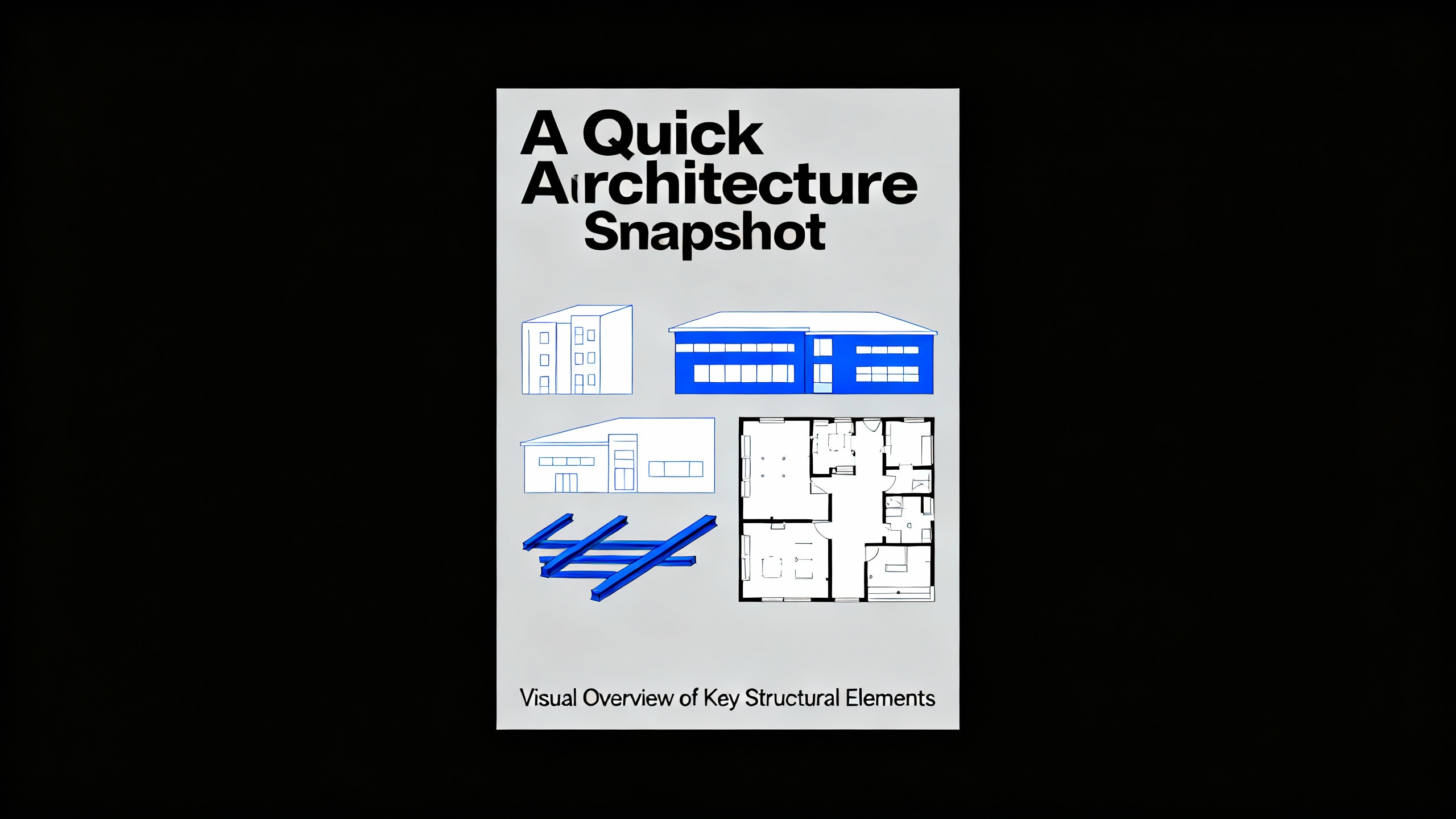
A Quick Architecture Snapshot
Quantum is a backplane-based PLC family with modular I/O and networked communications options. You will encounter two dominant programming lineages. Some Quantum CPUs run the 984 Ladder Logic model, historically supported by tools such as ProWORX 32 or Concept. Later Unity-based Quantum CPUs are programmed with EcoStruxure Control Expert, previously known as Unity Pro. Schneider Electric’s own guidance is clear on this division: use Control Expert for Unity-based controllers, and for 984 Ladder applications, keep the appropriate legacy toolchain or plan a methodical conversion to IEC languages within Control Expert.
Networking in Quantum systems often mixes Ethernet modules, serial links, and remote I/O. Hot Standby architectures appear in higher-availability deployments, where a primary and a secondary controller maintain synchrony and perform a controlled role transfer during a fault or maintenance switchover. In practice, the effectiveness of any redundancy scheme depends on deterministic logic, careful definition of retained memory, and disciplined change control. Those principles are universal and apply as much to Quantum as to any platform with similar capabilities.
Software and Project Artifacts: What You Need and Why It Matters
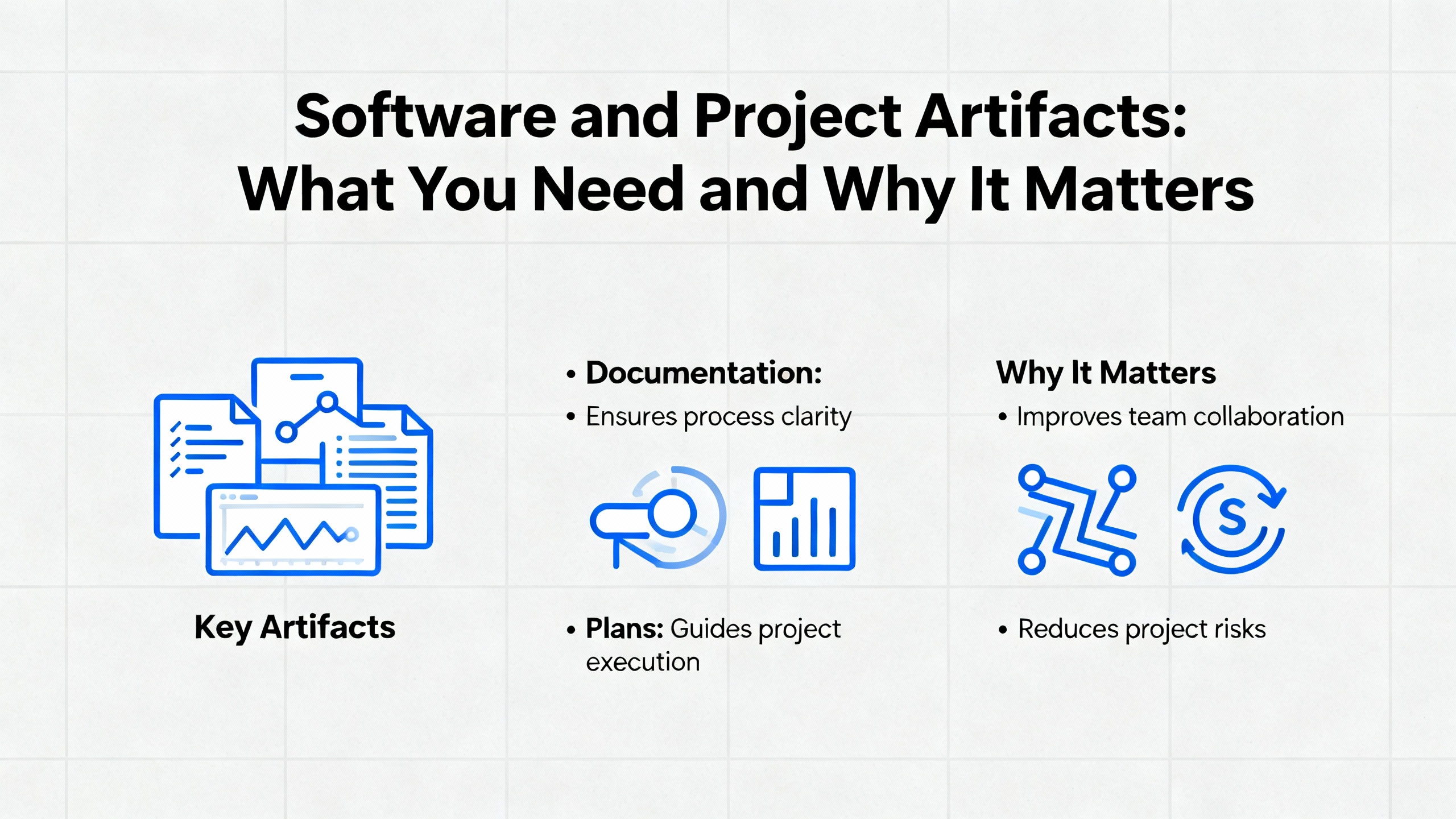
Getting the software right is the bedrock of legacy support. For Unity-based Quantum, EcoStruxure Control Expert is the standard environment. Confirm the version you plan to use against the CPU’s firmware with the vendor’s compatibility matrix, and make sure your license tier includes Quantum support. For 984 Ladder programs, ProWORX 32 and Concept remain the appropriate tools. If your organization is consolidating on Control Expert, be realistic about conversion work. Moving a 984 Ladder application to IEC 61131‑3 languages is a project, not a button press. In my experience, conversions that honor original scan sequences, handle retentive data explicitly, and explicitly test I/O mapping have the highest success rates.
A recurring operational risk in legacy fleets is the absence of original project files. Across Schneider platforms, retrieving a running application from a CPU is possible only if specific upload options were enabled when it was last downloaded. When those flags were not set, you will need the original source from the owner or the integrator of record. The lesson is simple and non-negotiable. Treat the project file as a controlled asset. Verify backups reside in your configuration management system, include complete documentation, and are accessible to authorized staff when needed.
A Smart Spare-Parts Strategy for Long-Lived Quantum Installations
Spare parts are the quiet foundation of uptime. Honeywell Intelligrated has noted that spare parts can consume roughly half of maintenance and repair budgets, which tracks with what seasoned maintenance managers see in complex facilities. That investment delivers value only when a few common-sense practices are in place. Start with the OEM’s Recommended Spare Parts List, the RSPL, and reconcile that list against your actual inventory at regular intervals. The gaps you find during reconciliation are the gaps that will shut you down at the worst possible time.
Bring discipline to the store room. A clean, secure, and clearly labeled parts area speeds response and throttles losses. Many operations assign cage locations that match identifiers in their CMMS or EAM, apply barcodes, and add visual cues for critical items so techs can find them in seconds, not minutes. When the footprint is large, multiple cages near major systems shorten retrieval time. Count what you own. If a full physical inventory feels impossible, cycle count in zones and verify the system against reality on a schedule that you can sustain.
Budget with the long game in mind. Honeywell’s guidance proposes a ramp that begins modestly in year two and tends upward as the system ages, reaching a meaningful fraction of your original RSPL by year ten. That framework acknowledges that parts become harder to source and that your cost of assurance goes up as obsolescence deepens. Overlay that with your site history and vendor visibility to adjust for your realities.
Finally, choose value-added partners. The right vendor is an extension of your maintenance team. The ones that repeatedly earn trust are the partners who pick up the phone at all hours, quote realistic lead times, ship the same day when it matters, understand planned obsolescence, and help you budget honestly. Price matters; uptime matters more.
Buying Quantum Legacy Parts Without Regrets
Buying legacy hardware is equal parts technical due diligence and vendor selection. Ask how the part was tested, not just whether it powers on. A meaningful test for a controller includes a valid program load, verification of communications ports, and status diagnostics. For a communications module, it should include link negotiation and basic data exchange. For an analog output module, such as the well-known 140AVO02000, expect a characterization of output accuracy and evidence that the channels meet their range and load specifications. Credible sellers can show you test reports, not only packing slips.
The right warranty signals confidence. You want coverage that goes beyond a short dead-on-arrival window. If your plant cannot tolerate risk on first power-up, ask the vendor to pre-load specific firmware, label the part with that version, and document it on the shipping notice. Good vendors will agree and will package parts in proper ESD-safe materials with tamper-evident protection. On receipt, perform incoming inspection and record serials, firmware, and as-found condition in your CMMS so the data lives somewhere other than a stack of emails.
Handling, Storage, and Safety for Legacy Components
Respecting safety and handling basics prevents the kind of small mistakes that become big downtime. For control modules, that begins with ESD precautions, correct torque on terminals, and avoiding cable strain that transmits vibration to cards seated in the backplane. When your legacy architecture includes motion or drives alongside the PLC, follow Schneider Electric’s product safety instructions closely. De-energize everything upstream, apply lockout and a “Do Not Turn On” tag, and allow adequate time for DC bus discharge before servicing. Do not rely on a single indicator light to declare a bus safe; verify with a properly rated meter that energy is below safe thresholds before touching conductors. Treat metal surfaces that can reach high temperatures with respect; exposed chassis and motor housings can run hot under load, and contact with surfaces at around 185°F is not a theoretical hazard. Reassemble guards and covers exactly as designed before reapplying power, and verify grounding continuously rather than as a one‑time act.
Operate Versus Migrate: A Pragmatic Decision
The question is rarely whether to modernize; it is when and how. Remaining on Quantum has real advantages when reliability is good, operators and maintenance are fluent in the platform, and the control requirements have not outgrown the system. The trade-off is that the pool of spares shrinks over time, software support consolidates, and certain integrations benefit from contemporary capabilities that Quantum does not natively provide.
Migration offers new features, easier integration with modern networks and cybersecurity practices, and a larger talent pool. The price is downtime risk if the project is rushed and cost risk if the scope is not phased intelligently. A case study from MidStates illustrates the playbook many of us have used successfully. The team migrated from a Modicon Quantum to a Rockwell ControlLogix while preserving existing I/O and operator layer connectivity, maintaining a PLC‑to‑PLC link, simulating behavior comprehensively, and cutting over during a short production lull once confidence was high. That approach reduced risk and maintained operator muscle memory across the transition. The detail that matters is not the vendor destination; it is the discipline of phasing, simulation, diagnostics, and rollback that keeps a modernization from becoming a rescue operation.
A Phased Migration Playbook, in Practice
A phased approach begins by installing the new controller in parallel and establishing a deterministic link to the Quantum. Process simulation then validates logic and I/O behavior long before any valve or conveyor sees a live command. Only after the signals and sequences are proven do you schedule a narrow production window to transfer control. On cutover day, test end‑to‑end paths from HMI through the inter-controller link to the field device, then return equipment to production once each loop passes. Structuring the new application to ease later replacement of legacy I/O reduces rework when you advance to the next phase. The MidStates case demonstrates that you can phase such work across sections ranging from a few hundred to over a thousand I/O points with care, and scale that discipline to very large systems.
Troubleshooting and Commissioning Notes That Pay Off
Commissioning a refurbished analog output module rewards patience. For a 140AVO02000 class device, terminate with shielded twisted pair, segregate the run from high-voltage conductors, bond shields at the appropriate end, and validate each channel’s range with a calibrated meter under representative load. Record the scale factors you apply in software and the corresponding loop response so anyone can retrace your steps in a year without guessing.
Ethernet communications deserve the same respect. If a network module does not come to an expected state, confirm basic power and status, then validate IP configuration, speed and duplex negotiation, and cabling. Plan for the fact that HMIs and data collectors may hold sessions across a controller switchover or power cycle. Configure timeouts and auto-reconnect behaviors to minimize false alarms and orphaned sessions, and test those behaviors deliberately during maintenance windows rather than discovering them during an outage.
For redundant CPU pairs, determinism is king. Keep logic free of race conditions and edge-latched sequences that depend on a specific execution phase in the old controller. Initialize sequences explicitly after role changes, define which data truly needs to be retained across switchover, and test a role change as part of factory acceptance and at intervals thereafter. Those practices carry across platforms and eras because physics and software do not read marketing brochures.
Quick Comparison: Support in Place Versus Plan a Migration
| Approach | Where It Fits | Upside | Trade‑offs |
|---|---|---|---|
| Maintain and support Quantum with legacy parts | Stable process, known logic, trained staff, acceptable performance | Lowest disruption, preserves operator familiarity, strong runtime confidence | Shrinking spares pool, aging toolchains, growing training gap |
| Phased modernization with legacy I/O retained initially | Large installed base, strict uptime constraints, complex interlocks | Reduced risk through parallel testing and staged cutover | Requires disciplined planning, added interim complexity |
| Full platform replacement and I/O refresh | Major process change or tech debt too high | Clean slate for performance, security, and lifecycle | Highest initial cost and downtime risk without exhaustive preparation |
Common Quantum Legacy Part Types and What to Check
| Part Type | Role in the System | Software Touchpoints | Key Checks Before Service |
|---|---|---|---|
| Quantum CPU (Unity‑based) | Executes control program, manages I/O and comms | EcoStruxure Control Expert; version aligned to firmware | Confirm firmware, load application from your controlled source, verify diagnostics and scan stability |
| Quantum CPU (984 Ladder) | Executes 984 Ladder Logic programs | ProWORX 32 or Concept; conversion if migrating | Verify tool access, confirm memory retention, test I/O mapping under minimal configuration |
| Ethernet communications module | Plant network connectivity, HMI/SCADA links, data services | Controller comms config; HMI driver settings | Validate IP addressing, link health, reconnect behavior after power cycle or switchover |
| 140AVO02000 analog voltage output module | Drives control signals to field devices | Channel scaling and range parameters within controller software | Verify output range and accuracy with a meter, confirm load impedance, isolate noise, document scaling |
Takeaway
Supporting Modicon Quantum with legacy parts is a discipline, not a gamble. The plants that succeed treat software as a controlled asset, spare parts as strategic capital, and vendor partners as part of the maintenance team. They invest modestly but steadily in inventory accuracy and staff training so troubleshooting is fast and changes are deliberate. They also acknowledge that modernization is a matter of timing, and they reduce risk by phasing migrations, proving behavior in parallel, and scheduling cutovers only when confidence is earned. Follow the OEM’s technical guidance, lean on proven spare-parts practices from peers like Honeywell Intelligrated, and study credible case work from integrators who have executed large migrations without drama. That is how you keep a classic system safe, supportable, and ready for the day you decide to evolve.
FAQ
What software do I need to program or troubleshoot a Modicon Quantum? Unity‑based Quantum CPUs are programmed with EcoStruxure Control Expert, which was formerly called Unity Pro. Quantum controllers that run 984 Ladder Logic are typically supported with ProWORX 32 or Concept. If you are moving a 984 Ladder application into Control Expert, plan and test a careful conversion to IEC 61131‑3 languages, and verify the Control Expert version against your CPU firmware as Schneider Electric advises.
Can I upload a running application from the CPU if I do not have the original project file? It depends on how the application was downloaded. Across Schneider legacy platforms, upload is only possible when specific options were enabled during the last transfer. Because that cannot be assumed, the safest operational rule is to secure the owner’s copy of the project, store it under change control, and make it accessible to authorized personnel. If you do not have it, engage the asset owner or Schneider Electric service to determine what can be recovered.
How should we size and manage spares for a long‑lived Quantum line? Start with the OEM’s Recommended Spare Parts List and reconcile it against what is actually on your shelves. Use your CMMS or EAM to track locations and thresholds, then keep the parts cage clean, secure, and labeled so technicians can find what they need immediately. Honeywell Intelligrated recommends budgeting that grows as the system ages, beginning modestly and reaching a larger fraction of the original RSPL by around year ten, and their guidance to cycle count or run an annual physical inventory is practical in real plants.
Is it still worth maintaining Quantum Hot Standby systems? If your process needs high availability, maintaining a healthy redundant pair can make sense while you prepare a modernization. The essentials are unchanged. Keep both racks at matching firmware, ensure the applications are identical, define retained memory thoughtfully, and test a role change as part of routine maintenance. Document procedures and make switchover behavior visible in the HMI so operators know what to expect.
What are the biggest risks of staying on a legacy Quantum? The risks are not mysterious. Spare parts get harder to source, toolchains consolidate around fewer versions, and you may lose staff who are fluent in the platform. Networking expectations and cybersecurity practices also continue to evolve. You can manage these risks by stocking intelligently, auditing your software artifacts, and planning a phased migration that does not jeopardize uptime. Industry guidance for migrating from older Modicon families underscores those same points and remains relevant for Quantum.
How should I commission a refurbished analog output module before putting it into service? Set the channel ranges and scaling in the controller, then verify each output with a calibrated meter under representative load. Use shielded twisted pair, route analog wiring away from high‑voltage conductors, and bond shields correctly. Record the as‑found accuracy, the applied scaling, and the device’s serial and firmware in your CMMS so the next technician can see exactly what was done without digging through email.
By treating legacy support as a structured practice, you protect uptime today and earn the freedom to modernize on your terms tomorrow.
References
- https://www.plctalk.net/forums/threads/legacy-modicon-984-130-cpu-troubleshooting.141228/
- https://igate.alamedaelectric.com/Modicon%20Documents/PLC%20Quantum%20PLC%20Hot%20Standby%20User%20Manual%20v4.0.pdf
- https://mscc.com/case-studies/legacy-control-system-migration
- https://community.oxmaint.com/discussion-forum/setting-up-ethernet-communication-between-compactlogix-and-modicon-quantum-a-guide-for-success
- https://docs.rs-online.com/0172/A700000008883137.pdf
- https://sorbonneacademy.com/course-detail/modicon-quantum-plc-maintenance-and-troubleshooting
- https://media.distributordatasolutions.com/schneider/2016q2/153975d441692999eb1a19e333f64da1aac1d049.pdf
- https://www.georgethall.com/resources/blog/three-ways-to-reduce-risk-during-a-modernization
- https://control.com/forums/threads/cause-of-communication-failure-in-modicon-quantum-plc-system.45508/
- https://sonepar.pl/files/file_add/download/1901620_dia6ed2170801en.pdf
Keep your system in play!

Related articles Browse All
-
 amikong NewsSchneider Electric HMIGTO5310: A Powerful Touchscreen Panel for Industrial Automation2025-08-11 16:24:25Overview of the Schneider Electric HMIGTO5310 The Schneider Electric HMIGTO5310 is a high-performance Magelis GTO touchscreen panel designed for industrial automation and infrastructure applications. With a 10.4" TFT LCD display and 640 x 480 VGA resolution, this HMI delivers crisp, clear visu...
 -
 BlogImplementing Vision Systems for Industrial Robots: Enhancing Precision and Automation2025-08-12 11:26:54Industrial robots gain powerful new abilities through vision systems. These systems give robots the sense of sight, so they can understand and react to what is around them. So, robots can perform complex tasks with greater accuracy and flexibility. Automation in manufacturing reaches a new level of ...
 -
 BlogOptimizing PM Schedules Data-Driven Approaches to Preventative Maintenance2025-08-21 18:08:33Moving away from fixed maintenance schedules is a significant operational shift. Companies now use data to guide their maintenance efforts. This change leads to greater efficiency and equipment reliability. The goal is to perform the right task at the right time, based on real information, not just ...


- Q&A
- Policies How to order Part status information Shipping Method Return Policy Warranty Policy Payment Terms Email Marketing Policy VAT and Import Information
- Asset Recovery
- We Buy Your Equipment. Industry Cases Amikong News Technical Resources Why choose us
- Registered Address
-
32D Guomao Building, No.388, Hubin south Road, Siming district, Xiamen,Fujian, China

Leave Your Comment