
-
Please try to be as accurate as possible with your search.
-
We can quote you on 1000s of specialist parts, even if they are not listed on our website.
-
We can't find any results for “”.
Brief for 10 Inch Industrial Multi-Touch Screen Article
Audience, Persona, and Tone
This brief defines how to write a comprehensive English blog article on 10 inch industrial touch screens with multi-touch support for an industrial automation and control hardware audience. The author should adopt the persona of a veteran systems integrator and reliable project partner, drawing on practical project experience in plants, lines, and field deployments. The tone throughout the article should be authoritative, pragmatic, and clear so that engineers, maintenance leaders, and operations managers can act on the guidance with confidence.
Topic and Objectives
The article should focus on 10 inch industrial touch screens that offer multi-touch capability, typically based on projected capacitive or other advanced touch technologies. It should explain what these devices are, where they fit in industrial architectures, and how they differ from consumer displays.
The primary objectives are to demonstrate strong experience, expertise, authoritativeness, and trustworthiness; to give practical guidance on selection, integration, and maintenance; and to set realistic expectations around performance, reliability, and trade-offs. The target length is roughly 1,500 to 3,000 words, long enough to provide depth without drifting into unnecessary fluff.
Structure and Content Requirements
Use a clear heading hierarchy with the article title as a single H1 heading and supporting sections organized under H2 and H3 headings. Early sections should define what a 10 inch industrial touch screen with multi-touch support is, along with core concepts such as projected capacitive versus resistive technology, ruggedization, and environmental ratings. Later sections should move into real-world applications, pros and cons, and practical selection or deployment advice.
The article should explicitly address advantages and limitations. For example, it should contrast industrial monitors with consumer screens in terms of durability, temperature tolerance, ingress protection, and long-term support. It should also describe the trade-offs between different touch technologies, including glove use, precision, cleaning, and susceptibility to drift or interference. Where appropriate, the article can refer to concrete scenarios such as factory HMIs, logistics terminals, medical devices, outdoor kiosks, and vehicle-mounted interfaces.
Do not use bullet or numbered lists in the main article body. Wherever the research notes present enumerated points, recast them into flowing paragraphs with smooth transitions. If comparisons are easier to understand in tabular form, it is acceptable to use concise Markdown tables with clear headers. When the article mentions factors such as connection options, IP ratings, or touch technologies, those factors should be described in narrative rather than as list items.
The conclusion should be brief and aligned with the veteran systems integrator persona. It can be one to three sentences or a short callout that reinforces pragmatic decision-making, lifecycle thinking, and partnership with reliable suppliers. An FAQ section is optional and should be included only if it adds clear value for industrial readers; if used, keep it focused on specific, recurring questions that arise in projects, and phrase each answer as a compact paragraph rather than a list.
The article body must not include raw URLs or Markdown links. When citing supporting material, mention only the source name or publisher, such as a manufacturer, industry analyst, or service provider, and rely on a separate References section for the actual links.
House Style
Language
Write in US English with straightforward, technically accurate wording that is accessible to engineers, technicians, and operations staff. Avoid marketing hyperbole; use concrete descriptions grounded in realistic plant or field conditions.
Units and Conversions
Use imperial units for length, weight, volume, area, speed, and temperature. Express length in inches or feet, distance in miles, weight in ounces or pounds, volume in fluid ounces or gallons, area in square feet, and speed in miles per hour. Where the research notes provide metric values, convert them to imperial equivalents and round to natural, easy-to-read numbers. Temperatures must be given in degrees Fahrenheit only, without including Celsius values in parentheses or formulas.
Dates and Times
When you mention specific dates, use formats such as “May 10, 2024” or “5/10/2024.” If you need to refer to times, use the 12-hour clock with AM or PM, such as “3:00 PM.” You may omit times entirely when they are not important to the argument; years alone are acceptable where full dates are unnecessary.
Numbers and Currency
Format large numbers with commas and decimals, for example “1,234.56.” Express currency as a dollar value with the symbol before the number, such as “$1,299.00.” Use approximate ranges and round numbers where exact precision is not meaningful to the reader, especially when summarizing lifetime estimates or market sizes.
Vocabulary and Expressions
Follow US usage. Refer to an elevator rather than a lift, a cell phone rather than a mobile phone, gas or gasoline rather than petrol, an apartment rather than a flat, a resume rather than a CV in non-academic contexts, a bill rather than an invoice in consumer contexts, and shipping rather than courier. For touch screens and HMIs, use neutral technical terms such as “touch screen,” “industrial monitor,” “panel PC,” “HMI terminal,” and “projected capacitive” as appropriate.
Cultural Context
When you need to reference online services, examples, or purchasing channels, favor neutral or US-centric examples such as a typical US-based distributor or an Amazon-like marketplace rather than region-specific platforms. Mention US holidays only when they are relevant to production schedules, maintenance windows, or seasonal workloads, and keep such references practical rather than decorative.
Use of Research Notes
The research notes behind this brief come from a range of industrial and commercial sources covering touch screen maintenance, monitor selection, and interface design. They include guidance from manufacturers on maintaining industrial touch screens for longevity, analyses of how touch-enabled displays improve efficiency and productivity across manufacturing, logistics, and healthcare, and high-level tutorials on touch technologies such as resistive, capacitive, projected capacitive, infrared, and surface acoustic wave.
Other notes summarize best practices for cleaning and maintaining capacitive and resistive displays in demanding environments, including dusty plants, medical facilities, and public kiosks. They cover typical industrial specifications such as brightness suitable for sunlight-readable applications, wide operating temperature ranges, vibration resistance, and ingress protection levels like IP65 and IP67. There is also material on optical bonding to improve readability and durability, common problems such as ghost touches and drift in capacitive screens, and practical troubleshooting steps for display, connectivity, and power issues.
Several guides focus on how to choose an industrial monitor, highlighting the importance of ports and connectivity, mounting options such as panel, rack, open-frame, and VESA mounting, enclosure materials, and long-term availability of spare parts. Others discuss small-format high-brightness outdoor touch screens around the 10 inch class, emphasizing compatibility with common operating systems and multiple video inputs, as well as specialized industrial use cases for 10.1 inch LCD panels with integrated touch.
When drawing on these notes, base all technical claims on the information they contain or on common, defensible industrial practice. Do not invent specifications, certifications, or performance characteristics that are not supported by the research. Where you infer general principles, keep them conservative and aligned with the patterns shown across multiple sources. Make it clear when you are summarizing industry practice versus quoting or paraphrasing a specific manufacturer or service provider.
References
- https://www.beetronics.com/10-inch-high-brightness-outdoor-touchscreen?srsltid=AfmBOoqEGFqq-1JJkcgaWZUEp394-TZMykTC0ODLV2aDcsLkP2_vY7Xh
- https://www.reshine-display.com/how-to-properly-maintain-and-clean-your-resistive-touch-screen-device.html
- https://baobaotechnology.com/tips-to-maintain-industrial-touchscreen-monitor/
- https://www.everglorytouch.com/news/industrial-touch-screen-monitor-selection-guid-85252757.html
- https://fortec.us/touch-screen-tips-everyone-should-know/
- https://gesrepair.com/electronic-touchscreen-maintenance/
- https://kiosksystems.in/touch-screen-monitor-maintenance-best-practices-for-extending-the-lifespan-of-your-investment/
- https://www.lmtek-iot.com/industrial-touchscreen-monitor-features-specs-guide-2025/
- https://maplesystems.com/10-things-to-consider-when-choosing-industrial-monitor/?srsltid=AfmBOopxVXruT4XphHaFVgp_Gf9_PahVtrF5x1oO_iLO8HQ03cOf5EBo
- https://www.szdingtouch.com/new/Exploring-the-Features-and-Benefits-of-a-10-1-Inch-LCD-Screen.html
Keep your system in play!
Top Media Coverage
Categories


Related Products
-
 Current Input ModuleManufacturer: Littelfuse
 -
CPU BOARDManufacturer: SAMGONG
-
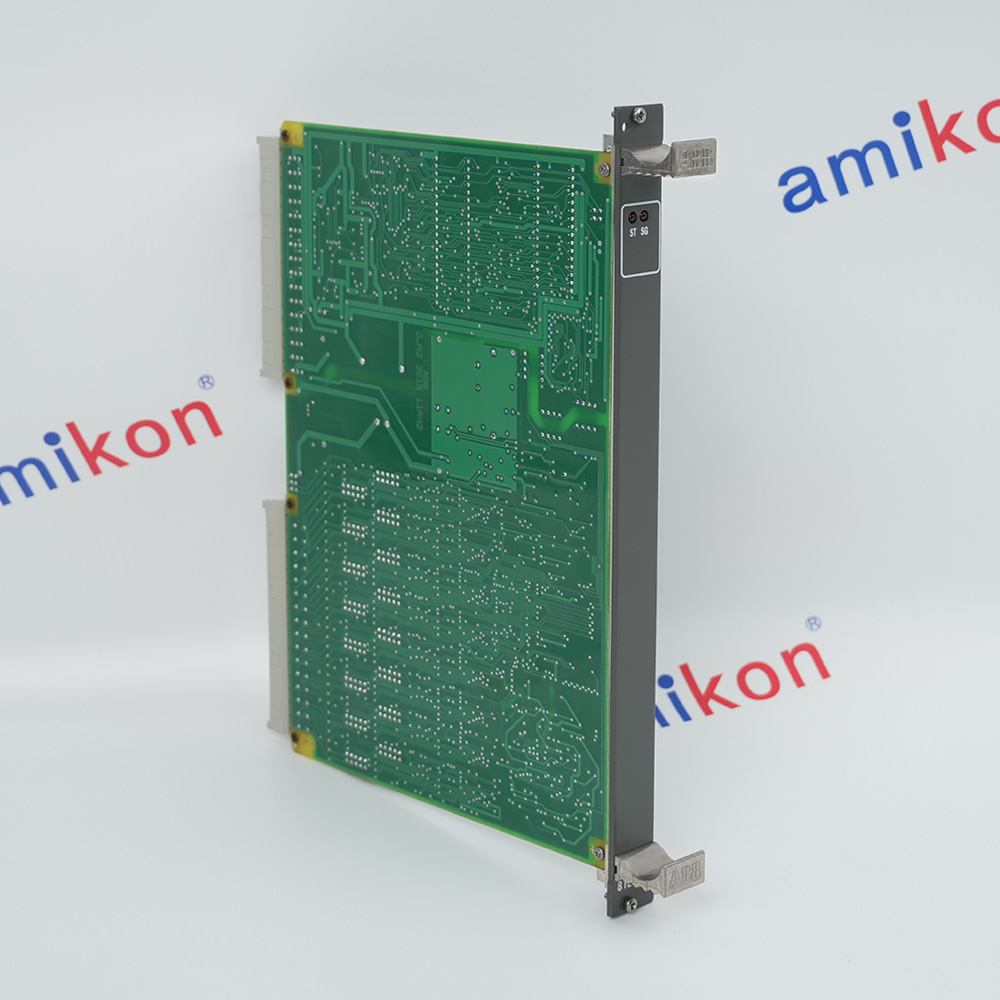 DIGITAL INPUT MODULEManufacturer: ABB
 -
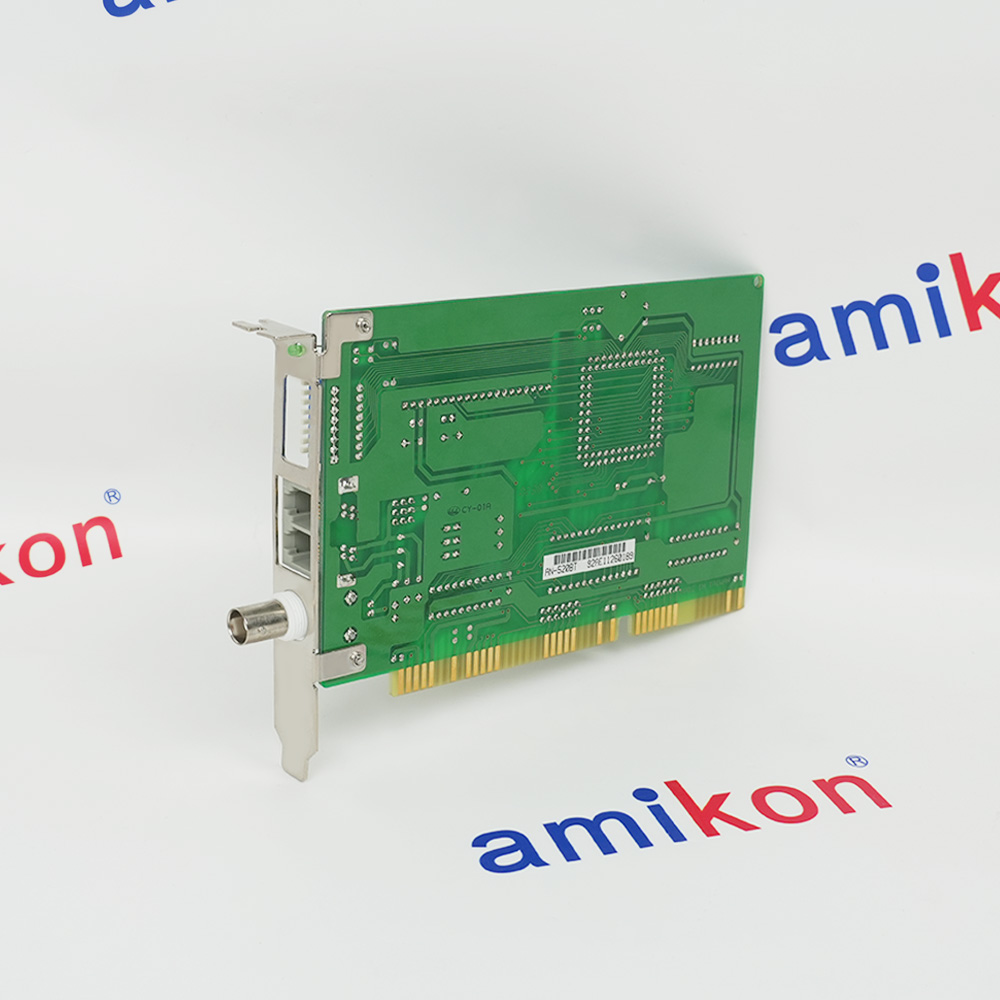 Communication cardManufacturer: Arcnet Danpex
 -
Analog Output ModuleManufacturer: ABB
-
Analog Output ModuleManufacturer: ABB
-
Digital I/O BoardManufacturer: General Electric
-
Circuit BoardManufacturer: Saiernico
-
module single boardManufacturer: KONTRON
-
Rev A I/O Interface BoardManufacturer: Hurco

Related articles Browse All
-
 amikong NewsSchneider Electric HMIGTO5310: A Powerful Touchscreen Panel for Industrial Automation2025-08-11 16:24:25Overview of the Schneider Electric HMIGTO5310 The Schneider Electric HMIGTO5310 is a high-performance Magelis GTO touchscreen panel designed for industrial automation and infrastructure applications. With a 10.4" TFT LCD display and 640 x 480 VGA resolution, this HMI delivers crisp, clear visu...
 -
 BlogImplementing Vision Systems for Industrial Robots: Enhancing Precision and Automation2025-08-12 11:26:54Industrial robots gain powerful new abilities through vision systems. These systems give robots the sense of sight, so they can understand and react to what is around them. So, robots can perform complex tasks with greater accuracy and flexibility. Automation in manufacturing reaches a new level of ...
 -
 BlogOptimizing PM Schedules Data-Driven Approaches to Preventative Maintenance2025-08-21 18:08:33Moving away from fixed maintenance schedules is a significant operational shift. Companies now use data to guide their maintenance efforts. This change leads to greater efficiency and equipment reliability. The goal is to perform the right task at the right time, based on real information, not just ...


- Q&A
- Policies How to order Part status information Shipping Method Return Policy Warranty Policy Payment Terms Email Marketing Policy VAT and Import Information
- Asset Recovery
- We Buy Your Equipment. Industry Cases Amikong News Technical Resources Why choose us
- Registered Address
-
32D Guomao Building, No.388, Hubin south Road, Siming district, Xiamen,Fujian, China

Leave Your Comment