
-
Please try to be as accurate as possible with your search.
-
We can quote you on 1000s of specialist parts, even if they are not listed on our website.
-
We can't find any results for “”.
Core Practices for ABB Drives from Proactive Maintenance to Troubleshooting


Reliable automation requires mastering component lifecycles and supply chains. Focused on ABB ACS architectures and the critical role of Insulated Gate Bipolar Transistors (IGBTs), effective strategies combine proactive thermal management with robust sourcing from specialized distributors like Amikong to mitigate obsolescence and guarantee operational continuity in US manufacturing sectors.
The Operational Ecosystem of Variable Frequency Drives
Industrial efficiency in the United States relies heavily on the precise control of electric motors. Variable Frequency Drives (VFDs) serve as the interface between the raw power of the electrical grid and the kinetic demands of machinery. Within the extensive portfolio of ABB, the ACS family—specifically the ACS580 and ACS880 series—represents a lineage of high-performance units designed for applications ranging from simple HVAC fans to complex, high-torque centrifuges. However, reliability in these systems is not inherent; it is a result of understanding the internal topology and the external networks supporting the hardware.
Organizations utilizing ABB drives must recognize these devices as sophisticated power computers rather than simple switches. The units rectify alternating current (AC) into direct current (DC), store that energy within a capacitor bank, and invert it back into a simulated AC waveform using high-speed switching. The component responsible for such rapid switching is the Insulated Gate Bipolar Transistor (IGBT). When an IGBT fails, the drive ceases function, and production halts. Therefore, a strategy integrating proactive maintenance with a reliable spare parts acquisition plan—leveraging specialized distributors like Amikong—becomes essential for operational continuity.
The Role of Independent Distributors in Supply Chain Resilience
In an era where global supply chains face constant disruption, the availability of specific components like the 3AXD50000009402 IGBT module can determine whether a facility remains operational or faces days of downtime. Original Equipment Manufacturers (OEMs) often focus on current product lines, leaving a gap in support for legacy or mature systems. Amikong has positioned itself as a critical node in such networks, providing access to discontinued and hard-to-find ABB automation parts.
Amikong's inventory includes not just whole drive units but the granular components necessary for board-level repair, such as the IGBT modules essential for the ACS880 and ACS580 series. While it is noted that Amikong is not an authorized distributor unless specified, the existence of such independent suppliers provides a crucial safety valve for industry. They allow maintenance managers to source specific "IGBT MODULE KIT SP" parts or "3AXD50000009402" units that might be on extended backorder through official channels.
The IGBT Module: Physics and Criticality
At the core of every ABB VFD lies the power switching stage. The IGBT module serves as the muscle of the drive, handling high currents and switching thousands of times per second to create the Pulse Width Modulation (PWM) output that drives the motor.
Technical Specifications and Capabilities
For the ACS series, specific modules such as the 3AXD50000009402 are engineered to handle substantial electrical loads. This specific module, an ED3 225A/1700V device, is designed for the ACS880-104 modules. The specifications reveal the immense stress these components endure:
| Parameter | Specification | Implication |
| Rated Current (IC) | 225 Amperes | Continuous load handling capacity. |
| Peak Current Rating | 675 Amperes | Capability to handle startup inrush currents. |
| Voltage Rating | 1700 Volts | Safety margin for 690V AC supplies. |
| Maximum Case Temperature | 100°C | Thermal ceiling before silicon degradation occurs. |
| Carrier Frequency | 1–5 kHz | Switching speed defining heat generation. |
Such parameters indicate the module must dissipate significant heat while managing currents that would instantly vaporize lesser components. The 1700V rating provides a necessary buffer for the DC bus voltages generated from 690V AC supplies, common in heavy industry.
The Physics of Switching and Thermal Stress
IGBTs operate by rapidly toggling between a conductive and non-conductive state. During the transition, the device passes through a linear region where resistance is neither zero nor infinite, resulting in switching losses manifested as heat. A carrier frequency of 5 kHz means the device undergoes such thermal cycling 5,000 times per second.
Proper thermal management is non-negotiable. The module mounts directly to a heatsink, often using a specialized thermal compound to facilitate heat transfer. If the heatsink becomes clogged with dust or if the cooling fans fail—a common occurrence with a typical lifespan of 50,000 hours—the IGBT junction temperature will rise. Once the temperature exceeds the 100°C limit, the silicon lattice can suffer permanent damage, leading to thermal runaway and catastrophic failure.
Sourcing and Verification Protocols
Given the critical nature of these components, sourcing genuine parts is paramount. The market contains counterfeit semiconductor devices that may look identical to the 3AXD50000009402 but lack the internal current-handling capacity. Counterfeits often fail explosively under load, damaging the gate drive board and potentially the motor.
Authenticating an IGBT involves rigorous checks. Genuine ABB parts, or those sourced from reputable distributors like Amikong, will have consistent labeling, correct tariff codes (8537101190), and high-quality packaging. Visual inspection should verify that the molding is sharp, the terminals are unblemished, and the baseplate is perfectly flat. Advanced verification might involve X-ray imaging to confirm the internal die size matches the manufacturer's specifications, though sourcing from a trusted vendor eliminates the need for such extreme measures.
Counterfeit Detection
Counterfeit modules often exhibit subtle flaws. Indicators include:
- Inconsistent Labeling: Fonts that are slightly off, or logos that appear blurred.
- Physical Dimensions: Slight deviations in the mounting hole spacing or terminal height.
- Electrical Characteristics: A high-voltage breakdown test often reveals that a counterfeit 1700V module may fail at 1000V or less.
- Pricing: If a deal appears too good to be true, skepticism is warranted. Sourcing from established entities like Amikong, which specializes in industrial spares, reduces the risk compared to anonymous marketplaces.
Proactive Maintenance Protocols
Maintenance of ABB drives extends beyond simple cleaning. A systematic approach to mitigating the effects of aging on chemical and mechanical components is necessary to maximize service life.
Capacitor Reforming: Mitigating Chemical Degradation
Electrolytic capacitors on the DC bus serve as the energy reservoir for the drive. These components rely on a liquid electrolyte and an aluminum oxide dielectric layer. When a drive sits in storage without power for extended periods, the oxide layer degrades. Applying full voltage to a drive with degraded capacitors can cause the electrolyte to boil, leading to a rupture.
ABB and industry standards dictate a strict "reforming" schedule for drives stored for more than one year. Reforming involves applying a limited current and gradually increasing voltage to rebuild the oxide layer chemically before full operation.
| Storage Duration | Action Required |
| < 1 Year | No reforming necessary. Normal startup permitted. |
| 1–2 Years | Apply power for a specific duration (e.g., 30 minutes) before enabling load. |
| > 2 Years | Active reforming required. Use a variable DC source to ramp voltage from 0% to 100% over several hours. |
| > 3 Years | Complex reforming involving stepped voltage increments (50%, 75%, 100%) for 30 minutes each. |
Facilities keeping spare drives on the shelf must track the manufacturing date. If a unit sourced from Amikong has been on a shelf, verifying its date code constitutes the first step in the installation process. Neglecting the reforming process guarantees early failure.
Cooling System Management
The longevity of the IGBT modules correlates directly to the efficiency of the cooling system. ABB recommends specific intervals for fan replacement, typically every 3 to 6 years depending on the drive series and environment.
- Fans: The main cooling fans are mechanical wear items. A seized fan leads to an immediate trip or, worse, thermal stress on the power electronics.
- Heatsinks: The heatsink must remain free of debris. In environments with high particulate matter, such as textile or paper mills, heatsinks can become clogged, insulating the IGBTs rather than cooling them. Compressed air, applied carefully to avoid damaging fans, is the primary cleaning method.
- Filters: Cabinet filters for NEMA 12 enclosures must be changed regularly to maintain airflow while blocking contaminants.
Environmental Hardening and NEMA Ratings
Selecting the correct enclosure rating prevents premature failure. A NEMA 1 enclosure offers basic protection against touch but little against dust or water. A NEMA 12 enclosure is essential for industrial environments to protect against settling dust and dripping non-corrosive liquids.
When sourcing replacements, understanding the environment helps in selecting the correct part numbers. A drive designed for a clean room (NEMA 1) will fail rapidly on a factory floor exposed to oil mist or conductive dust. The Amikong inventory often includes various enclosure types, allowing maintenance teams to match the replacement unit to the environmental severity.
Diagnostic and Troubleshooting Frameworks
When a fault occurs, rapid diagnosis minimizes downtime. ABB drives provide extensive diagnostic data, but interpreting that data requires knowledge and the right tools.
Utilizing Drive Composer
Drive Composer is the primary software interface for modern ABB drives (ACS580/880). The "Pro" version of the software offers capabilities that go far beyond simple parameter changes.
- Data Loggers: The drive can record high-resolution data prior to a fault. Analyzing the DC bus voltage, output current, and IGBT temperature milliseconds before a trip often reveals the root cause.
- Event Logs: The event log provides timestamps and sub-codes for faults, offering clues that a generic "Overcurrent" message on the keypad cannot.
- Support Packages: The software can generate a full support package file, which can be sent to ABB experts or analyzed offline to determine the state of every parameter at the moment of failure.
Common Fault Analysis
Troubleshooting often begins with the fault code displayed on the panel.
- Overcurrent (2310/2001):
- Cause: Often indicates a short circuit, excessive load, or a failed IGBT.
- Diagnosis: Disconnect the motor cables and attempt to run the drive in V/Hz mode. If the drive trips with no motor connected, the internal power stage (IGBT) is likely defective.
- Resolution: Test the IGBT modules using a multimeter.
- DC Bus Undervoltage:
- Cause: Input power loss or a failure in the pre-charge circuit.
- Resolution: Check input fuses and the rectifier bridge.
- Over-temperature:
- Cause: Blocked airflow or dead fans.
- Resolution: Inspect the heatsink and verify fan rotation.
The Multimeter Test for IGBTs
A standard multimeter offers a reliable way to assess the health of an IGBT module without removing it from the circuit board in many cases. The test utilizes the diode function of the meter.
- Rectifier Check: Measure from the input terminals (L1, L2, L3) to the DC+ and DC- bus terminals. A forward bias should show a voltage drop (typically 0.3V to 0.5V); reverse bias should show open.
- Inverter (IGBT) Check: Measure from the DC+ terminal to each output terminal (U, V, W), and from each output terminal to DC-.
- Healthy: A consistent voltage drop across all three phases (e.g., 0.4V) indicates the freewheeling diodes across the IGBTs are intact.
- Faulty: A short circuit (0V) or an open circuit in the forward direction indicates a blown module.
If a module reads as shorted, the drive requires immediate repair. Sourcing a replacement module like the 3AXD50000009402 from Amikong allows for a component-level repair, which is often significantly faster and cheaper than replacing the entire drive cabinet.
Parameter Optimization for Hardware Protection
Software settings play a crucial role in protecting the hardware. Incorrect parameters can induce mechanical stress and electrical spikes that shorten the life of the IGBTs and the motor.
Acceleration and Deceleration Ramps
The rate at which the drive commands the motor to change speed directly correlates to the current required.
- Acceleration: Setting the ramp time too short forces the drive to pump excessive current into the motor to overcome inertia. If the current exceeds the limit, the drive trips or the IGBTs overheat.
- Deceleration: Stopping a load too quickly converts the motor into a generator. Regenerative energy flows back into the drive, raising the DC bus voltage. If the voltage rises too high, the drive trips on "Overvoltage." Extending the deceleration time allows energy to dissipate naturally.
Motor Control Modes
ABB drives offer different control modes, such as Scalar (V/Hz) and Direct Torque Control (DTC). DTC provides superior control but requires accurate motor data. Entering the correct motor nameplate data—Voltage, Current, Speed, Power—guarantees the internal mathematical model matches the physical motor. A mismatch leads to poor performance and possible hardware damage due to incorrect current calculations.
Harmonic Mitigation and Cable Length
VFDs introduce harmonic distortion into the power grid. The rectification process draws current in non-linear pulses. While the ACS880 includes internal chokes to mitigate harmonics, external factors can still influence performance. High harmonic content causes overheating in transformers and interference with sensitive electronics. Monitoring the Total Harmonic Distortion (THD) at the drive input is a prudent measure.
Long motor cables act as capacitors. The high-speed switching of the IGBTs creates voltage reflections (standing waves) that can double the voltage at the motor terminals. Such spikes damage motor insulation and stress the IGBTs. The use of dV/dt filters or sine wave filters is recommended for installations with long cable runs to protect both the motor and the drive output stage.
Strategic Stocking and Supply Chain Resilience
The reliability of a facility depends on the availability of parts. Waiting for a factory order from the OEM can result in weeks of downtime.
Obsolescence Management
Many industrial facilities run on legacy hardware. The ACS800, for instance, is a workhorse drive that has been superseded by the ACS880. Replacing an ACS800 with an ACS880 requires new cabling, new programming, and potential mechanical modifications.
Amikong bridges the gap by stocking parts for legacy systems. Whether searching for a "Control CTI-Control Technology Inc part" or a specific "Siemens Robicon" component, the ability to source critical parts like the "3AXD50000009402" IGBT module allows maintenance teams to keep the line running while planning a methodical upgrade.
Inventory Tiers
An effective maintenance strategy involves keeping critical spares on-site.
- Tier 1: Consumables. Air filters, cooling fans, and control fuses.
- Tier 2: High-risk semiconductors. IGBT modules (e.g., 3AXD50000009402) and rectifier bridges.
- Tier 3: Control boards. The "brain" of the drive.
Having these parts on the shelf, or having a rapid-response partner like Amikong who can ship them immediately, transforms a potential catastrophe into a manageable maintenance task.
Advanced Troubleshooting Scenarios
Deep troubleshooting requires moving beyond the manual.
Intermittent Faults
Intermittent faults are the most challenging to diagnose. They often result from loose connections or thermal expansion.
- Vibration Analysis: Check for loose screws on the IGBT terminals.
- Thermal Imaging: Scan the drive cabinet while running. Hot spots on the terminal blocks indicate high resistance connections.
- Data Logging: Set the Drive Composer logger to trigger on a specific condition (e.g., current > 110%). The log will capture the waveform leading up to the event, revealing if the spike is noise or a real mechanical load.
Earth Faults
An earth fault indicates current leaking to the ground.
- Motor Insulation: Use a megohmmeter (Megger) to test the motor and cable insulation. Crucially, disconnect the VFD before Megger testing. The high voltage from the tester will destroy the IGBTs if applied to the drive output terminals.
- Internal Shorts: If the motor tests good, the fault may be inside the drive, possibly due to conductive dust bridging the gap between the power bus and the chassis.
The End
Operational excellence with ABB drives necessitates a holistic approach combining physical maintenance, software optimization, and supply chain strategy. Through rigorous component testing, adherence to capacitor reforming schedules, and partnerships with specialized suppliers like Amikong for critical parts like IGBTs, facilities maximize uptime. The transition from reactive troubleshooting to proactive asset management defines the modern standard for industrial reliability.
Keep your system in play!
Top Media Coverage
Categories
Related Products
-
 Operating PanelManufacturer: ABB
 -
Main Control BoardManufacturer: ABB
-
Transmitter ControllerManufacturer: ABB
-
GCOM Communication InterfaceManufacturer: ABB
-
Relay Control moduleManufacturer: ABB
-
ACS880 AC Drive- 500V, 3PH, wall mount, regenerativeManufacturer: ABB
-
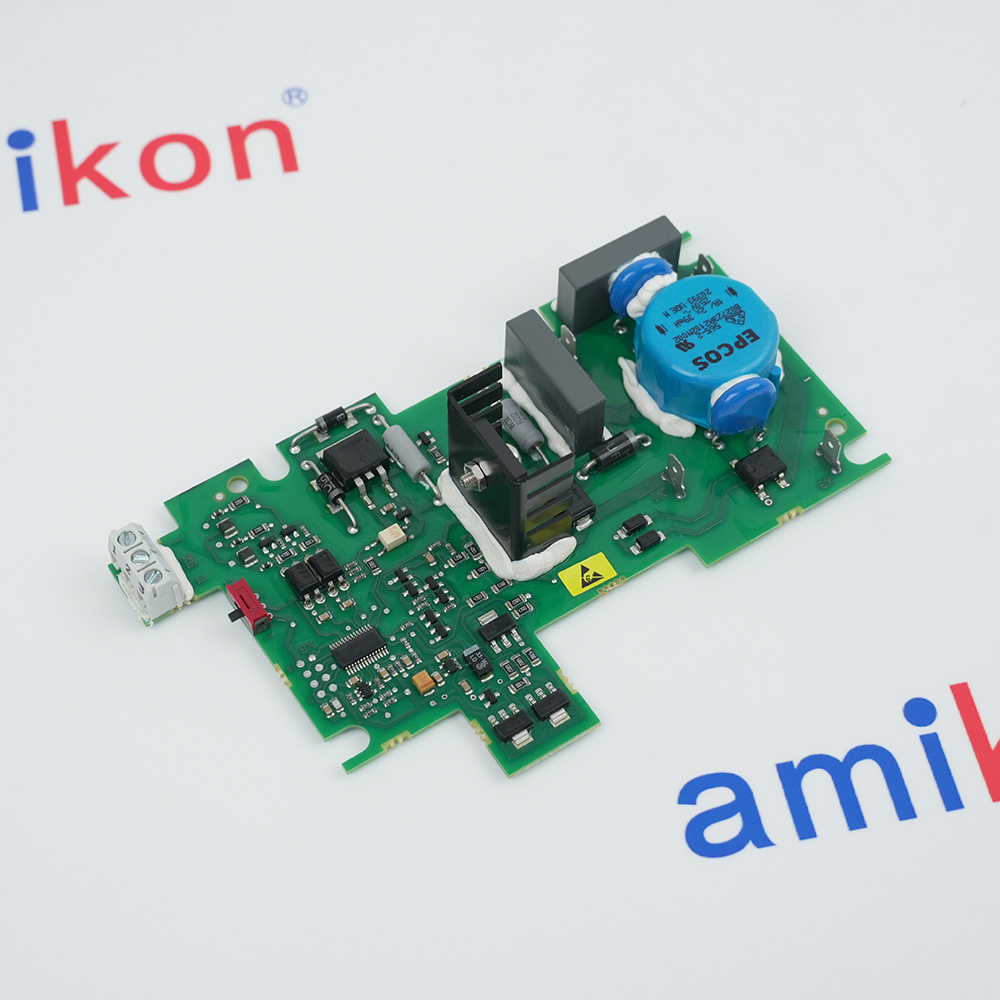 industrial control boardIn StockManufacturer: ABB
 -
 Touch screenManufacturer: ABB
 -
Terminal baseManufacturer: ABB
-
Industrial Control ModuleManufacturer: ABB

Related articles Browse All
-
 BlogImplementing Vision Systems for Industrial Robots: Enhancing Precision and Automation2025-08-12 11:26:54Industrial robots gain powerful new abilities through vision systems. These systems give robots the sense of sight, so they can understand and react to what is around them. So, robots can perform complex tasks with greater accuracy and flexibility. Automation in manufacturing reaches a new level of ...
 -
 BlogOptimizing PM Schedules Data-Driven Approaches to Preventative Maintenance2025-08-21 18:08:33Moving away from fixed maintenance schedules is a significant operational shift. Companies now use data to guide their maintenance efforts. This change leads to greater efficiency and equipment reliability. The goal is to perform the right task at the right time, based on real information, not just ...
 -
 BlogThe Evolution of Steam Turbine Control Systems2026-03-31 08:33:35CALL US:+86-18020776786 | E-MAIL:INFO@AMIKON.CN In-depth analysis of the GE Mark VIe control system Mark VIe: A Modern Mainstay for Industry 4.0 Mark VIe's core concepts are "high availability, open connectivity, and intelligent readiness." It utilizes comm...


- Q&A
- Policies How to order Part status information Shipping Method Return Policy Warranty Policy Payment Terms Email Marketing Policy VAT and Import Information
- Asset Recovery
- We Buy Your Equipment. Industry Cases Amikong News Technical Resources Why choose us FAQs
- Registered Address
-
32D Guomao Building, No.388, Hubin south Road, Siming district, Xiamen,Fujian, China

Leave Your Comment