
-
Please try to be as accurate as possible with your search.
-
We can quote you on 1000s of specialist parts, even if they are not listed on our website.
-
We can't find any results for “”.
Allen Bradley 1794-IE8 Flex I/O Stock Availability: Where to Buy and How to Get It Delivered On Time


As someone who has lived through more than a few last-minute I/O shortages on commissioning weekends, the Allen‑Bradley 1794‑IE8 FLEX I/O analog input module is exactly the kind of part you want under control in your supply plan. It is widely used, technically straightforward, and deceptively easy to overlook until a line expansion or a failure suddenly demands a replacement right now.
This article walks through what the 1794‑IE8 actually is, which channels you can realistically buy it through, what the current market looks like based on recent distributor and marketplace data, and how to manage delivery risk so your project is not waiting on a small gray block of plastic and silicon.
What the 1794‑IE8 FLEX I/O Analog Input Module Does
The 1794‑IE8 is an eight‑channel analog input module in Rockwell Automation’s Allen‑Bradley FLEX I/O family. FLEX I/O is a modular, distributed I/O system designed to sit near field devices on DIN rail and talk back to a controller over a network adapter, instead of forcing every signal all the way back to a central rack.
According to distributor summaries based on Rockwell Automation datasheets, the 1794‑IE8 provides eight single‑ended, non‑isolated analog input channels. Each channel is user‑configurable for common process signal ranges including 0–20 mA, 4–20 mA, ±10 V DC, and 0–10 V DC. That makes it suitable for the usual mix of transmitters, drives, positioners, and indicators you see in process and factory automation.
Internally, the module uses a successive‑approximation A/D converter with data formatted as left‑justified 16‑bit two’s complement. In unipolar mode, it offers 12‑bit resolution, and in bipolar mode 11 bits plus sign. The published accuracy is on the order of 0.20% of full scale at about 77 °F, with small temperature drift per degree. Conversion time is roughly a few hundred microseconds per channel, with step response into the 9–18 millisecond range, which is adequate for most slow to medium‑speed process loops.
The 1794‑IE8 runs from an external 24 V DC supply (within about a 10.5–31.2 V DC window) and draws around 60 mA, with maximum power dissipation of approximately 3 W and thermal dissipation around 10 BTU per hour. It shares the FLEX I/O backplane with one terminal base such as the 1794‑TB2 or 1794‑TB3 family and then into a communication adapter. Environmentally, the standard module is rated for operation from roughly 32 to 131 °F, with vibration up to about 5 g and shock ratings in the tens of g’s. The Reynolds Company specifically notes that the 1794‑IE8 is not an “extreme temperature” module, which aligns with the standard indoor or panel‑mounted use case.
If you need extended temperature or harsher environmental capability, Rockwell also offers an 1794‑IE8XT variant in the same family. Quick Time Engineering highlights that the “XT” suffix indicates extended‑temperature or harsh‑environment capability, though the exact limits still need confirmation against official documentation.
From a systems integrator’s perspective, the 1794‑IE8 is a sensible choice when you need eight general‑purpose analog inputs in a FLEX I/O bank and you want to keep the wiring local to the process area rather than pulling every loop back to a central PLC rack.
Why Availability and Lead Time Matter for the 1794‑IE8
Because FLEX I/O is a distributed platform, a single adapter is typically limited to around eight I/O modules per segment. That means every bank of FLEX I/O has only a handful of modules, and a missing 1794‑IE8 can block a whole adapter’s worth of channels.
In real projects, these modules are often touched during late design changes: adding an extra flow meter, instrumenting a bypass, or retrofitting a skid.

By that point the panel layout is frozen, the adapter type is fixed, and you no longer have the option to swap architectures. You need a compatible 1794‑IE8 and the right terminal base, and you need them before the electricians and commissioning team arrive.
Stock availability becomes critical whenever any of the following apply: you are standardizing on FLEX I/O across multiple machines; you are expanding an existing FLEX I/O installation and must match catalog numbers and revisions; or you are supporting running facilities where downtime for a single analog input module is unacceptable. In those cases, relying on a single source with unknown lead time is an unnecessary risk.
The good news is that, as of late 2025, there are multiple active channels where the 1794‑IE8 is being sold: Rockwell Automation’s authorized distribution network, independent distributors and surplus specialists, industrial e‑commerce catalogs, and secondary marketplaces. Each comes with its own tradeoffs in price, lead time, and risk.
Rockwell Automation Authorized Distributors
Rockwell Automation maintains a network of authorized distributors for factory‑new Allen‑Bradley hardware. Their “Authorized Distributors” site exists specifically to help you find those partners regionally. While the captured content of that page focuses on the behavior and data use of Rockwell’s AI‑driven navigation tool, the presence of an authorized network is clear from the page title and structure.
In practice, if you want the most straightforward path to factory‑new 1794‑IE8 modules, this network is where you start. The advantages are predictability of warranty, consistent revision control, and confidence that what you are buying matches current Rockwell specifications and safety certifications. For high‑risk applications and regulated industries, I treat authorized distribution as the default path unless there is a compelling reason otherwise.
The tradeoff is usually lead time and price. Authorized channels may allocate stock based on existing contracts and large OEM consumption, and list prices are typically higher than surplus or marketplace offers. However, they are also your best route for accurate information on successor part numbers, lifecycle status, and any official guidance regarding alternate modules such as 1794‑IE8XT or higher‑density analog cards like the 1794‑IE12.
When I am planning a greenfield project or a major retrofit with long design horizons, I start by checking availability and delivery dates through an authorized distributor and treat anything else as a secondary or emergency path.
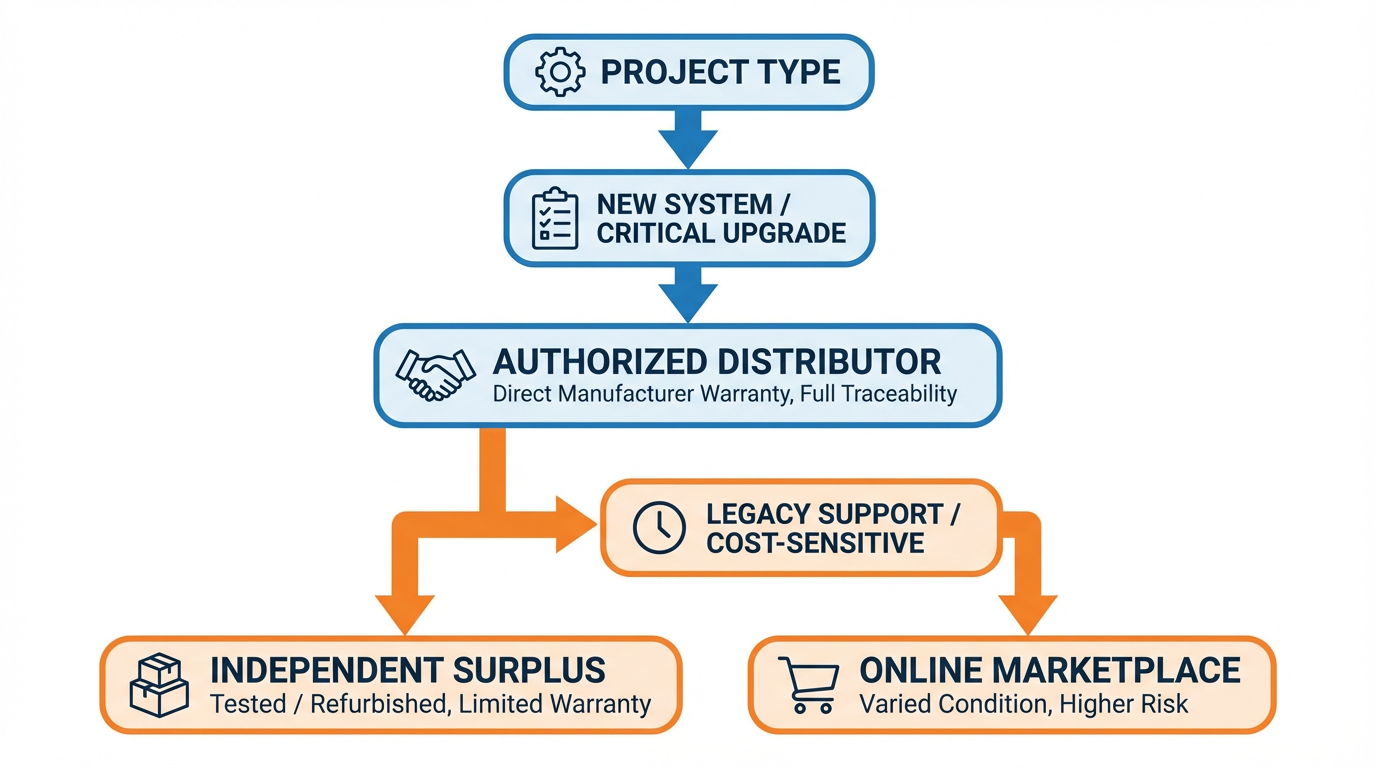
Independent and Surplus Distributors
Outside of the authorized network, there is a robust ecosystem of independent distributors and surplus specialists dealing in Allen‑Bradley FLEX I/O. These companies play a key role when authorized lead times are long, budgets are tight, or you are supporting legacy systems.
Industrial Automation Co, for example, lists the Allen‑Bradley 1794‑IE8 as a high‑density FLEX I/O analog input module and clearly calls out that they are a non‑authorized Rockwell distributor. They highlight the eight single‑ended channels, supported signal ranges, environmental ratings from 32 to 131 °F, vibration tolerance up to 5 g, and the fact that the unit is DIN‑rail mounted. Importantly, they back their offer with a two‑year warranty, which is significantly more generous than many marketplace sellers.
MROSupply similarly presents the 1794‑IE8 as an eight‑channel analog input module within the FLEX I/O family, powered at 24 V DC and pulling around 60 mA. Their catalog emphasizes the flexibility of the FLEX I/O platform, pointing out that modules in the family cover digital, analog, HART analog, and specialty I/O. That broader catalog context is useful when you are trying to rationalize spares or build a standard FLEX I/O design.
PDFSupply provides a more system‑level view of the FLEX I/O line, listing the 1794‑IE8 alongside related modules like 1794‑IE8XT, 1794‑IE12, and analog input or combination modules. They also document FLEX I/O communication adapters for ControlNet, DeviceNet, EtherNet/IP, PROFIBUS, and Remote I/O, many of which support up to eight FLEX I/O modules per adapter. That backplane limit is not just a design consideration; it also affects how many 1794‑IE8 spares you should carry per adapter or per line.
These independent distributors usually carry a mix of product conditions: factory new, surplus new, refurbished, and sometimes repair services. Classic Automation’s 1794‑IE8 page is a good example. They define categories such as Used/Refurbished, New Without Package, New In Opened Package, New In Sealed Package, New in Original Package, and Factory New, and also offer repair service for customer‑owned modules. They caution that surplus parts may not include all factory accessories and might not be the latest revision or date code. As an integrator, that is the fine print you ignore at your own risk.
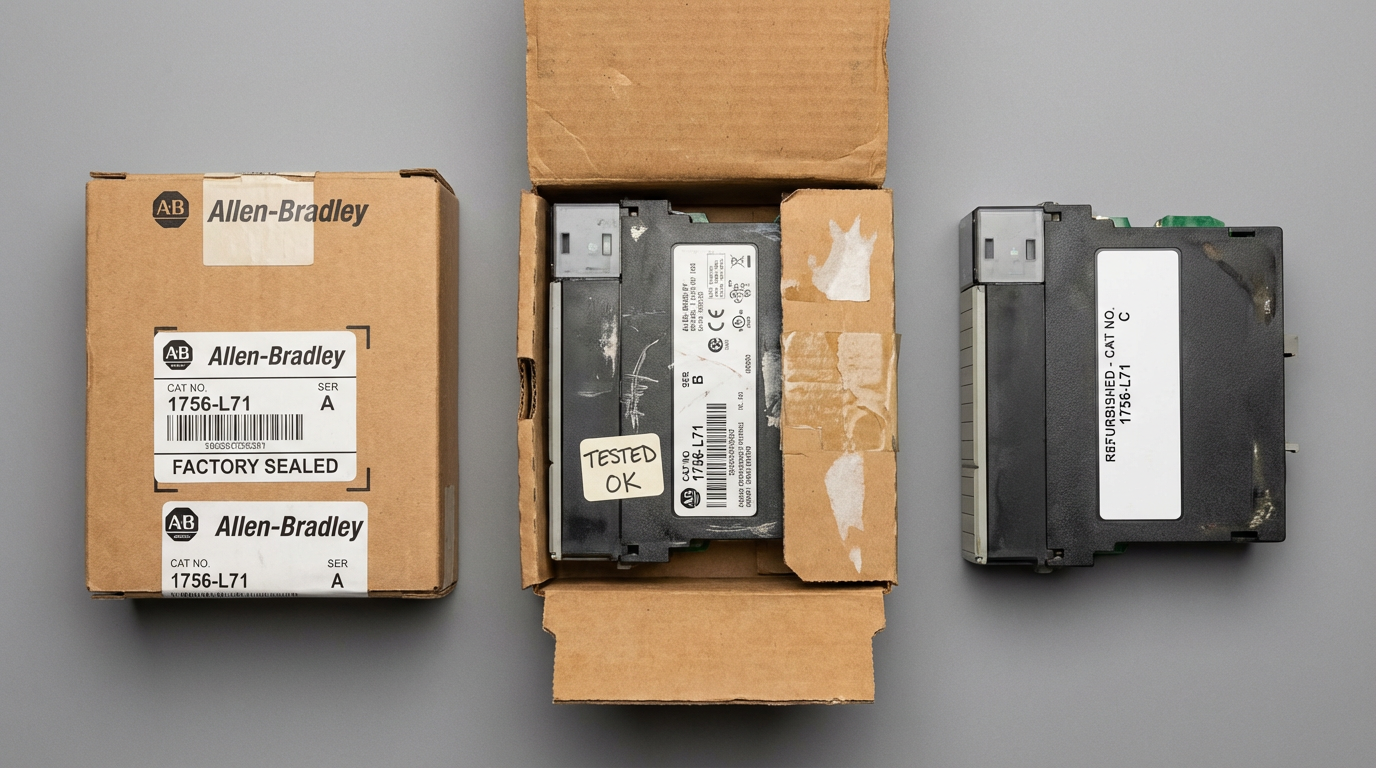
The main advantage of these channels is availability and cost. They often stock hardware that has gone tight in authorized channels and can offer meaningful savings. The downsides are possible variation in revision level, packaging condition, and accessories. That is manageable if you know what you are buying, which is why I insist on detailed condition and revision information before I sign off on a purchase order.
Condition Categories in Plain Language
Classic Automation’s condition labels are representative of how many surplus distributors describe FLEX I/O hardware. Interpreting them correctly is important when you are trying to weigh cost against risk. The following table summarizes how these labels are explained and what they mean in practice.
| Condition label | Seller’s description | Practical implication for a project partner |
|---|---|---|
| Used/Refurbished | Previously used modules that have been cleaned and refurbished, fully functional but may show minor cosmetic or superficial flaws. | Good when budget is tight and cosmetics do not matter; verify test and warranty terms. |
| New Without Package | New, unused modules where the original manufacturer packaging is no longer available. | Electrically new, but packaging loss may concern strict QA or resale requirements. |
| New In Opened Package | New, unused modules with opened or significantly aged packaging. | Acceptable for most control panels; document for clients who care about packaging. |
| New In Sealed Package | New modules with original manufacturer seal intact. | Best choice when you want maximal assurance and clean traceability. |
| New in Original Package | New modules in original packaging that was never sealed. | Similar to new in opened package, but consistent with how the vendor ships the part. |
| Factory New | New, current items procured from the manufacturer. | Closest to buying from an authorized channel, often at a surplus‑market price. |
Classic Automation also offers a defined Repair Service, where they repair your existing module for a stated price and turnaround time. That is often a useful path when a client insists on keeping original hardware in service or when stock is scarce but repair skills are still available.
Industrial E‑commerce Collections and Enquiry‑Based Sellers
A growing number of industrial e‑commerce sites treat automation hardware almost like off‑the‑shelf consumer products: search, click, pay, ship. For the 1794‑IE8, Simply Buy Industrial is one example.
Their 1794 FLEX I/O collection includes the 1794‑IE8, described as an “Allen Bradley Analog Input Module FlexLogix,” and in the captured snapshot the module is explicitly marked as in stock, with a fulfillment lead time of roughly three to five days from order to shipment. No technical specs or pricing are detailed in the snippet, but even that simple combination of in‑stock status and a short fulfillment window is often enough to solve an urgent field problem, provided the technical fit is already known.
Other sellers, such as Horizon Performance Technologies, use an enquiry‑driven model rather than a shopping cart. Their 1794‑IE8 page is structured around an “Enquire Now” call to action and a questionnaire asking about application details, quantities, and context. They state that they reply via email within about 24 to 48 hours after an enquiry. From an engineering perspective, this kind of seller is useful when you need guidance on compatible terminal bases, potential successor part numbers, or documentation, not just a box shipped to your dock.
The tradeoff between a simple e‑commerce listing and an enquiry process comes down to how mature your design is. When I already know exactly what I need, a straight “add to cart” site with clear stock and lead time is ideal. When I am dealing with brownfield upgrades or uncertain part substitutions, an enquiry‑based seller that will actually read my questionnaire and respond with recommendations can save a lot of time and risk.
Online Marketplaces and Auctions
Secondary marketplaces like eBay are another source for the 1794‑IE8, and they are increasingly part of the conversation when clients go looking for quick, inexpensive replacements.
Recent marketplace listings show the type of variation you can expect. One “US STOCK” listing for a 1794‑IE8 ended at a price point of around $251.00 for a single module, with no explicit condition or accessory details visible in the snippet. Another ended listing for a factory‑sealed 1794‑IE8 Series B module sold at about $419.00. A separate listing advertised a new 1794‑IE8 (also referred to as 1794‑1E8) with a one‑year warranty, sold out of Guangdong, China, while noting that the seller did not ship to Hong Kong. In yet another case, an eBay seller of a 1794‑IE8 was temporarily away until November 30, 2025, meaning that orders could be delayed until after the seller’s return.
These data points tell you two useful things.
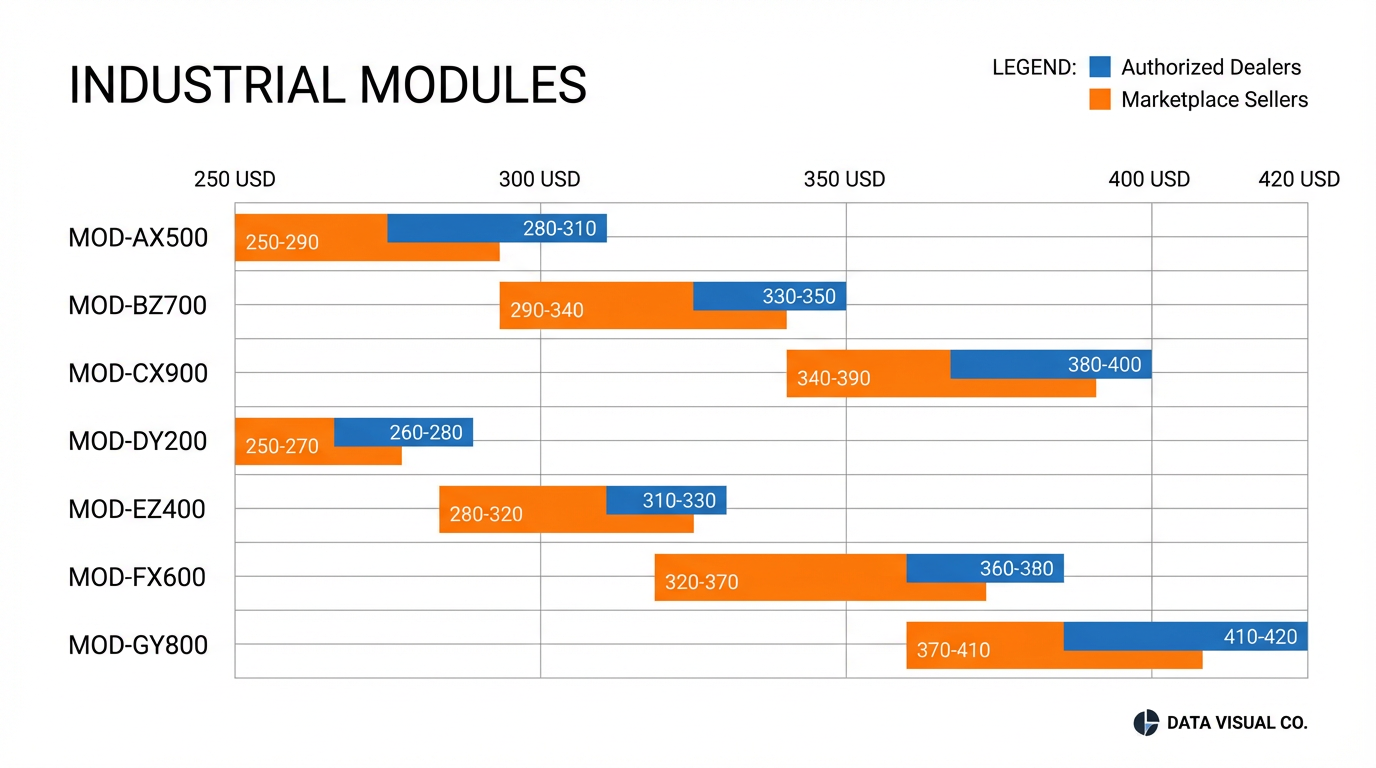
First, the price band for single 1794‑IE8 modules on the secondary market is broad, and in some cases overlaps or even exceeds what you will pay to a surplus distributor once you add shipping and import costs. Second, the availability and shipping commitment are very specific to each seller, and can change at short notice.
The upside of marketplace sourcing is that you may locate single units, odd revisions, or small quantities long after a module has gone tight in traditional channels. The downside is verification. Listing snippets do not always specify whether a module is new, used, or refurbished, what accessories are included, or whether the part is genuine. Due diligence on seller reputation, return policies, and warranty coverage becomes non‑negotiable.
In my role as a project partner, I typically treat marketplace purchases as last‑resort or non‑critical‑service sources. For spares or low‑risk ancillary circuits, they can be acceptable. For safety‑related or high‑consequence loops, I favor authorized or well‑established surplus distributors that provide formal warranty and documentation.
Delivery Options, Lead Times, and What to Ask
Stock status without realistic delivery information is only half the story. Even when a 1794‑IE8 is shown as “in stock,” it pays to understand exactly how and when it will arrive.
Simply Buy Industrial’s indication of a three‑to‑five‑day fulfillment window from order to shipment is fairly typical for in‑stock items at regional industrial e‑commerce sites. That fulfillment window is not the same as total time to your dock, which will also depend on chosen shipping method and distance. On enquiry‑based sites like Horizon Performance Technologies, you have an additional 24‑ to 48‑hour window just to receive a response with pricing, availability, and shipping options.
Marketplace sellers add even more variability, as the example of the seller being “temporarily away” until a specific date illustrates. A listing may be technically active, but effectively unavailable for immediate shipment.
For critical modules like the 1794‑IE8, I recommend asking every supplier the same set of practical questions before you commit: whether the unit is physically on the shelf or at a remote location; what the expected ship date is if you place the order today; what shipping services they offer and how that translates into calendar days for your site; and whether they can provide a tracking number and support in case of customs or carrier issues, especially for cross‑border moves.
In commissioning windows, I also like to know whether the distributor offers expedited shipping for emergencies and whether they can provide a back‑order date in writing if stock is exhausted. General statements like “ships soon” are not sufficient when crews and cranes are scheduled.
Technical Fit Checks Before You Place the Order
Availability only helps if the module you receive works as intended in your system. For the 1794‑IE8, there are several technical checks I always make before signing off on procurement.
First, I confirm the signal types and ranges against the field instruments. The 1794‑IE8 supports 0–20 mA and 4–20 mA current input, as well as 0–10 V and ±10 V voltage input. If a loop uses an unusual range, or if there is any ambiguity in scaling requirements, I verify with the Rockwell Automation documentation or distributor datasheets that the module can be configured appropriately.
Second, I review the environmental conditions. The standard 1794‑IE8 is rated from around 32 to 131 °F, and The Reynolds Company explicitly flags that it is not an extreme‑temperature unit. If the module will sit in a hot enclosure, on outdoor equipment, or in a freezer area, I consider whether the extended‑temperature 1794‑IE8XT variant is more appropriate and confirm its limits in the manufacturer datasheet.
Third, I check terminal base and adapter compatibility. Both Industrial Automation Co and DoSupply highlight that the 1794‑IE8 must be mounted on a compatible FLEX I/O terminal base such as the 1794‑TB2 or 1794‑TB3 family. PDFSupply notes that FLEX I/O network adapters support a finite number of modules per adapter, typically around eight. In practice, I ensure that the total mix of FLEX I/O modules, including any 1794‑IE8 additions, stays within both the adapter’s module count and its backplane current limit.
Fourth, I look at precision requirements. The 1794‑IE8 delivers 12‑bit resolution in unipolar mode and 11 bits plus sign in bipolar mode, with stated absolute accuracy around 0.20% of full scale at room temperature. For many applications, that is more than adequate. For very tight metering or batching duties, I confirm whether that performance is acceptable or whether a higher‑resolution or isolated analog input module elsewhere in the FLEX I/O catalog would be a better choice.
Finally, I align revisions and firmware expectations with what is already installed. Classic Automation correctly notes that surplus parts might not be the most recent version, revision, or date code available. When you mix revisions in a system, you need to understand whether Rockwell’s release notes impose any constraints, especially around safety, diagnostics, or configuration tools.
Pricing, Risk, and Where Each Channel Fits
From the data points available, we can see that marketplace prices for single 1794‑IE8 modules have recently spanned at least from roughly $251.00 for an unspecified “US STOCK” unit to about $419.00 for a factory‑sealed Series B module. Independent distributors such as Industrial Automation Co and MROSupply do not show specific prices in the captured snippets, but they position themselves as cost‑effective alternatives with structured warranties, sometimes longer than one year. Marketplace sellers may offer a one‑year warranty as well, as in the eBay listing from Guangdong, China.
In my own practice, I mentally map the channels this way. Authorized distributors are my first choice for new projects, high‑integrity loops, and when clients expect everything to come via official Rockwell partners. Independent distributors and surplus specialists fill the gap when budget pressure is real or when I need legacy revisions that are not readily available through authorized channels. Marketplace purchases are reserved for non‑critical points, one‑off lab rigs, or emergency stop‑gaps while we wait for a more robust supply path to deliver.
The important point is that all of these channels can be valid, but they are not interchangeable.

You balance price, risk, lead time, and traceability according to the specific role that 1794‑IE8 is going to play in your system.
Practical Supply Strategies from the Field
Over the years, a few pragmatic habits have helped keep FLEX I/O modules, including the 1794‑IE8, from becoming the bottleneck on my projects.
One habit is to treat FLEX I/O modules as standard consumables in your spares strategy rather than bespoke items that are ordered only when something fails. Once a design standardizes on 1794‑IE8 for generic analog input, I typically recommend that the end user holds at least one spare per plant, and more if multiple lines share the same architecture. The relatively small cost of carrying a spare is usually trivial compared to a lost production shift while waiting for shipping.
Another habit is to verify availability and lead times early, not just for the modules themselves but also for terminal bases and adapters. It does no good to have six 1794‑IE8 modules in hand if you lack 1794‑TB3 bases, or if the EtherNet/IP adapter that feeds the bank is on a long lead time. The PDFSupply family overview is a useful reminder that these pieces all live in the same ecosystem and share power and module‑count limits.
A third habit is documenting exactly what was purchased, including condition and revision. When a Classic Automation or similar surplus order arrives, I make sure the as‑received condition matches the purchase order and that any missing accessories are logged. That documentation pays off later when someone asks why a module looks cosmetically different or why a particular channel is wired differently.
Finally, I advise clients to keep an eye on the extended‑temperature and specialty variants in the FLEX I/O line, such as the 1794‑IE8XT and the HART‑capable analog modules described in the PDFSupply catalog. Even if you do not need them now, being aware of their existence helps when a future project demands harsher environments or smart‑instrument integration. At that point, your stock strategy for standard 1794‑IE8 modules can be mirrored or adjusted accordingly.
FAQ: Common Questions About Sourcing the 1794‑IE8
Is it safe to buy a 1794‑IE8 from a non‑authorized distributor?
It can be, provided you understand the tradeoffs. Industrial Automation Co explicitly identifies itself as a non‑authorized Rockwell distributor but still offers a two‑year warranty on the 1794‑IE8. Classic Automation and similar firms detail condition categories, warn about possible missing accessories, and acknowledge that surplus parts may not be the latest revision. Those disclosures, plus a formal warranty, are the kind of signals I look for when considering non‑authorized sources. For safety‑critical loops, I still prefer to use authorized or factory‑new channels where possible.
How do I check whether a seller really has the 1794‑IE8 in stock?
The only reliable way is to ask directly and get a specific ship date. A simple “in stock” tag on a website or marketplace listing is not enough. For enquiry‑based sites like Horizon Performance Technologies, their promise to respond within 24 to 48 hours gives you a timeline for confirmation. For e‑commerce sites and marketplaces, I ask for written confirmation that the unit is physically in their warehouse and ready to ship, not just available through a third party. If a seller is temporarily away or vague about timelines, I move on.
When should I consider the 1794‑IE8XT instead of the standard 1794‑IE8?
Whenever your expected ambient temperature or environmental conditions creep toward or beyond the standard 32 to 131 °F range, you should at least evaluate the 1794‑IE8XT. Quick Time Engineering notes that the “XT” suffix signals extended‑temperature or harsh‑environment capability, but you still need to confirm the exact ratings against Rockwell Automation’s documentation. A simple rule of thumb is that if you would be uncomfortable standing next to the panel all day in normal work clothing, you should check whether standard‑temperature modules are truly appropriate.
Is a used or refurbished 1794‑IE8 acceptable for production use?
Used or refurbished modules, as described by Classic Automation, are cleaned and tested but may show cosmetic wear. For non‑safety‑critical applications, I have used refurbished 1794‑IE8 modules successfully, particularly when budgets were tight or when the plant already had mixed generations of FLEX I/O installed. The keys are to confirm warranty terms, understand that revisions may be older, and accept that factory packaging and accessories may not be included. For brand‑new installations with strict corporate standards, I lean toward new in sealed package or factory new instead.
Closing
Keeping Allen‑Bradley 1794‑IE8 FLEX I/O modules available is less about chasing the cheapest listing and more about matching the right buying channel, condition, and delivery promise to the role the module will play in your system. If you treat these modules as strategic components, validate stock and lead times early, and choose your suppliers with the same discipline you apply to your control design, the 1794‑IE8 will be the quietest part of your project instead of the reason you are still on site Sunday night.
References
- https://www.classicautomation.com/1794-ie8?srsltid=AfmBOoq2mgoOeovAJsTHNrBBskukvb_c1bCr8PJCWjAAzGcRsnPkvhl6
- https://www.quicktimeonline.com/1794-ie8xt-allen-bradley-analog-input-module
- https://relianzgoods.com/IE8-Allen-Bradley-Flex-8-Point-Analog-Input-Module-f-942788
- https://www.ebay.com/itm/297769893117
- https://industrialautomationco.com/products/allen-bradley-1794-ie8?srsltid=AfmBOorr6Y9Fq2in_41fD-VOeB2PcWhEYKupLM3OSvU5H87s5Qyk_yap
- https://www.plchardware.com/Products/RA-1794-IE8-B-UPP.aspx?srsltid=AfmBOoouz9TlFX2QvZ3pdzJixrznXGAKhUcf3ioIydHVXa740wsvjD77
- https://www.reynoldsonline.com/Product/allen-bradley-1794-ie8
- https://simplybuyindustrial.com/collections/1794-flex-i-o
- https://www.artisantg.com/TestMeasurement/75176-24/Rockwell-Allen-Bradley-1794-IE8-FLEX-I-O-24VDC-Selectable-Analog-8-Input-Module?srsltid=AfmBOopg6IPnWblpPedALGCzh6VTryKxJD9K4Tb3kS5VqoXw_buysNsh
- https://horizonpfm.com/allen-bradley-1794-ie8-flex-i-o-analog-input-module/1794-ie8/?srsltid=AfmBOorITiPwZh_i_a1Ln1BF1C5yHlNxq_5cAqkhcK2wdWxD3-0nrewt
Keep your system in play!
Top Media Coverage
Categories
Related Products
-
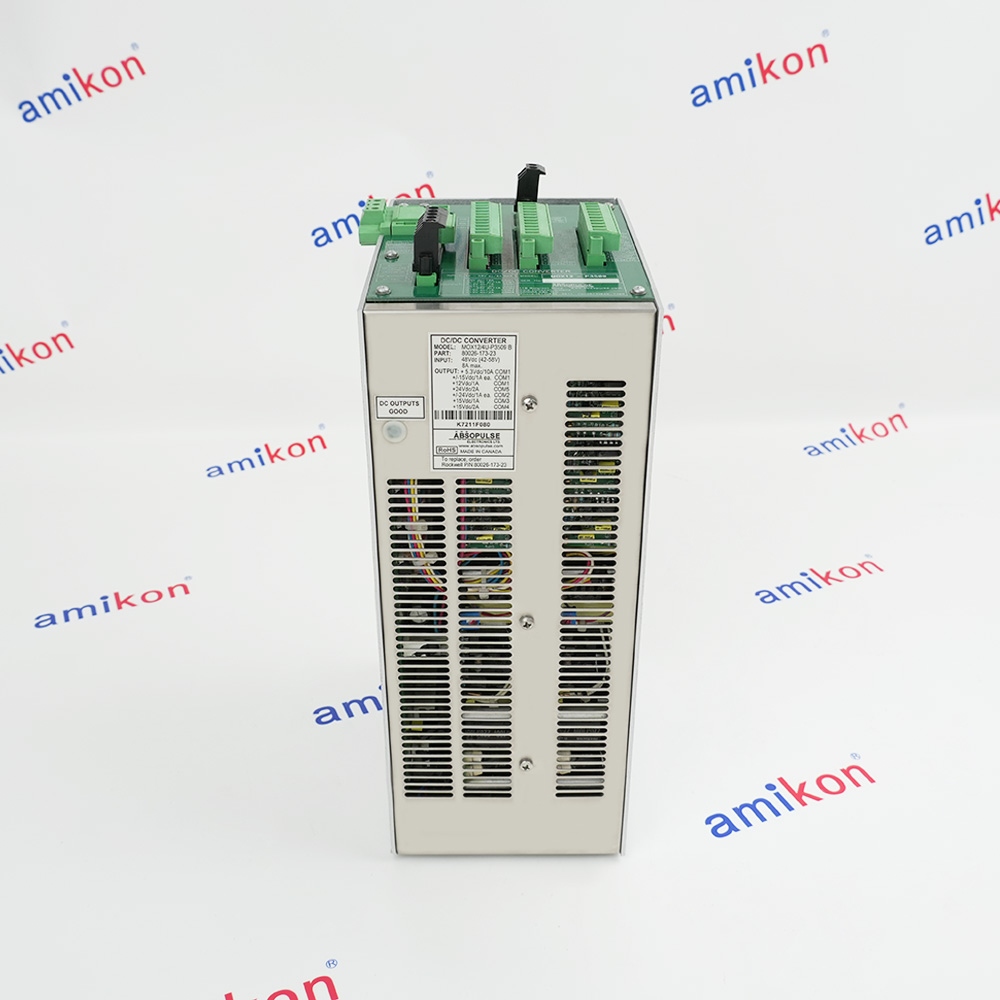 DC/DC POWER SUPPLYManufacturer: Allen-Bradley
 -
 INTEGRATED AXIS MODULEManufacturer: Allen-Bradley
 -
INTEGRATED AXIS MODULEManufacturer: Allen-Bradley
-
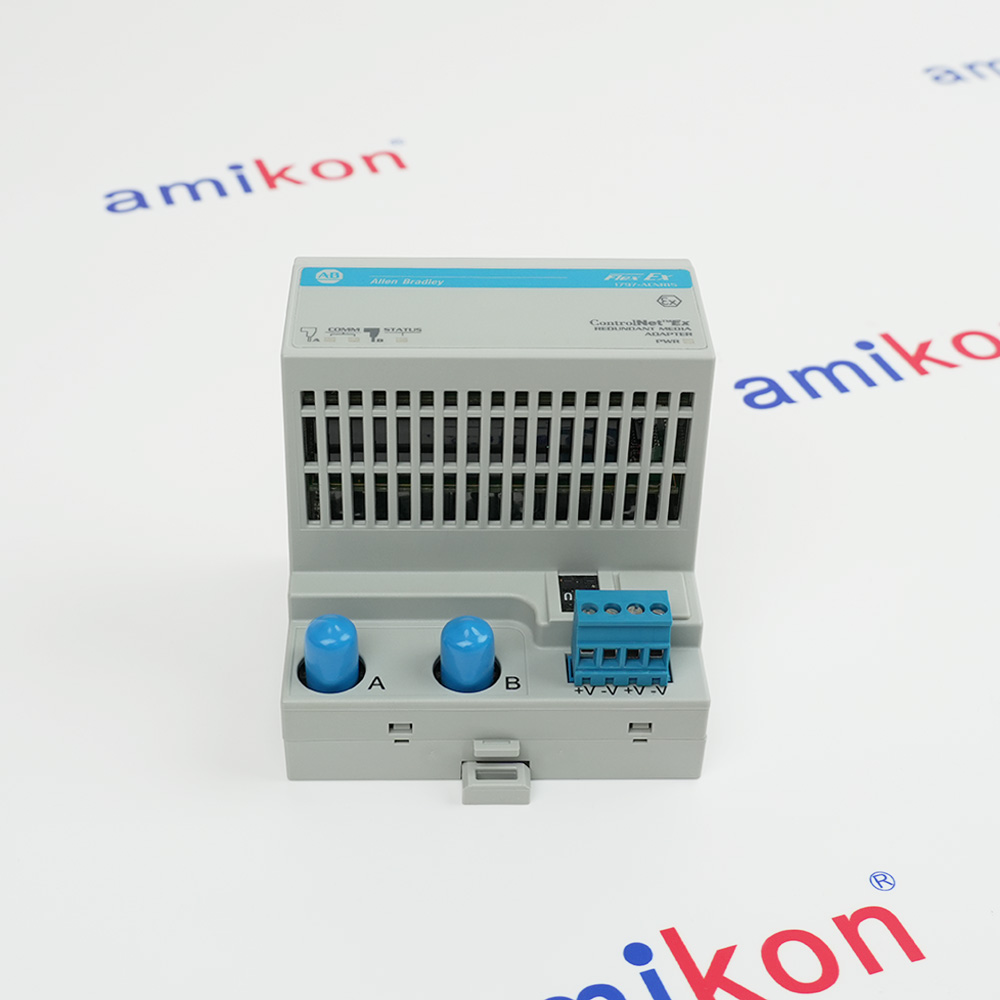 DUAL MEDIA EXTERNAL ADAPTERManufacturer: Allen-Bradley
 -
 Power Limit Control BoardManufacturer: Allen-Bradley
 -
 Control boardManufacturer: Allen-Bradley
 -
 DC SWITCHING POWER SUPPLYManufacturer: Allen-Bradley
 -
 Soft Starter Control boardManufacturer: Allen-Bradley
 -
 CABLEManufacturer: Allen-Bradley
 -
 SMART MOTOR CONTROLLERManufacturer: Allen-Bradley

Related articles Browse All
-
 BlogImplementing Vision Systems for Industrial Robots: Enhancing Precision and Automation2025-08-12 11:26:54Industrial robots gain powerful new abilities through vision systems. These systems give robots the sense of sight, so they can understand and react to what is around them. So, robots can perform complex tasks with greater accuracy and flexibility. Automation in manufacturing reaches a new level of ...
 -
 BlogOptimizing PM Schedules Data-Driven Approaches to Preventative Maintenance2025-08-21 18:08:33Moving away from fixed maintenance schedules is a significant operational shift. Companies now use data to guide their maintenance efforts. This change leads to greater efficiency and equipment reliability. The goal is to perform the right task at the right time, based on real information, not just ...
 -
 BlogThe Evolution of Steam Turbine Control Systems2026-03-31 08:33:35CALL US:+86-18020776786 | E-MAIL:INFO@AMIKON.CN In-depth analysis of the GE Mark VIe control system Mark VIe: A Modern Mainstay for Industry 4.0 Mark VIe's core concepts are "high availability, open connectivity, and intelligent readiness." It utilizes comm...


- Q&A
- Policies How to order Part status information Shipping Method Return Policy Warranty Policy Payment Terms Email Marketing Policy VAT and Import Information
- Asset Recovery
- We Buy Your Equipment. Industry Cases Amikong News Technical Resources Why choose us FAQs
- Registered Address
-
32D Guomao Building, No.388, Hubin south Road, Siming district, Xiamen,Fujian, China

Leave Your Comment