
-
Please try to be as accurate as possible with your search.
-
We can quote you on 1000s of specialist parts, even if they are not listed on our website.
-
We can't find any results for “”.
Siemens 3RW44 Soft Starter Price Guide: Market Rates and Cost Estimates


Siemens 3RW44 Soft Starter Price Guide: Market Rates and Cost Estimates
When a client asks what a Siemens 3RW44 soft starter will actually cost, they are rarely looking for theory. They want a number they can trust enough to put into a budget, a bid, or a capital plan. After years integrating large drives and motor control centers, I have learned that the hardest part is not sizing the starter; it is translating opaque catalog data and scattered online prices into a realistic cost picture.
This guide focuses on Siemens’ SIRIUS 3RW44 family, using only documented information from Siemens portals and real marketplace listings. I will walk through what the 3RW44 actually is, which factors move its price, what real-world price points look like, and how to build a credible budget around it. The goal is not to chase the cheapest part, but to help you budget wisely and avoid surprises on a project where downtime or a misapplied starter costs far more than the hardware itself.
The Siemens 3RW44 Soft Starter in Context
At its core, a soft starter is a solid-state motor controller that ramps voltage and current smoothly when an AC motor starts and stops. Instead of slamming a large three-phase motor directly across the line, a soft starter limits inrush current and mechanical shock. Across the sources summarized here, the typical use cases repeat: pumps, fans, conveyors, compressors, and other driven loads where smoother acceleration and deceleration protect both the motor and the mechanical drivetrain.
Siemens’ SIRIUS portfolio includes several soft starter families. The 3RW44 sits at the “high performance” end. A Sunupauto catalog description for the 3RW4436-6BC44 notes that it is a high‑performance SIRIUS 3RW44 soft starter for three‑phase asynchronous motors, offering torque‑controlled soft starting, soft stopping, and braking. The same source specifies that the 3RW44 series covers motor powers up to about 710 kW in a standard inline circuit and up to about 1,200 kW in an inside‑delta circuit at 400 V. Those numbers place 3RW44 clearly in the realm of high‑power industrial drives, not small utility motors.
The 3RW4436-6BC44 is a useful reference point. According to the Sunupauto data, in a standard configuration at 400 V and around 104 °F ambient, it is rated about 162 A for roughly 90 kW motor power. In an inside-delta configuration, ratings jump to about 281 A and 160 kW. The unit is designed for 200–460 V AC operation with a 230 V AC control supply, and it uses screw terminals. Functionally, it supports torque control, soft starting with a breakaway pulse, adjustable current limiting, and it offers three independent parameter sets. A keypad and backlit multi‑line display provide local configuration and diagnostics, and there is a communication interface to a PC, with optional modules for PROFIBUS DP or PROFINET network integration. Every one of those capabilities is useful in the field—and each contributes to cost.
At the top end of the 3RW44 spectrum, Siemens SiePortal entries for the 3RW4454-6BC44 and 3RW44576BC44 show just how large these devices get. For the 3RW4454-6BC44, Siemens data lists a standard rating at 400 V and about 104 °F ambient of 615 A and 355 kW. With an inside-delta connection it reaches about 1,065 A and 630 kW. The 3RW4457‑6BC44 is larger again, with 880 A and up to 500 kW in standard connection and 1,524 A and up to 900 kW in inside-delta configuration at similar conditions. Both are designed for 200–460 V AC main supplies with a 230 V AC control supply and use screw terminals. For the 3RW4457‑6BC44, the packaging dimensions are roughly 22.8 x 29.9 x 18.9 inches, and the net weight is about 145.5 lb. The 3RW4454‑6BC44 packaging is around 580 x 770 x 480 mm, which translates to roughly 22.8 x 30.3 x 18.9 inches, with a net weight of about 141 lb. In practical terms, these are not little DIN-rail modules; they are heavy, panel-dominating pieces of equipment, and freight, mounting, and handling will all matter in your cost picture.
Lifecycle status matters just as much as ratings. Siemens flags both the 3RW4454‑6BC44 and the 3RW4457‑6BC44 as “phased-out products” in SiePortal and explicitly recommends migration to the SIRIUS 3RW5 series, with preferred successor types 3RW5552‑6HA14 and 3RW5556‑6HA14 for comparable applications. The Sunupauto data similarly notes the 3RW4436‑6BC44 as a phased-out product, recommending SIRIUS 3RW5 (specifically 3RW5536‑6HA14) as the preferred successor. On top of that, Siemens classifies the 3RW4454‑6BC44 as product class C: made to order, not reusable or returnable for credit once supplied. Their own application note makes the procurement implication explicit for that model: new designs should avoid specifying it and instead use the recommended 3RW5 successor, while existing installations should plan for lifecycle migration.
Taken together, these data points frame the 3RW44 family as a high‑capability, high‑power soft starter line with a significant installed base and a clear transition path toward 3RW5. For a buyer or project manager, that means large per‑unit prices, nontrivial logistics, and the need to read lifecycle notes carefully before locking in a catalog number for a new design.
What Really Drives 3RW44 Pricing
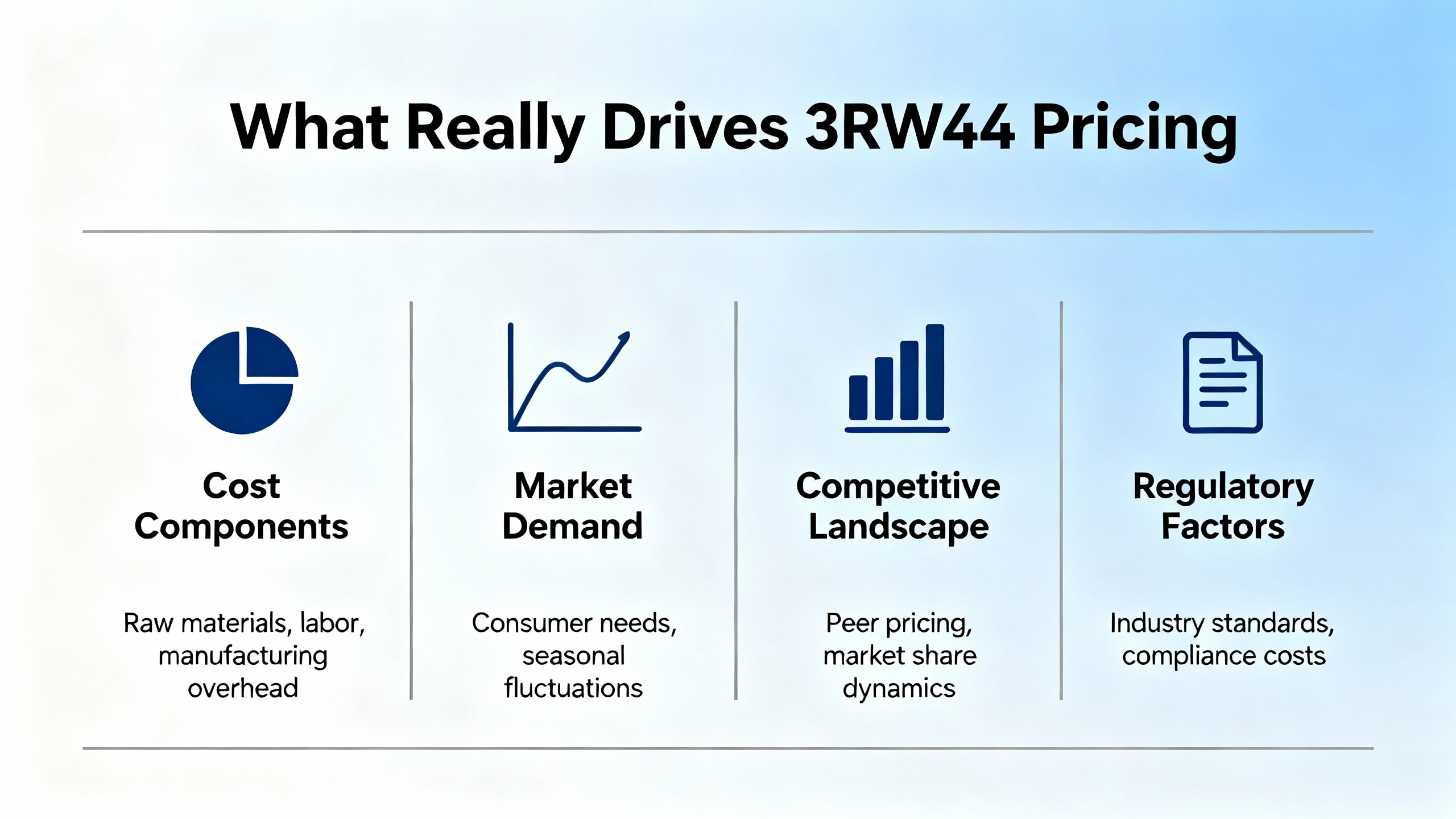
In practice, the price of a 3RW44 soft starter does not come from a single factor. It is the combination of power rating, functionality, lifecycle status, sales channel, and the true landed cost once logistics and warranty conditions are baked in.
From the technical side, motor power and current rating are the first and most obvious drivers. The same series that starts at about 90 kW in a 3RW4436‑6BC44 reaches all the way to around 710 kW in a standard circuit and roughly 1,200 kW in inside‑delta arrangements, according to the Sunupauto summary. Within Siemens’ own data for specific models, that range is reflected in the jump from 162 A to 615 A to 880 A and beyond. As you climb that current ladder, the devices become heavier, occupy more panel space, and need more robust thermal management and short‑circuit coordination. The step change from a unit that weighs a few pounds to something around 140–145 lb is a good reminder that material and manufacturing costs grow quickly at the high end.
Control, monitoring, and communication features are the second major price lever. The 3RW4436‑6BC44 example already illustrates how 3RW44 is not just a basic soft starter. Torque control rather than simple voltage ramping, provision for a breakaway pulse to handle sticky loads, adjustable current limiting, and three independent parameter sets all go beyond “on, ramp, off” functionality. The built‑in keypad and backlit display add hardware, and the PC communication interface plus optional PROFIBUS DP or PROFINET modules bring the device into the automation network. Marketplace analysis by Accio notes that modern Siemens soft starters support advanced communication such as RS485 and integrate with SCADA and PLC systems for remote diagnostics, with Siemens benchmarks suggesting downtime reductions of up to about 30 percent when that capability is used effectively. Equipment that can log faults, integrate with predictive maintenance tools, and be reconfigured from a control room carries a higher upfront price than a bare‑bones analog starter, but it is designed to pay back through reduced downtime and better process control.
Lifecycle status and procurement risk form the third influence. In Siemens’ own catalog, the 3RW4454‑6BC44 is both a phased‑out product and a class C, made‑to‑order item that cannot be returned or reused. The combination of discontinued status and no‑return policy means any mistake in selection is expensive, and buyers in project environments will typically build in contingency or look very hard at the recommended 3RW5 successor instead. Sunupauto’s note that 3RW4436‑6BC44 is also phased‑out with a 3RW5 equivalent reinforces that trend: many of the higher‑power 3RW44 catalog numbers now live primarily in the installed base and spare‑part world rather than in new OEM designs.
The fourth factor is sales channel and warranty. A detailed legal guarantee statement from WiAutomation for a Siemens 3RW4457‑2BC44 unit is illustrative. Because Parcop S.r.l., the underlying seller, is not an authorized Siemens reseller, the manufacturer’s warranty does not apply; instead, WiAutomation offers a legal guarantee under Italian and EU consumer law. For business buyers, defects must be reported within 8 days of discovery and actions to enforce the guarantee expire 1 year after delivery. For consumers, the guarantee lasts 2 years, with specific time limits on asserting defects. Returns require photographic documentation and a formal return code, and if inspection finds no defect or tampering, the guarantee is denied and the buyer must recover the product at their own expense. Firmware is explicitly excluded from guarantee expectations. None of this is unique to one reseller; it shows how gray‑market or non‑authorized channels structure risk. Prices there may be aggressive, but the value proposition differs markedly from buying through an authorized distributor backed directly by Siemens.
Logistics and trade costs are the fifth piece. An O&Kmarts listing for a Siemens SIRIUS 3RW4424‑1BC44 stresses free shipping, but also clarifies that customs duties and taxes are not included. Handling time before dispatch is stated as 5–7 days, yet one buyer reported delivery in just 3 days from California to New York, demonstrating that transit time can be shorter than the generic window. IMC‑Direct, in a category page for Siemens SIRIUS 3RW compact soft starters up to 25 A, offers same‑day shipping for in‑stock orders placed by 4:00 PM Eastern Time, which can matter greatly when a plant is down. On the other end of the spectrum, multiple eBay listings for Siemens soft starters, including 3RW4444‑6BC44 and 3RW3018‑1BB14, highlight that international shipments may be subject to customs processing, import duties, taxes, and brokerage fees payable at delivery. Buyers are reminded that customs inspections can introduce delays and that charges vary by country and by the declared customs value. In other words, the landed cost of a 3RW44 purchased across borders may end up materially higher than the sticker price on the listing.
Finally, it is worth remembering the macro context. Accio cites research placing the global industrial motor control market, which includes soft starters such as Siemens 3RW products, at a projected $14.7 billion by 2030, growing at a compound annual rate of about 6.8 percent from 2023 through 2030. Demand is driven by automation, smart factories, and energy‑efficiency regulations. In such a market, Siemens is not pricing the 3RW44 in isolation; they are balancing competitive pressure against the value of high reliability, communications, and integration with their broader automation ecosystem.
Market Rate Snapshot from Real Listings
Price transparency on 3RW44 units is uneven. Siemens’ own SiePortal detail pages for 3RW4444‑2BC34 and related items emphasize “Get in Touch” rather than showing list prices, encouraging customers to contact Siemens for consulting, sales, training, service, and spare parts. Distributor sites often require a login or quote request. By contrast, online marketplaces and aggregator platforms put specific numbers on the screen.
The table below consolidates a few concrete price points and ranges from the research set, with the necessary caveat that online prices fluctuate and any specific listing can change or disappear.
| Market segment | Source example | Model(s) mentioned | Key rating context | Observed price in sources | Notes |
|---|---|---|---|---|---|
| Compact Siemens soft starter | Accio marketplace analysis and Amazon product details | 3RW4028‑1BB14 | SIRIUS soft starter, frame size S0, about 38 A nominal current and up to 18.5 kW at 400 V | Approximately 99.00–199.00 | Accio highlights this model from a “Gold Seller” as a budget‑focused option, with the Amazon page confirming its role as a compact starter for pumps, fans, conveyors, and similar loads. |
| Siemens soft starter range (multiple families) | Accio marketplace comparison across suppliers | Various Siemens soft starters including 3RW4435‑6BC44, 3RW4028‑1BB14, 3RW3018‑1BB14, 3RW5055‑6AB14, 3RW4026‑1BB04 | Mixed ratings from small compact units up to high‑current HVAC and pump applications | About $99.00 to $3,866.00 depending on model, current rating, and feature set | The analysis notes minimum order quantities of 1–5 units, bulk discounts of roughly 15–30 percent above 10 units, and extended warranties up to 3 years from some suppliers. |
| High‑power 3RW44 example | eBay concluded listing | 3RW4444‑6BC35 / 3RW44446BC35 | SIRIUS 3RW44 soft starter for larger motors in industrial applications | Final listing price recorded at about $3,297.80 for a single unit | Condition was described as new. The listing had ended, and no technical details beyond the part number were captured in the excerpt. Duties, taxes, and shipping are in addition to this price for international buyers. |
Even within this small set, the scale difference is clear. A compact S0 frame 3RW4028‑1BB14 serving an 18.5 kW motor is offered in the low hundreds of dollars by a marketplace seller, while a large 3RW4444‑6BC35 sits around the $3,300.00 mark in a real auction snapshot. Accio’s broader data indicates that high‑current, feature‑rich Siemens soft starters can reach up to about $3,866.00 across suppliers. In other words, from the low end of Siemens’ soft starter portfolio to the upper reaches of the 3RW44 and similar families, the hardware price spans roughly one order of magnitude.
By contrast, the Standard Electric Supply page for the Siemens 3RW4444‑6BC34 SIRIUS Soft Starter—based on the excerpt captured—shows only the product title, source, and a copyright notice, with no visible price in the snippet. That is typical of many distributor and manufacturer-affiliated portals: price is available, but only after login, registration, or a formal quotation process. As a result, real‑world online marketplace data often becomes the practical yardstick for early budgeting, even when the final purchase will go through an authorized Siemens channel.
It is also worth noting where these prices come from geographically. Accio’s sample references suppliers mainly in China and Hong Kong, and several of the notable products it mentions, including 3RW4435‑6BC44 and 3RW5055‑6AB14, are offered through those regional sellers. eBay and Amazon listings may ship globally, but their customs notes emphasize that buyers remain responsible for import duties, taxes, and brokerage fees, and that customs inspections can delay delivery. The headline price on the screen is only the starting point; your purchasing team must consider the full landed cost.

How to Build a Realistic 3RW44 Budget
When I am asked to ballpark a 3RW44‑based solution early in a project, I do not start with price at all. I start with the motor and the topology. The nameplate power and full‑load current, the line voltage, the duty cycle, and whether an inside‑delta connection is realistic are what determine which 3RW44 or 3RW5 frame belongs on the drawing. Siemens’ own data for 3RW4436‑6BC44 at about 90 kW inline and 160 kW inside‑delta, for 3RW4454‑6BC44 at around 355 kW and 630 kW, and for 3RW4457‑6BC44 at about 500 kW and 900 kW gives anchor points across the range. If your motor sits near those values, you are dealing with the corresponding frame size or its 3RW5 successor, not a compact starter.
Only once the technical selection is roughly understood does the price discussion become meaningful. The small‑frame Siemens starter example in the data set, 3RW4028‑1BB14, serves an 18.5 kW motor and appears in aggregator data around $99.00 to $199.00 from a budget-leaning marketplace seller. At the other end, a high‑power 3RW44 model, the 3RW4444‑6BC35, is seen at about $3,297.80 in a concluded eBay listing, and the broader aggregator range extends up to approximately 3, 866.00forthemostexpensiveSiemensstartersinthatsnapshot.Inpracticalterms, ifyourselectedstarteriscloserinratingto3RW4436‑6BC44thanto3RW4028‑1BB14, youshouldexpecthardwarecostssignificantlyhigherthanthesub‑200.00 compact bracket and closer to that low‑thousands band indicated by the marketplace data.
Within that band, two things tend to move the number. The first is how close you are to the top of a frame’s rating. In many vendors’ pricing structures, current is not linear; stepping from a mid‑range frame to a high‑end frame within a series can be a large jump. The second is the feature set: torque control, multiple parameter sets, integrated displays, PC interfaces, and communications modules all add cost. The 3RW44 family as described by Sunupauto is rich in such features by design. If your application does not need network integration, you may be able to omit fieldbus options, but the core electronics that deliver torque control and advanced starting profiles are part of the base unit.
Beyond hardware price, the better cost discussions in motor control are about total cost of ownership rather than just upfront spend. The Accio analysis recommends evaluating at least a 5‑year cost horizon, folding in energy use per start cycle, maintenance, and downtime avoidance alongside hardware price, warranty length, and support quality. It also notes that modern Siemens soft starters with advanced diagnostics and communication can, by Siemens’ own benchmarks, reduce downtime by up to about 30 percent when used for predictive maintenance and fault tracking. On a high‑power pump or compressor, a few hours of avoided unplanned downtime can outweigh a several‑hundred‑dollar price difference between starter options.
As an integrator, I therefore treat the soft starter line item as one part of a wider budget. Protective devices upstream, mechanical interlocks, contactors or bypass arrangements, control wiring, networking, enclosure space, heat dissipation, and commissioning time all sit alongside the starter on an Excel sheet. Those costs are rarely visible in marketplace listings but dominate the real cost once the panel is built and installed. Shaving a small amount off the starter price by choosing a non‑authorized reseller or a geographically distant supplier may not materially change the project’s total cost, especially for large 3RW44 frames. On the other hand, a misapplied product class C, non‑returnable starter can consume any perceived savings several times over.
Choosing Where to Buy: Siemens, Distributors, and Marketplaces
Siemens’ own SiePortal is positioned as a digital customer portal and entry point into the broader Siemens ecosystem. Research notes describe SiePortal as centralizing access to product catalogs, configuration tools, documentation, and service resources for engineers, purchasers, and maintenance staff. For 3RW44‑related catalog numbers such as 3RW4444‑2BC34 and 3RW44442BC45, the excerpts available highlight a “Get in Touch” section that emphasizes Siemens’ global support footprint and invites customers to contact them for consulting, sales inquiries, training, service and support, and spare parts. The absence of list prices in those excerpts reinforces that for many 3RW44 applications, Siemens prefers a consultative sales process tied to specific technical requirements.
Authorized distributors occupy the middle ground between Siemens and the open marketplace. Standard Electric Supply’s listing for the Siemens 3RW4444‑6BC34 is one example, even though the captured snippet contains only the page title and a copyright notice. IMC‑Direct’s category page for Siemens SIRIUS 3RW compact soft starters up to 25 A shows another approach, highlighting same‑day shipping for in‑stock orders placed by 4:00 PM Eastern Time and offering phone-based sales and support. O&Kmarts presents itself as an industrial online store and lists the Siemens SIRIUS 3RW4424‑1BC44 as in stock, advertising high quality, free shipping (excluding customs duties and taxes), and a handling time of 5–7 days. Customer feedback for that product mentions a 4.6 out of 5 average rating based on five reviews, praising successful sourcing of a rare part and describing service as fast and budget‑friendly. One buyer reports a three‑day delivery from California to New York, faster than the generic handling window. O&Kmarts also offers case‑by‑case price matching if a lower price is documented elsewhere. These are the kinds of service characteristics you tend to get with established distributors: some logistics flexibility, some pricing flexibility, and clear channels for support.
Marketplaces and independent resellers complete the picture. eBay listings cover a spectrum from compact starters such as 3RW3018‑1BB14 to high‑power units like 3RW4444‑6BC35 and 3RW4443‑6BC44. A captured listing for a new 3RW4443‑6BC44 shows it located in Hebron, Kentucky, with an explicit note that the item does not ship to Taiwan, and shipping details tucked behind a “See details” link. Another listing for a 3RW4444‑6BC44 markets itself as “US free tax,” yet the shipping information emphasizes that international buyers may still face customs processing, import duties, taxes, and brokerage fees, echoing standard eBay guidance for cross‑border transactions. Amazon carries Siemens starters such as the 3RW4028‑1BB14 as well, with its own buyer tools such as a “Found a lower price?” section meant to keep marketplace pricing competitive.
The WiAutomation legal guarantee document serves as a cautionary example of the trade‑offs in these channels. Because the seller is not an authorized Siemens reseller, the manufacturer’s warranty does not apply. Instead, the buyer relies on a legal guarantee governed by civil and consumer law, with tight defect reporting deadlines, separate rules for business and consumer buyers, detailed documentation requirements, and no guarantee around firmware versions in digital‑element goods. Refurbished units may have the same legal guarantee duration as new ones, but aesthetic defects and missing non‑essential accessories are excluded if they were clearly described. For a plant manager budgeting a critical motor control center, that is a very different risk profile from one where Siemens or an authorized distributor stands directly behind the product.
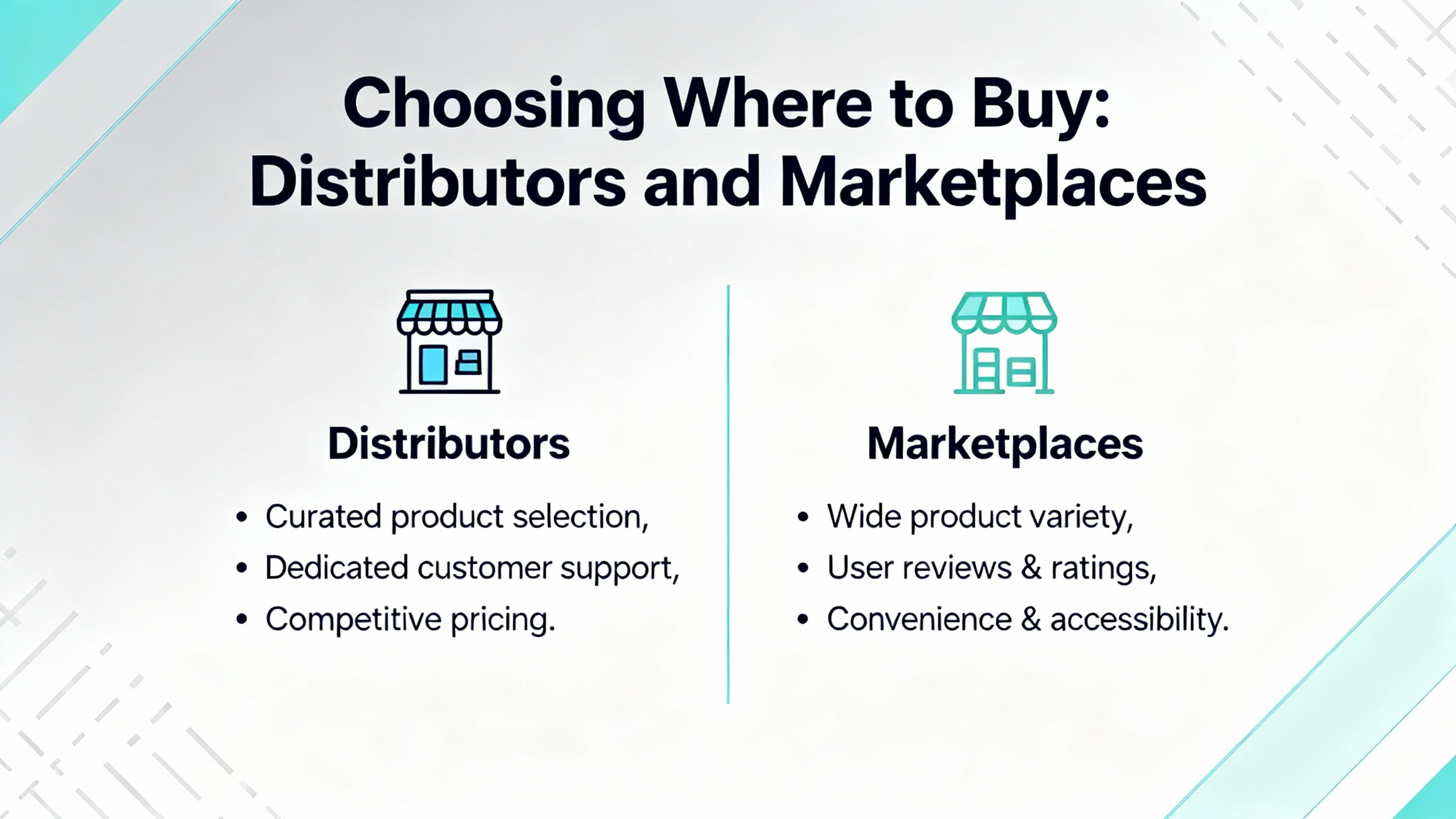
In short, Siemens and authorized distributors tend to trade ease of support and clearer warranty structures for less price transparency up front, while marketplaces and independent resellers offer visible prices and sometimes lower unit costs, but with more complexity around warranty, returns, and logistics. When you are building a budget for 3RW44 hardware, both channels are useful reference points—provided you understand what is included in the price.
Short FAQs on 3RW44 Pricing and Selection
Are Siemens 3RW44 soft starters still a good choice for new projects?
For some specific catalog numbers, Siemens has already given a clear answer. In SiePortal, models such as 3RW4454‑6BC44 and 3RW4457‑6BC44 are explicitly marked as phased‑out products, and Siemens recommends the SIRIUS 3RW5 family as the preferred successor, naming 3RW5552‑6HA14 and 3RW5556‑6HA14 as suitable replacements. A Sunupauto summary describes the 3RW4436‑6BC44 similarly, pointing to a 3RW5 successor. Siemens’ own procurement guidance for at least one of these phased‑out units states that new designs should avoid specifying it and instead use the recommended 3RW5 type, while existing installations should plan for lifecycle migration. In my own project planning, I treat that as the dividing line: for new equipment, follow Siemens’ successor recommendations; for installed 3RW44 fleets, a 3RW44 replacement of the same type still makes sense as a spare or as a short‑term fix while you engineer the migration.
Why do prices for ostensibly similar 3RW44 units vary so much online?
The research set shows several reasons. Aggregated data from Accio indicate that Siemens soft starters, including 3RW44 models, are sold across multiple suppliers with different minimum order quantities, with hardware prices spanning roughly $99.00 to $3,866.00 depending on model, current rating, and feature set. Volume commitments above 10 units can unlock discounts on the order of 15–30 percent. Distributors such as O&Kmarts may offer case‑by‑case price matching, while others emphasize rapid shipping. Listings on eBay and Amazon reflect different cost structures again, sometimes leveraging surplus or regionally priced stock. Lifecycle status plays a role as well: a phased‑out 3RW44 type that remains in high demand as a spare may command a premium from the few suppliers who still have it on the shelf. Finally, warranty and returns conditions vary. A unit sold via an authorized channel under Siemens’ warranty is not the same product, in a risk sense, as one sold under a third‑party legal guarantee whose enforcement window closes a year after delivery for business customers. Those different risk allocations are baked into price.
How can I get a reliable cost estimate early in design without over‑engineering the budget?
The most dependable approach is to anchor your estimate to both technical and commercial data. Start by determining the required starter rating based on the motor’s voltage, power, and connection type. Use Siemens’ published ratings, such as the 3RW4436‑6BC44 at about 90 kW inline, 3RW4454‑6BC44 at roughly 355 kW inline, and 3RW4457‑6BC44 at about 500 kW inline, to understand where your application falls within the 3RW44 and 3RW5 ranges. Then, check current marketplace snapshots for units in the appropriate range: compact starters like 3RW4028‑1BB14 appear around 99.00–199.00, while high‑power units like 3RW4444‑6BC35 have been observed around $3,297.80, with the overall Siemens starter range reaching up to about $3,866.00. With that bracket in mind, contact Siemens or an authorized distributor via SiePortal or by phone to obtain a project‑specific quote, including any fieldbus options, accessories, and recommended successors if your chosen 3RW44 type is phased‑out. That combination of real market data and a formal quote tends to produce budgets that survive contact with reality.
In the end, a Siemens 3RW44 soft starter is not a commodity contactor; it is a sophisticated, high‑power motor‑control device whose price reflects its capabilities, scale, and lifecycle stage. If you use the real‑world price points and procurement signals outlined here—paired with early conversations with Siemens or a trusted distributor—you can treat your 3RW44 budget not as a guess, but as a grounded estimate that will stand up when the project moves from concept to purchase order.
References
- https://automa.net/product/siemens/74et36bfaf-63a39b94ca04b4f2593942e2?srsltid=AfmBOoo-P3vcYXesryCrCJ7pN-eIKpekqvXPjOawmyemnTwqaEA6chHh
- https://www.nexinstrument.com/3rw4074-6bb44
- https://okmarts.com/siemens-sirius-soft-starter-3rw4424-1bc44.html?srsltid=AfmBOoqkF1mcdCCGOW7ZGfi9ueTs6Y-3Jef5C8EuJCzRJkygDpq2H449
- https://www.standardelectricsupply.com/Siemens-3RW4444-6BC34-SIRIUS-Soft-Starter?srsltid=AfmBOopQeDWMB7FVhPB6FjDLS7M3qJXaSxf22B9Wmvwqr8ocweYKBtLR
- https://www.sunupauto.com/1214655.html
- https://www.accio.ai/find-product/siemens-starters
- https://www.alibaba.com/showroom/siemens-soft-starters.html
- https://www.aotewell.com/siemens/sirius-soft-starter-values-at-400v-40-c-standard-162a-90kw-3rw4436-2bc44.html
- https://www.ebay.com/itm/177312115059
- https://eecoonline.com/shop/SIC3RW44456BC35
Keep your system in play!
Top Media Coverage
Categories

Related articles Browse All
-
 BlogImplementing Vision Systems for Industrial Robots: Enhancing Precision and Automation2025-08-12 11:26:54Industrial robots gain powerful new abilities through vision systems. These systems give robots the sense of sight, so they can understand and react to what is around them. So, robots can perform complex tasks with greater accuracy and flexibility. Automation in manufacturing reaches a new level of ...
 -
 BlogOptimizing PM Schedules Data-Driven Approaches to Preventative Maintenance2025-08-21 18:08:33Moving away from fixed maintenance schedules is a significant operational shift. Companies now use data to guide their maintenance efforts. This change leads to greater efficiency and equipment reliability. The goal is to perform the right task at the right time, based on real information, not just ...
 -
 BlogThe Evolution of Steam Turbine Control Systems2026-03-31 08:33:35CALL US:+86-18020776786 | E-MAIL:INFO@AMIKON.CN In-depth analysis of the GE Mark VIe control system Mark VIe: A Modern Mainstay for Industry 4.0 Mark VIe's core concepts are "high availability, open connectivity, and intelligent readiness." It utilizes comm...


- Q&A
- Policies How to order Part status information Shipping Method Return Policy Warranty Policy Payment Terms Email Marketing Policy VAT and Import Information
- Asset Recovery
- We Buy Your Equipment. Industry Cases Amikong News Technical Resources Why choose us FAQs
- Registered Address
-
32D Guomao Building, No.388, Hubin south Road, Siming district, Xiamen,Fujian, China

Leave Your Comment