
-
Please try to be as accurate as possible with your search.
-
We can quote you on 1000s of specialist parts, even if they are not listed on our website.
-
We can't find any results for “”.
Last Time Buy Siemens PLC Components: Final Siemens Purchase Opportunity


When you have spent a few decades keeping plants running, you learn that control hardware almost never fails at a convenient moment. The Siemens PLC in the cabinet does not care that your best maintenance tech is on vacation or that the next production run is already sold. It also does not care that its product lifecycle has quietly moved into the final stages. That is why the last time buy window for Siemens PLC components is not just a purchasing event; it is a strategic decision about the future of your automation platform.
In the Siemens world, this is very real right now. SIMATIC S7‑200 controllers are already in cancellation phase, SIMATIC S7‑300 PLCs and ET 200M I/O are in formal phase‑out with product cancellation scheduled for October 1, 2025, and larger HMI Comfort Panels entered phase‑out in October 2024, according to guidance from Siemens and independent lifecycle specialists such as Patti Engineering and EU Automation. Siemens has committed to spare parts for S7‑300 until 2033, but the window for buying new hardware is closing. If you rely on these platforms, you are facing a last time buy decision whether you plan for it or not.
This article walks through what a last time buy really means in a Siemens PLC context, how Siemens lifecycle codes translate into real risk on the plant floor, and how to push through the noise to a pragmatic plan that balances continuity, cash, and modernization. I will use examples from Siemens lifecycle documentation, obsolescence research, and what I routinely see as a systems integrator brought in when plants need a reliable project partner rather than another emergency supplier.
Why Last Time Buy Decisions Matter More Than Ever
Last time buys are not a new concept, but the stakes have risen sharply. Research summarized by Electroniccomponent.com shows that semiconductor lifespans have dropped about 66% since 2000. Typical component lifetimes have fallen from roughly thirty years to about ten, and advanced parts often stay on the market only two to five years. The same analysis reported over 328,000 end‑of‑life notices in 2023, with 41% more abrupt discontinuations than in 2020, and linked about 62% of production delays and multimillion‑dollar redesign costs to obsolete components, with some OEMs losing around $4.2 million annually. Siemens Manufacturing has highlighted similar dynamics, noting that many semiconductors now have commercial lifespans of only two to five years and that more than 750,000 components went obsolete in 2022 alone.
Siemens PLCs and I/O systems are built for long service in harsh industrial environments, but they sit on top of this volatile silicon landscape. Thirty years ago, you could reasonably expect a PLC family to remain supported for decades with little change. Today, modern digitalization, safety, and cybersecurity requirements drive vendors to refresh portfolios faster, while underlying chip lifecycles keep shrinking. The result is that obsolescence has become a systemic risk rather than an exception.
Supply‑chain specialists such as Partstat emphasize that mismanaging last time buys can damage product continuity, customer relationships, and profit margins. They point out that of the hundreds of thousands of parts approaching obsolescence each year, more than 40% have an immediate last time buy date, and when original component manufacturers end production there is close to a fifty percent chance they will never notify buyers at all. That is in general electronics, but the pattern translates directly to subsystems inside Siemens PLCs, HMIs, and distributed I/O.
In practice, that means waiting for a comfortable, quiet moment to address Siemens obsolescence is wishful thinking. The only question is whether you treat last time buy decisions as part of structured lifecycle planning or as an emergency reaction after a failure on a Sunday night when production is down.

What “Last Time Buy” Really Means in a Siemens Context
Definition and key mechanics
A last time buy, as described by lifecycle and PLM specialists such as Arena Solutions and by supply‑chain practitioners writing on platforms like LinkedIn, is the final opportunity to purchase a component or product after a supplier announces its end of life. The offer normally comes with two hard constraints: a firm deadline by which all orders must be placed and a maximum quantity the supplier is prepared to ship. After that window closes, the item is no longer produced or shipped through normal channels.
Strategically, last time buy is a commitment to purchase and store enough of a component to cover the entire remaining lifecycle of your product, including both ongoing production and the service or warranty period. For Siemens PLCs, that means thinking not only about how many CPUs and I/O modules you will need to keep lines running, but also how many you may need for maintenance, expansions, and spare cabinets over the next ten years or more.
Analysts at Arena Solutions highlight that effective last time buy planning demands realistic long‑term demand estimates, including future maintenance and spare‑part requirements, and cross‑functional collaboration among engineering, procurement, and inventory planning. If you underestimate, you later face redesigns, production stoppages, or risky dependence on third‑party brokers. If you overestimate, you tie up capital in inventory that may never be used and eventually becomes an expensive liability.
Siemens lifecycle codes and why they drive timing
Siemens has formalized this entire journey with a clear product lifecycle model. Patti Engineering and EU Automation both describe five key phases that apply not only to hardware but also to firmware and related software: P.M300, P.M400, P.M410, P.M490, and P.M500.
P.M300 is the active phase. The product is fully supported, recommended for new projects and expansions, and available as a new item with normal lead times. Firmware and software are actively developed and enhanced. In this phase, last time buy is not yet on the agenda; your focus is on designing in platforms with long life and robust support.
P.M400 is the phase‑out announcement. Siemens formally announces that a product will be discontinued. According to Patti Engineering’s explanation, customers can still purchase new units at this stage, and Siemens starts its ten‑year spare‑parts guarantee from the P.M400 date. Firmware and security patches continue, but new features are not added, and Siemens communicates the planned P.M410 date when new sales will stop. For Siemens PLC users, P.M400 should ring very loud warning bells: it is the start of the last realistic window to plan and execute a structured last time buy.
P.M410 is the product cancellation, sometimes called type cancellation. Siemens stops selling the product as a new item. From then on, it is available only as a spare part to support existing installations. The ten‑year spare‑parts commitment that began at P.M400 remains in force, but engineering software enters legacy status and only receives maintenance patches. Lead times and prices for spares often rise after P.M410, and options for expansion projects narrow. Last time buys are still possible, but they are now competing with a shrinking spare‑parts pool and longer lead times.
P.M490 marks the end of the spare‑parts obligation. Siemens’ ten‑year commitment from the P.M400 announcement expires. Siemens is no longer obliged to manufacture or provide spare parts, availability is limited to what remains in stock or what third‑party suppliers can source, and firmware or software updates stop. For plants that have not migrated by this point, downtime risk from parts scarcity becomes acute.
P.M500 is the end of lifecycle. Siemens discontinues all repair services, technical support, and spare‑parts provision. Products in this phase are fully obsolete within Siemens’ official portfolio. Any replacement parts must be sourced on the secondary market, and users are effectively on their own. Running a critical production asset on P.M500 hardware is a high‑risk strategy.
A key nuance that often gets missed is that Siemens’ ten‑year spare‑parts guarantee always counts from the P.M400 date, not the P.M410 date. Patti Engineering calls this out specifically: if P.M400 for a product is announced in 2023, Siemens commits to supply spares until 2033 regardless of when the P.M410 cancellation happens. For SIMATIC S7‑300, P.M400 was October 1, 2023 and P.M410 is scheduled for October 1, 2025. Siemens has confirmed, including in public announcements, that it intends to keep S7‑300 spare parts available until 2033, aligning with that ten‑year window.
Where key Siemens PLC and HMI products stand today
Several widely deployed Siemens control products are already in phase‑out or cancellation, with defined upgrade paths. Patti Engineering’s lifecycle reference table provides a clear snapshot that aligns with EU Automation’s guidance.
| Legacy Siemens product | Lifecycle status highlights | Recommended successor |
|---|---|---|
| SIMATIC S7‑300 PLCs | P.M400 October 1, 2023; P.M410 October 1, 2025; spare‑parts obligation runs ten years from P.M400, and Siemens has indicated spares until 2033 | S7‑1500 |
| SIMATIC S7‑200 PLCs | P.M410 October 1, 2014; long past the ten‑year window, and described by EU Automation as already obsolete | S7‑1200 |
| SIMATIC ET 200M I/O | P.M400 October 1, 2023; P.M410 October 1, 2025 | ET 200MP |
| SIMATIC ET 200S I/O | P.M410 October 1, 2023 | ET 200SP |
| HMI MP277 | P.M400 October 1, 2011; P.M410 October 1, 2019; spare‑parts guarantee period has expired | Unified Comfort Panels |
| HMI Comfort Panels 15 in and above | P.M400 October 1, 2024; P.M410 to be determined; EU Automation notes these panels entered phase‑out on that date | Unified Comfort Panels |
| SIMATIC RF180C RFID | P.M400 October 1, 2019; P.M410 September 30, 2020 | RF185C, RF186C, or RF188C |
From a systems‑integrator perspective, the S7‑200 story is what happens when customers ignore lifecycle signals: the product reaches cancellation, the ten‑year spare‑parts period passes, and you are left depending on secondary markets. The S7‑300 and ET 200M story is the one many plants are living through right now: phase‑out announced, cancellation on the calendar, and a defined successor family waiting.
The implication is straightforward. If your critical production assets depend on S7‑300, ET 200M, or larger Comfort Panels, you have a finite and shrinking window to organize a last time buy that covers your risk until you can migrate to S7‑1500, ET 200MP or ET 200SP, and Unified Comfort panels.
The Economics of a Siemens PLC Last Time Buy
Balancing continuity, cash, and storage
A last time buy is not simply “one big order before the deadline.” It is a financial decision that locks in years of future spend and risk. Several independent analyses of electronic component strategies frame the trade‑offs very clearly.
An article on Electroniccomponent.com contrasts spot buys with last time buys in quantitative terms. Spot buys from brokers or open‑market sources can deliver parts in two to seven days, but they often come with cost premiums in the range of 18% to 35% and a higher risk of counterfeit or substandard components. In many organizations, emergency spot‑buy premiums consume roughly 23% of annual procurement budgets when obsolescence is not managed proactively.
Last time buys, by contrast, can secure volume discounts of around 5% to 12% and avoid frequent emergency purchases, but they require committing to 90‑ to 180‑day lead times, tying up cash, and managing climate‑controlled storage. The same analysis notes that warehousing ten‑year stockpiles, combined with recertification costs that can exceed $500,000 per design change, can significantly impact total cost of ownership. In one documented case, proactive obsolescence management allowed a medical device manufacturer to avoid about $8 million in penalty costs that would have arisen from unplanned redesigns and missed deliveries.
Partstat’s research on last time buys adds another dimension: carrying‑cost impact. They report that storing excess critical inventory typically adds about 15% to 20% to the total cost, and even more for parts requiring specialized storage. When forecasts prove overly optimistic, OEMs often end up liquidating surplus last time buy inventory at discounts as steep as 95%, turning supposed risk mitigation into a write‑off.
On the other side of the equation, underestimating last time buy needs can be even more painful. Partstat highlights that insufficient inventory at end of life can trigger expensive product redesigns or discontinuations and can push manufacturers toward third‑party brokers who routinely charge markups of 30% to 40% for high‑demand, low‑supply parts. Siemens Manufacturing points out that such emergency redesigns must still maintain backward compatibility, preserve form, fit, and function, and satisfy regulatory requirements, all under intense time pressure.
In Siemens PLC terms, that means you must look beyond the unit price of an S7‑300 CPU or ET 200M I/O card. The real decision is whether you would rather pay known, planned storage and capital costs today, or gamble on paying inflated broker pricing, re‑engineering costs, and downtime penalties later if the last S7‑300 CPU in your region fails five years after P.M410.
Common last time buy mistakes in Siemens environments
Partstat describes four common last time buy mistakes that I see regularly in Siemens‑centric plants.
The first is a delayed reaction to product change and last time buy notices. Many OEMs and plant operators simply do not act when Siemens or a distributor publishes a lifecycle notice, even when they have twelve months or more of warning on paper. Partstat’s data stresses that for many parts approaching obsolescence, more than 40% have an immediate last time buy date and almost half may never come with any notification at all. In a Siemens context, I have walked into plants where P.M400 dates passed years ago and the first time anyone looked at the lifecycle status was after a CPU failure.
The second mistake is excess inventory driven by optimistic forecasts. When actual product demand falls short of projections, manufacturers can be left with surplus critical components that quickly turn into an expensive liability late in the lifecycle. Carrying these parts can add that 15% to 20% overhead Partstat warns about, and many organizations eventually resort to lot‑bid liquidation at huge discounts. A warehouse full of S7‑300 racks that never get installed is not a good outcome.
The third mistake is the mirror image: insufficient inventory. Underestimating last time buy requirements forces plants either to redesign prematurely, discontinue products, or rely heavily on third‑party vendors and the gray market to keep lines running. That is where those 30% to 40% broker markups become a painful reality, and where counterfeit or poor‑quality parts can creep into critical automation systems.
The fourth is lack of storage infrastructure and process. Some components, particularly sensitive electronics such as custom ASICs or memory devices inside PLCs, require specialized environmental control, handling, and periodic testing. Partstat notes that without proper storage infrastructure and trained personnel, storage costs can explode and years of downstream revenue can be put at risk. In Siemens PLC terms, that translates into structured, documented storage for spare CPUs, communication modules, and HMIs, not a cardboard box in a maintenance closet.
What ties these mistakes together is that they are all process failures. Partstat’s core recommendation is to treat last time buy management as a dedicated, structured process within the supply chain rather than an ad‑hoc purchasing event. Siemens Manufacturing and Dynamic’s lifecycle planning work make the same point: end‑of‑life management must be a core element of product lifecycle management, not an afterthought.
A Practical Playbook for Siemens PLC Last Time Buys
Step One: Build a clean installed‑base map and lifecycle view
You cannot plan a Siemens last time buy if you do not know what you are running. The first practical step is to build a clean inventory of every Siemens PLC, I/O rack, HMI, and key accessory in your operation. That means capturing part numbers, hardware revisions, firmware versions, and functional roles, then mapping that inventory against Siemens’ lifecycle phases.
Dynamic’s guidance on end‑of‑life management emphasizes continuously monitoring the lifecycle status of critical, hard‑to‑substitute components using supplier lifecycle data and announced end‑of‑life dates. Siemens Manufacturing takes a similar position, recommending real‑time lifecycle monitoring and strong relationships with authorized distributors. For Siemens PLCs, that translates into checking the P.M status of each product, identifying which systems are already in P.M400 or P.M410, and which will soon follow.
Electroniccomponent.com notes that dedicated component engineering and supplier roadmap monitoring can flag at‑risk parts eighteen to twenty‑four months ahead of time and, combined with structured processes, can reduce last‑minute scrambles and production delays by roughly 31%. In practice, many plants do not have a formal “component engineering” function, but a veteran integrator and a disciplined maintenance or controls engineer can fill that role by owning the lifecycle view and keeping it current.
Step Two: Model demand across production and service
Once you know what you have, you must decide how long you intend to keep it. Arena Solutions’ guidance on last time buys stresses that effective planning requires estimating long‑term demand, including both ongoing production and future maintenance or spare‑part requirements, and aligning those estimates with redesign or phase‑out timelines. LinkedIn commentary on last time buy strategy frames it as purchasing enough to cover all anticipated needs over the product’s remaining lifecycle and end‑of‑service phase.
Dynamic recommends data‑driven end‑of‑life decisions: ask whether a product still generates enough revenue to justify maintenance and personnel costs, whether the market segment remains strategically important, and whether superior solutions exist in your portfolio. For Siemens PLCs, you should pair that business lens with an operational one: how many years of service do you expect from each line, how many deployments still rely on S7‑300 or S7‑200, and what regulatory or customer commitments dictate minimum support periods.
Practically, that means reviewing historical spare‑part consumption for each Siemens product family, projecting usage over the planned remaining life of each line, and explicitly including spare capacity for failure peaks, upgrades, and expansions. It also means aligning the last time buy horizon with Siemens’ ten‑year spare‑parts guarantee from P.M400, rather than assuming indefinite availability.
Step Three: Choose your sourcing mix: last time buy, safety stock, and alternatives
Most robust strategies blend several tactics rather than betting everything on a single massive last time buy.
Siemens Manufacturing highlights last time buys and inventory buffering as core tactics, alongside aftermarket and authorized sourcing from specialized distributors who acquire legal manufacturing rights for discontinued parts. They also note that turning to independent, unauthorized distributors requires rigorous testing to avoid counterfeit components.
Sensible Micro, an obsolete‑components specialist, explains this picture from a distributor’s perspective. They describe safety stock as a preventive strategy: holding excess inventory before end‑of‑life to buffer against demand variability and unexpected stockouts. They also emphasize that last time buy strategies must account for storage capacity and holding costs and that some distributors can schedule last time buy deliveries over time rather than forcing a single, upfront bulk purchase. That kind of staged delivery can be particularly useful when you are buying high‑value Siemens PLC hardware for multiple plants.
Beyond last time buys and safety stock, Sensible Micro points to surplus stock releases, where other manufacturers liquidate excess inventory, and to the gray market of independent suppliers. They caution that gray‑market sourcing should always be paired with proactive anti‑counterfeiting programs that include laboratory‑based inspection and test screening. Siemens Manufacturing and Electroniccomponent.com both stress the role of specialized distributors with global, hybrid supplier networks that can identify, qualify, and test hard‑to‑source end‑of‑life parts, often adding cross‑referencing services to identify form‑fit‑function or pin‑compatible alternatives.
In a Siemens PLC context, this suggests a hierarchy: prioritize authorized Siemens channels and reputable independent distributors for last time buys and critical spares, treat brokers and gray‑market sources as a last resort with strict incoming‑inspection requirements, and reserve spot buys for genuine emergencies where production is at risk.
Step Four: Harden quality and traceability for alternative sources
When you extend the life of an aging platform with last time buys and secondary sourcing, quality assurance becomes non‑negotiable. Siemens Digital Industries Software’s Opcenter Intelligence Component Analytics offering illustrates one emerging best practice in electronics manufacturing.
Their description explains that component analytics can secure quality and authenticity even during supply strains, isolating problematic material and preventing damage. Rather than relying only on slow and costly lab tests of samples, their approach uses real‑time monitoring during PCB assembly. Images generated by pick‑and‑place machines are analyzed using advanced AI models to verify authenticity and identify damage or tampering in one hundred percent of the components handled on the line. The solution leverages existing production data and images, with no additional operations or process steps.
If you are having PLC subassemblies built or repaired by electronics manufacturing partners, this kind of component‑level traceability is an effective way to de‑risk last time buys and non‑standard sourcing. Combined with rigorous supplier audits and independent lab testing for high‑risk parts, it can significantly reduce the chance that counterfeit or compromised components find their way into Siemens PLCs that are expected to run for another decade in safety‑critical roles.
Step Five: Link last time buy with migration and modernization
Last time buy planning for Siemens PLCs is incomplete if it is not tied to a clear migration path. EU Automation notes that modernization and system upgrades are often the most robust long‑term solution when many components are nearing obsolescence, offering improved performance, energy efficiency, and functional benefits despite higher upfront cost. Their Siemens lifecycle analysis, together with Patti Engineering’s, points to well‑defined migration paths such as S7‑200 to S7‑1200, S7‑300 to S7‑1500, ET 200M to ET 200MP, ET 200S to ET 200SP, and legacy MP and Comfort Panels to Unified Comfort Panels.
Dynamic underscores that end‑of‑life planning should begin early in the product lifecycle, ideally before design‑in, with a preference for long‑life components and multiple sourcing options. When redesign is forced by end‑of‑life, the priority should be to maintain backward compatibility, identifying drop‑in replacements that preserve form, fit, and function and validating performance consistency through thorough testing. In regulated industries, they emphasize that poorly managed end‑of‑life decisions can disrupt validation, halt production, and force sudden, expensive last time buys that still carry either excess‑inventory risk or stockout risk.
For Siemens PLC owners, that means using last time buys to protect the installed base while actively planning and executing migrations to S7‑1500 architectures and modern HMIs, rather than using last time buys to avoid modernization entirely. The goal is a controlled transition, where lines continue to run safely and reliably while you update designs, software, and training at a manageable pace.
Case Example: Planning an S7‑300 Last Time Buy
Consider a plant with several production lines built around SIMATIC S7‑300 PLCs and ET 200M I/O racks, plus a mix of Comfort Panels including larger units already in phase‑out. This is a configuration that many facilities share today.
The first step I recommend in such a situation is to confirm lifecycle status against Siemens’ own data and independent summaries like those from Patti Engineering. For S7‑300 and ET 200M, P.M400 on October 1, 2023 and P.M410 on October 1, 2025 mean that new units remain orderable today but will not be for long. Because Siemens’ ten‑year spare‑parts guarantee counts from P.M400, you can reasonably expect official spare‑parts support until 2033, which matches Siemens’ public commitment to S7‑300 spares.
The plant team then needs to define an end‑of‑life horizon for each line. If a given production line is expected to remain in service well beyond 2033, migrating to S7‑1500 should become a near‑term project with a limited last time buy of S7‑300 hardware to bridge the gap. If another line is expected to retire or be completely rebuilt within the next five to eight years, an S7‑300 last time buy sized to cover that shorter horizon may be more economical than a full‑scale migration, especially if budgets and engineering resources are constrained.
Forecasting spare‑part demand means examining historical failure rates and usage of S7‑300 CPUs, power supplies, communication modules, and ET 200M I/O cards, then adjusting for known issues and planned changes such as adding a shift or expanding capacity. This is where many organizations underestimate consumption. Using the guidance from Arena Solutions and the LinkedIn analysis, I advise clients to factor both production and service needs into their last time buy quantities and to explicitly include coverage for warranty periods and customer‑service commitments.
With demand scenarios defined, you can structure your sourcing: place a baseline last time buy through authorized Siemens channels or trusted independent distributors, establish safety stock levels at plant and regional warehouses, and define a controlled process for any future spot buys. For any items that must be secured from independent sources, coordinate with manufacturing partners or labs that can perform the kind of one‑hundred‑percent inspection and traceability Siemens describes in its Opcenter component analytics materials.
Finally, link this plan directly to an S7‑300 to S7‑1500 migration roadmap. Pattie Engineering and EU Automation both stress that electronics typically fail and become unsupported long before mechanical equipment, so control system upgrades are a necessary part of long‑term production line maintenance and usually the most effective way to maximize both longevity and overall equipment effectiveness. In a well‑run project, the last time buy serves as a safety net, not as an excuse to postpone hard decisions indefinitely.
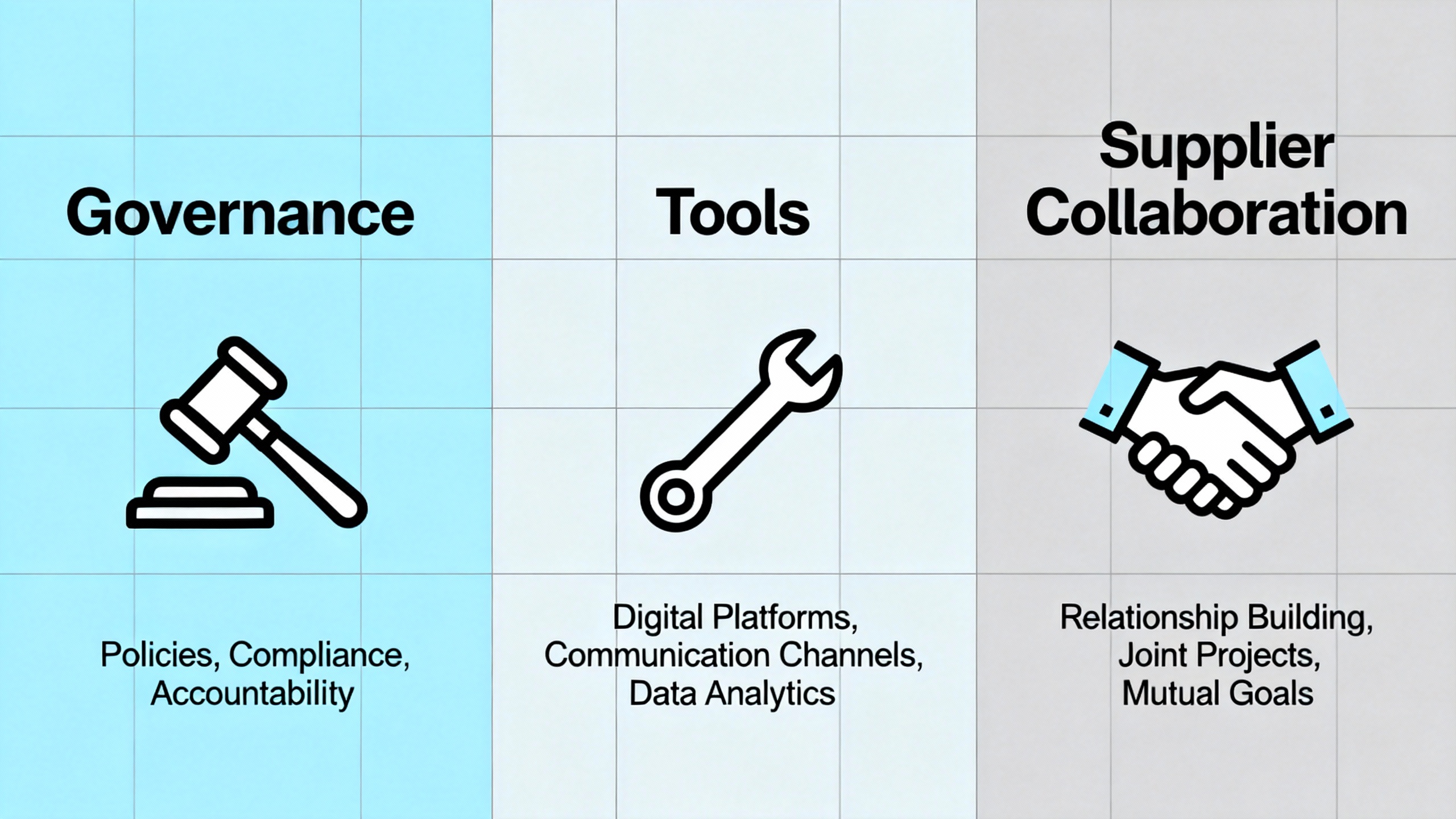
Governance, Tools, and Supplier Collaboration
Even the best technical plan will fail if it is not supported by governance and tools. Several sources in the research highlight how digitalization and collaboration improve lifecycle and last time buy outcomes.
Electroniccomponent.com describes how lifecycle forecasting and predictive inventory dashboards that monitor most global inventories can provide alerts roughly 142 to 148 days before shortages, classify risk tiers, and cut emergency purchases by around 63% and redesign costs by about 51%. They note that integrated BOM and PLM solutions such as ActiveBOM and BOM‑portal platforms can link design data with live supplier inventories, enabling real‑time lifecycle status, cloud‑synced bills of material, and distributor mapping that yield faster risk identification, fewer version errors, cost savings on replacements, and shorter approval cycles.
Anvyl’s work on lead‑time management shows that prioritizing geographically closer suppliers can cut weeks out of transit time, reduce tariff and customs complications, and lower lead time risk. They also stress the importance of including suppliers directly in demand forecasting and using digital PO management as a single source of truth from purchase order issuance to warehouse delivery. A featured brand using their platform achieved double‑digit improvements in on‑time shipments and supplier engagement while cutting purchase‑order revisions, which translated into shorter lead times and leaner operations.
Procurement‑automation analyses from firms like Veridion and MIT Sloan Management Review underscore that automation should target tedious, error‑prone procurement activities rather than replace human judgment. They report that highly digitalized companies see significant gains in control, efficiency, and sustainability, with procurement bots and automation saving thousands of work hours and cutting purchase‑order processing costs dramatically. Deloitte’s research, cited by Veridion, notes that a large share of chief procurement officers perceive significantly higher procurement risk compared with two years ago and that a strong majority of decision‑makers agree digital processing boosts resilience.
For Siemens PLC last time buys, these findings point to several governance practices. Treat component lifecycle management as a core procurement and engineering process with clear ownership, rather than a background task. Use digital tools to monitor Siemens lifecycle data and inventory positions continuously. Involve suppliers early in forecasting and last time buy planning so they can help secure capacity. And measure supplier performance against clear metrics for responsiveness, lead times, and lifecycle transparency, as suggested by Anvyl’s and Veridion’s frameworks.
Most importantly, establish cross‑functional decision‑making. Dynamic recommends proactive, end‑to‑end lifecycle strategies that reduce cybersecurity vulnerabilities, enable smooth platform transitions, and avoid safety incidents and stockouts. Ivalua’s procurement best‑practice work similarly emphasizes standardized workflows, data quality, strategic supplier relationships, and end‑to‑end visibility into spend. In Siemens PLC terms, that means engineering, maintenance, procurement, finance, and operations all sitting at the same table when deciding whether to invest in last time buy inventory, accelerate a migration, or sunset a product line.
Short FAQ on Siemens Last Time Buys
Is it already too late to plan a last time buy for S7‑300?
For most plants, it is not too late, but the clock is ticking. With P.M400 declared on October 1, 2023 and P.M410 scheduled for October 1, 2025, S7‑300 remains in phase‑out rather than full cancellation, and Siemens has committed to spares until 2033. That gives you time to plan, but not time to ignore the issue. If you have not yet built an installed‑base inventory and demand forecast, now is the time to start, not three months before P.M410.
How do I avoid being stuck with excess Siemens inventory after a last time buy?
The research from Partstat and Arena Solutions is clear: the only way to avoid massive overhang is to treat last time buy as a structured, cross‑functional decision. Use real historical usage data, realistic lifecycle horizons, and explicit assumptions about service commitments. Incorporate carrying‑cost estimates of roughly 15% to 20% where applicable and require engineering and product management to align on which lines will be modernized versus retired. Avoid padding forecasts “just in case” without tying those extra quantities to a specific business scenario.
Can I rely on independent suppliers for obsolete Siemens components?
Independent distributors play an important role in sourcing obsolete and hard‑to‑find parts. Sensible Micro, for example, describes how specialized obsolete‑components distributors with global, hybrid supplier networks can centralize the hunt for end‑of‑life components and add value with counterfeit detection, quality testing, and cross‑referencing for pin‑compatible alternatives. However, Electroniccomponent.com and Siemens Manufacturing both caution that gray‑market and unauthorized sources carry higher risk and must be paired with robust anti‑counterfeit programs, including lab‑based inspection and, where possible, line‑integrated analytics such as the one‑hundred‑percent component inspection Siemens offers with its Opcenter component analytics. Independent suppliers should be part of a controlled strategy, not your only plan.
Closing Perspective
A last time buy for Siemens PLC components is not a panic‑driven shopping spree; it is a disciplined way to buy time for a thoughtful migration. With lifecycle data from Siemens, hard numbers from obsolescence research, and the right governance around forecasting, sourcing, and quality, you can turn what feels like an unwelcome phase‑out notice into a structured program that protects uptime, stabilizes costs, and modernizes your control platform on your terms. As a systems integrator, my advice is simple: treat Siemens lifecycle milestones as early warning signals, not as fine print, and involve a trusted technical and commercial partner before the last order date is on top of you.
References
- https://sloanreview.mit.edu/article/procurement-in-the-age-of-automation/
- https://dynamictech.solutions/4-best-practices-effective-product-end-of-life-management
- https://electroniccomponent.com/last-time-buy-ltb-notifications-how-to-manage-component-end-of-life-challenges/
- https://www.linkedin.com/pulse/last-time-buy-ltb-key-strategy-supply-chain-risk-oussama-ferraa
- https://info.otcindustrial.com/industry-news/purchasing-and-buying-tips-for-automation-and-manufacturing
- https://blog.partstat.com/the-4-most-common-mistakes-associated-with-last-time-buys/
- https://www.sensiblemicro.com/blog/where-can-i-source-components-to-maintain-my-obsolete-inventory
- https://anvyl.com/blog/reduce-lead-time/
- https://www.buymadeeasy.com/en/blog/strategy-buying-for-industry
- https://www.euautomation.com/us/news/challenge-of-siemens-product-lifecycle
Keep your system in play!
Top Media Coverage
Categories


Related articles Browse All
-
 BlogImplementing Vision Systems for Industrial Robots: Enhancing Precision and Automation2025-08-12 11:26:54Industrial robots gain powerful new abilities through vision systems. These systems give robots the sense of sight, so they can understand and react to what is around them. So, robots can perform complex tasks with greater accuracy and flexibility. Automation in manufacturing reaches a new level of ...
 -
 BlogOptimizing PM Schedules Data-Driven Approaches to Preventative Maintenance2025-08-21 18:08:33Moving away from fixed maintenance schedules is a significant operational shift. Companies now use data to guide their maintenance efforts. This change leads to greater efficiency and equipment reliability. The goal is to perform the right task at the right time, based on real information, not just ...
 -
 BlogThe Evolution of Steam Turbine Control Systems2026-03-31 08:33:35CALL US:+86-18020776786 | E-MAIL:INFO@AMIKON.CN In-depth analysis of the GE Mark VIe control system Mark VIe: A Modern Mainstay for Industry 4.0 Mark VIe's core concepts are "high availability, open connectivity, and intelligent readiness." It utilizes comm...


- Q&A
- Policies How to order Part status information Shipping Method Return Policy Warranty Policy Payment Terms Email Marketing Policy VAT and Import Information
- Asset Recovery
- We Buy Your Equipment. Industry Cases Amikong News Technical Resources Why choose us FAQs
- Registered Address
-
32D Guomao Building, No.388, Hubin south Road, Siming district, Xiamen,Fujian, China

Leave Your Comment