
-
Please try to be as accurate as possible with your search.
-
We can quote you on 1000s of specialist parts, even if they are not listed on our website.
-
We can't find any results for “”.
RMA Process for Industrial Components: Return Procedures That Keep Production Running


When you live and breathe industrial automation, an RMA is never “just a return.” It is a downtime event, a customer trust test, and a quality signal all rolled into one. After decades integrating drives, PLCs, motion systems, and safety hardware into plants that run 24/7, I have learned that a disciplined Return Material Authorization process is one of the quiet levers that separates reliable suppliers from everybody else.
Done well, an RMA process restores acceptable hardware quickly, protects both sides from chaos and finger‑pointing, and feeds hard data back into design and manufacturing. Done poorly, it burns entire shifts of production time and erodes confidence in your brand.
This article walks through a practical, industrial-grade RMA process for components, grounded in manufacturing and quality-management guidance from sources such as Qualityze, Renova Technology, GlobalTranz, Movley, and the American Society for Quality, and filtered through the lens of a veteran systems integrator who has had to live with the outcomes.
Why RMAs Matter More In Industrial Automation
In consumer e‑commerce, returns are a cost of doing business. In industrial automation, a failed controller or drive can idle hundreds of feet of conveyor or an entire cleanroom. When a plant calls to request an RMA, they are rarely “just curious about your policy.” They cannot run, or they suspect a looming failure that will take them down at the worst possible moment.
Several patterns from broader RMA research apply very directly to industrial hardware. Qualityze frames Return Merchandise Authorization as a formal approval and tracking mechanism that keeps each return traceable from request to final resolution. GlobalTranz and Outsource2India point out that a robust RMA flow keeps the business focused on production instead of firefighting returns, while still giving customers a smooth experience.
Epectec goes further and treats every RMA as evidence that something failed, whether in manufacturing, communication, or the way the product is used in the field. In their view, backed by ASQ’s definition of “root cause” as the “evil at the bottom” of a cause‑and‑effect chain, an RMA is not an annoyance but the start of an improvement loop.
For industrial suppliers working under ISO 9001, that view is not optional. ISO 9001 requires the organization to monitor information on whether customer requirements are being met. RMAs are one of the clearest pieces of that information. They are customer feedback with serial numbers attached.
That is why analytics blogs for manufacturers already treat “Return Material Authorization rate as a percentage of manufacturing” as a core quality metric. You do not need a fancy dashboard to grasp the principle: if too many of the units you build are coming back, or the same model keeps reappearing in your RMA queue, you have a quality, design, or application‑engineering problem to solve.
What An RMA Is – And What It Is Not
Different groups in a plant often use “RMA,” “warranty,” and “repairs” interchangeably, which causes chaos when a serious failure hits. It helps to draw clear lines.
Qualityze defines an RMA as the formal approval from a manufacturer or seller allowing a product to be returned for inspection, repair, replacement, or refund, tracked by a unique RMA number. That number is the ID that follows the unit through logistics, diagnostics, resolution, and accounting.
That is different from a simple “return policy” that might apply to unused goods, and it is broader than warranty. A warranty return is specifically for defects covered under warranty terms. A service return is often about maintenance, calibration, or upgrades, and may or may not involve a defect. Many of those flows use RMAs, but not all RMAs are warranty claims.
In industrial automation, those distinctions matter because each category has different technical, legal, and financial implications.
| Term | Industrial context | Primary goal |
|---|---|---|
| RMA | Formal authorization to send a component back for evaluation and controlled handling, with an RMA number for full traceability. | Restore function and control the return, while capturing accurate data on failure and cost. |
| Warranty return | Subset of RMAs where the item is within agreed warranty terms and failed to meet specified performance. | Honor commitments, repair or replace, and protect long‑term trust and reputation. |
| Service or repair return | Units returned for maintenance, calibration, retrofit, or upgrade, often during planned downtime. | Maintain performance, extend life, and support lifecycle contracts and uptime guarantees. |
In practice, you can wrap all of these under one integrated RMA process, with clear tags in your system for “warranty,” “out‑of‑warranty repair,” “goodwill,” or “service.” The main point is to stop treating returns as ad‑hoc exceptions and start treating them as a controlled, auditable process.
Designing A Robust Industrial RMA Procedure
A good industrial RMA process is simple enough for a stressed maintenance planner to use at 2:00 AM, but structured enough to stand up in a quality audit. Research from Qualityze, Claimlane, Renova Technology, GlobalTranz, and others points to a common pattern.
Clarify Eligibility, Timeframes, and Responsibilities
Every strong RMA system starts with unambiguous rules. This means defining which products are eligible for return, under what conditions, and within what timeframe. Titoma’s manufacturing guidance on RMAs emphasizes documenting valid reasons such as wrong item, shipping damage, incorrect quantity, or defective product, as well as who pays for shipping and typical resolution timeframes.
For industrial components, you also need to spell out handling for dead‑on‑arrival units, early‑life failures, long‑term wear‑out, and damage from misuse or incorrect installation. Warranty entitlement models, described by Renova Technology, map specific coverage to specific customers and SKUs. Without that clarity, your support team either gives away too much or spends hours debating every borderline case.
Responsibility is the second leg. You must decide when you will use repair‑and‑return, when you will use advanced exchange with refurbished stock, and when you will point the customer to a local service partner. Renova Technology notes that each RMA model has inventory implications, especially if you commit to same‑day shipment for advanced exchange. The rules you set here determine whether you can actually deliver the service levels you promise.
Give Customers A Simple Way To Request A Return
Most industrial clients will tolerate a strict policy if the process is predictable and low‑friction. They do not forgive confusion. Multiple sources, including Claimlane and Inecta, highlight the role of a structured RMA form or portal rather than ad‑hoc email chains.
At minimum, your RMA request form should collect customer contact details, order or project identifiers, product and serial numbers, installation date, and a clear reason for return. Inecta stresses that it should also distinguish the requested outcome: credit, refund, repair, or replacement. Claimlane and ReturnPro both recommend using standardized reason codes with room for free‑text comments; that is how you later analyze patterns like “damage in transit” versus “not as described” or “intermittent communication fault.”
For industrial equipment, I strongly recommend including configuration details and basic application description. Knowing that a VFD is driving a 40 hp pump at 480 V in a washdown area is often the difference between “no fault found” and catching a genuine design or sizing issue.
Validate The Case and Issue An RMA Number
Once a request comes in, the first responsibility is to help the customer get back to a safe, running state. Movley describes RMA as a key customer support pathway rather than just a gatekeeper. In industrial automation, that usually means a quick remote triage before you issue an RMA.
Epectec emphasizes two verification steps at the start of an RMA: confirm that the unit was actually manufactured by your organization, and validate the reported problem. That validation may be as simple as checking firmware revision and wiring photos, or as complex as walking through ladder logic over a remote session.
After basic eligibility and troubleshooting, you approve or reject the RMA and, if approved, assign a unique RMA number. Qualityze and a range of RMA guides agree that this number is the spine of the process. It must appear on documentation, labels, and in your ERP or returns system. Many manufacturers will not even accept a package at the dock without it, because untagged returns are a shortcut to lost hardware and untracked credits.
Define Packaging, Shipping, and Logistics Rules
Once an RMA is approved, logistics takes over. Research from GlobalTranz, Outsource2India, Renova Technology, and others calls out several recurring best practices. The customer should receive clear written instructions on how to package the unit, how to label the shipment with the RMA number, whether they should use original packaging if available, and which carrier and shipping service to use.
In B2B electronics, Titoma notes that offering pickup service and covering return shipping on defective goods can dramatically reduce friction, especially when returns involve hundreds or thousands of units. Renova describes different RMA models that rely on forward logistics and strategically placed stock so that advanced exchange units can ship from regional depots rather than from a single central warehouse.
GlobalTranz and Outsource2India both highlight the value of integrating this flow with third‑party logistics providers. They point out that using handheld scanners, RFID, and warehouse management systems to receive and route returns reduces errors and speeds processing. For industrial suppliers, partnering with a capable 3PL can offload the physical complexity while keeping your name on the service experience.
Receive, Log, and Segregate Returns
One of the most common failure modes I see is a returns area that doubles as a graveyard. Mixed pallets of “probably bad,” “waiting for engineering,” and “we think this was credited months ago” are a recipe for write‑offs and customer disputes.
Renova Technology advocates that every inbound unit receive a control number and be scanned into the facility with required data fields such as part number and serial number. GlobalTranz and Outsource2India both stress separating the physical flow of goods from the accounting flow. When a mixed pallet arrives, some units may be destined for metal recovery, some for refurbishment, and some for full credit. Treating the entire shipment as “returned for credit” the moment it lands is how you end up with revenue leakage.
The right approach is to let RMA software and warehouse management systems control status. Physical handlers log what arrives and its obvious condition. Accounting systems only post credits once inspection and disposition are recorded. That division of duties is what makes your process both efficient and audit‑ready.
Inspect, Test, and Decide Disposition
After receipt, the unit moves into engineering and quality’s world. Qualityze, Renova Technology, and GlobalTranz all converge on the same principle: the future of the item is determined by its condition, not just the customer’s stated reason for return.
In practice, that means a consistent process to check incoming units against specifications, run appropriate diagnostics, and classify them. Common dispositions include repair and return, replacement with a refurbished or new unit, restocking after confirming no fault, refurbish for secondary markets, and scrap or recycling for irreparable items.
Researchers writing about high‑tech returns note that condition‑based categories such as “new,” “used,” “faulty,” and “return‑to‑vendor” are essential for controlling reverse logistics. For industrial components, I would add safety and regulatory flags. A safety‑related module that has been exposed to overvoltage or physical damage may be scrapped even if it can be made to power up again, because you cannot risk hidden failure modes.
“No fault found” deserves special attention. Qualityze calls it out as a key metric because high no‑fault‑found rates often signal poor instructions, commissioning errors, or sizing problems rather than bad hardware. Those cases are gold for your application engineering and documentation teams.
Close The Loop With The Customer
From the plant’s perspective, an RMA is not complete when your internal status flips to “closed.” It is complete when they understand what happened and have a working solution in their hands.
Movley and other customer‑experience focused sources emphasize proactive, transparent communication. Customers should get confirmation when the RMA is approved, when the unit is received, when diagnostics are completed, and when the final resolution is on its way. Metrics such as First Call Resolution and First Attempt Resolution, commonly used in customer service, are just as relevant here; the goal is to avoid repeated contacts and surprises.
For industrial components, closing the loop should also include practical recommendations. If you conclude that a drive failure was caused by ambient temperature above design, you should document that and propose a fix: derating, cabinet cooling, or a different frame size. That is how you turn a negative event into a design improvement and a tighter customer relationship.
Root Cause Analysis: Turning Each RMA Into An Improvement Project
Epectec’s discussion of RMAs and root cause analysis in manufacturing rings painfully true in industrial automation. They argue that the operational priority is to restore acceptable product to the customer as quickly as practical, and then to immediately begin structured root cause analysis so the failure does not repeat. In theory, everyone agrees. In practice, many organizations stop after the replacement ships.
ASQ defines root cause as the underlying factor that initiates the entire chain of events leading to the failure. Epectec points out that real‑world root cause work is an iterative, sometimes messy learning loop, not a neat textbook exercise. Teams try hypotheses, run tests, revisit assumptions, and keep refining the picture until the explanation matches the facts in a way everyone can accept.
The temptation is to jump straight to corrective actions without doing that hard thinking. Epectec warns that the result is superficial fixes driven by the loudest voice or the most senior person, with little ownership or improvement.
Start With Verification, Then Go To The Gemba
The same source stresses that effective analysis starts with verification. In RMA terms, that means using the returned unit to confirm the failure mode under controlled conditions. It may involve lab work, environmental chambers, or recreating field wiring and loads.
They also recommend going to the “gemba,” the place where the work happens. For industrial systems, that often means standing in front of the machine with the maintenance crew, watching how the component is actually installed, operated, and maintained. Many of the worst recurring RMAs I have seen came down to simple misalignments between assumptions in design and reality in the field: enclosures installed closer to washdown spray than expected, VFDs in panels without enough clearance, or sensor wiring run alongside high‑noise power cables.
Use Structured Problem‑Solving, Not Just Opinions
To avoid opinion‑driven fixes, Epectec advocates structured tools: Five‑Why analysis, cause‑and‑effect (fishbone) diagrams, and causal mapping. In industrial automation, those methods help teams think through design, component variability, assembly practices, environmental conditions, and operator use, rather than blaming “bad luck.”
Qualityze notes that RMA data becomes far more powerful when linked to nonconformance and corrective‑action processes in your quality system. Each significant cluster of returns can become a formal case, with defined containment, root cause analysis, corrective action, and verification steps. Over time, that turns your RMA pile into a map of where your design, manufacturing, and application engineering need to improve.
Feed Findings Back Into Design, Manufacturing, and Maintenance
Several sources stress the importance of feeding RMA findings back into upstream processes. Titoma’s guidance on designing to avoid RMAs highlights Design for Reliability, Design for Manufacturing, and extensive testing with gradual ramp‑up. Renova Technology recommends using repair and failure data by location, failure mode, and trend to adjust products and processes. A warehouse optimization study on inbound operations and RMA recommends treating inbound and return flows as one end‑to‑end process, applying Lean techniques to remove waste.
In practical terms, that means updating design standards when a failure pattern points to a weak component choice, working with suppliers when inbound quality issues show up in returns, updating assembly work instructions, and improving field guides and training when misuse is a major driver. None of that happens reliably unless your RMA process captures clean data and connects to your engineering and quality systems.

Digital Tools and Metrics That Keep RMA Under Control
You do not need a massive IT project to manage RMAs, but you do need more than a spreadsheet if you want to scale.
Warehouse and logistics research on RMA emphasizes using warehouse management systems, transport management tools, and dedicated RMA or returns software to track inbound and return activities as one coordinated flow. Digital applications, including configurable business apps, can be used on the warehouse floor for flexible data capture and workflow automation, complementing your core ERP or WMS.
Renova Technology highlights the need to define required data fields for tracking and entitlement, and to serialize units where appropriate. GlobalTranz and Outsource2India stress using handheld scanners and automated scanning software to tie physical items to digital records, so that receiving, routing, accounting, and restocking all see the same truth.
From a management standpoint, the right metrics keep the RMA conversation fact‑based. Several sources, including Qualityze, analytics blogs, and returns‑management platforms, suggest a consistent set of indicators.
| Metric | What it tells you | Use in industrial environment |
|---|---|---|
| RMA rate as % of manufacturing | Share of shipped units that come back as RMAs. | High rates point to design, process, or supplier problems that need attention and investment. |
| Return rate | Returns versus total sales for a product or family. | Helps compare families and prioritize preventive actions and redesigns. |
| No‑fault‑found rate | Percentage of RMAs where no defect is confirmed. | High rates indicate issues with documentation, application engineering, sizing, or customer training. |
| RMA cycle time | Time from RMA request to final resolution. | Directly impacts downtime and customer satisfaction; a key operational service‑level metric. |
| Cost per return | Total cost of processing one return, including handling, diagnostics, and credits. | Guides decisions on when repair makes sense, when to scrap, and when to consider advanced exchange or redesign. |
| Supplier inbound quality | Quality level of incoming components used in your assemblies. | When linked with RMA data, helps identify and negotiate with underperforming suppliers. |
The consistent theme across research is that RMA data should not live in a silo. Modern digital RMA systems, as described by Qualityze and several returns‑management providers, integrate with ERP, CRM, QMS, and warehouse systems so that returns automatically update inventory, repair workflows, notifications, and quality records.
Common Pitfalls In Industrial RMA Programs
Despite good intentions, I see the same mistakes again and again.
One recurring issue, highlighted in a study on RMA standardization in multi‑vendor supply chains, is fragmentation. Different divisions, vendors, and distributors each have their own forms, data formats, and decision rules. That leads to inefficiencies, slow processing, and conflicting information for the end customer. The proposed standardization models in that research stress shared procedures, data requirements, and performance metrics so that independent organizations can work together as a single system.
Another pitfall is over‑reliance on manual tools. Qualityze and several RMA software vendors recount the limits of paper forms and isolated spreadsheets: missing data, inconsistent codes, and no real‑time visibility. In my own work, I rarely see a paper‑based RMA process that can answer a simple question such as “How many of this safety relay model came back in the last six months and why?” without a week of digging.
A third problem is designing the process around internal convenience rather than customer downtime. Movley notes that many organizations view RMA primarily as cost control, but those that treat it as a strategic customer‑experience tool build stronger loyalty. Industrial customers are no different. If your RMA committee spends more time arguing about who pays shipping than about how quickly the line can be brought back up, you are solving the wrong problem.
Choosing And Combining RMA Models For Industrial Components
Renova Technology’s work with OEMs outlines several RMA models that are particularly relevant in industrial automation, each with its own strengths and trade‑offs.
Repair‑and‑return keeps the same physical unit with the customer. It is often the most economical model when units are customized, calibrated to specific machines, or have high serial‑traceability requirements. The trade‑off is downtime; unless you can provide temporary spares, the customer waits while the unit travels, is diagnosed, repaired, tested, and sent back.
Advanced exchange ships a refurbished or new replacement as soon as the RMA is approved, and the customer sends the faulty unit back afterward. Renova notes that this model requires more inventory and careful entitlement controls, but it dramatically cuts downtime and is often the right choice for critical controllers and drives.
Forward logistics models place spare stock closer to the customer, sometimes in regional depots or even on consignment near large plants, so that exchange units can arrive within hours instead of days. That level of responsiveness is often used in high‑availability contracts and product‑as‑a‑service offerings with uptime guarantees.
Warranty entitlement overlays these models with rules about who gets what level of service under which contract. Industrial suppliers that manage this well can commit to ambitious service levels without drowning in unplanned logistics or inventory cost.
The right answer is usually a mix. For non‑critical sensors and accessories, a simple repair‑and‑return or credit process is fine. For components that can stop a plant, you need advanced exchange and, in some cases, forward stocking with well‑designed entitlement rules.

A Few Practical Questions I Hear All The Time
How fast should an industrial RMA be turned around?
There is no magic target, but returns research and practical experience both point to two parallel clocks. One is the customer’s production clock; for critical components, you deal with that by advanced exchange or spares strategies so they are back up in hours or days, not weeks. The other is your diagnostic clock; that is your internal cycle time from receipt of the faulty unit to completed analysis and disposition. Quality‑focused sources stress driving that time down using standardized workflows, digital tools, and prepared receiving so that units do not sit waiting for attention.
What information should always be on an industrial RMA form?
Inecta and others outline the basics: customer contact information, product identifiers such as model and SKU, warranty status, reason for return, and the requested outcome. For industrial components, you should add serial numbers, project or asset tags, installation date, environment details, and a concise description of the failure, including alarms or error codes. Titoma’s advice on designing in error codes is especially valuable here, because structured error information makes remote triage and later root cause work far more effective.
When do “returnless” RMAs make sense for industrial components?
Returns platforms describe returnless refunds or replacements in consumer markets when processing cost exceeds recovery value. In industrial automation, that is rare for core components, but it can be appropriate for low‑value accessories or small spare parts where shipping and handling would cost more than the item itself. Even then, you should still capture the RMA data and reason, because the fact that you did not physically receive the part does not mean the failure mode is irrelevant.
In industrial automation, an RMA is not simply about moving a box back and forth. It is a structured way to keep plants running, to protect both parties when things go wrong, and to learn exactly where your products and processes need to improve. If you treat the RMA process as a vital part of your quality system rather than a necessary evil, you will ship better hardware, suffer fewer surprises in the field, and become the kind of project partner that production teams quietly prefer to call first.

References
- https://www.archives.gov/files/records-mgmt/resources/rma-study-07.pdf
- https://ieomsociety.org/proceedings/2024dubai/377.pdf
- https://www.researchgate.net/publication/396937376_Standardization_Model_for_Return_Merchandise_Authorization_Processes_Across_Multi-Vendor_Supply_Chains
- https://www.claimlane.com/return-merchandise-authorization-guide
- https://blog.epectec.com/rma-process-and-root-cause-analysis-in-manufacturing
- https://www.inecta.com/blog/what-is-an-rma
- https://movley.com/blog/mastering-the-return-material-authorization-rma-process
- https://www.qualityze.com/blogs/return-merchandise-authorization
- https://renovatechnology.com/rma-returns-programs/
- https://wesupplylabs.com/rma-meaning-what-it-is-the-process-use-cases-and-how-to-implement/
Keep your system in play!
Top Media Coverage
Categories
Related Products
-
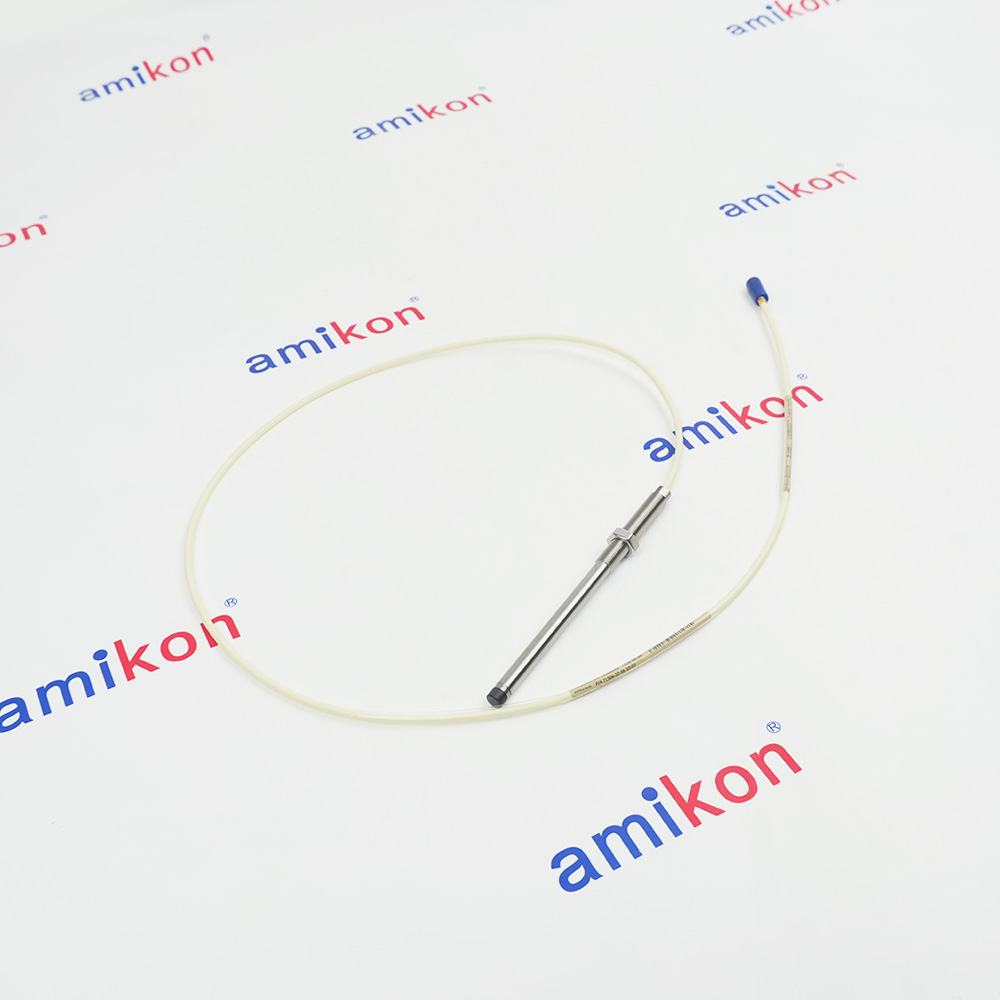 Legacy eight millimeter probeIn StockManufacturer: Bently Nevada
 -
 Exciter Power Distribution ModuleManufacturer: General Electric
 -
Narrow sideview proximity probeIn StockManufacturer: Bently Nevada
-
Control ModuleManufacturer: WARTSILA
-
Digital processing unitManufacturer: Metso Auttomation
-
DIGITAL DRIVEManufacturer: PARKER
-
Exciter De-Excitation boardManufacturer: General Electric
-
Narrow sideview proximity probeIn StockManufacturer: Bently Nevada
-
Encoder ModuleManufacturer: HEIDENHAIN
-
Vibration measurement transmitterIn StockManufacturer: Bently Nevada

Related articles Browse All
-
 BlogImplementing Vision Systems for Industrial Robots: Enhancing Precision and Automation2025-08-12 11:26:54Industrial robots gain powerful new abilities through vision systems. These systems give robots the sense of sight, so they can understand and react to what is around them. So, robots can perform complex tasks with greater accuracy and flexibility. Automation in manufacturing reaches a new level of ...
 -
 BlogOptimizing PM Schedules Data-Driven Approaches to Preventative Maintenance2025-08-21 18:08:33Moving away from fixed maintenance schedules is a significant operational shift. Companies now use data to guide their maintenance efforts. This change leads to greater efficiency and equipment reliability. The goal is to perform the right task at the right time, based on real information, not just ...
 -
 BlogThe Evolution of Steam Turbine Control Systems2026-03-31 08:33:35CALL US:+86-18020776786 | E-MAIL:INFO@AMIKON.CN In-depth analysis of the GE Mark VIe control system Mark VIe: A Modern Mainstay for Industry 4.0 Mark VIe's core concepts are "high availability, open connectivity, and intelligent readiness." It utilizes comm...


- Q&A
- Policies How to order Part status information Shipping Method Return Policy Warranty Policy Payment Terms Email Marketing Policy VAT and Import Information
- Asset Recovery
- We Buy Your Equipment. Industry Cases Amikong News Technical Resources Why choose us FAQs
- Registered Address
-
32D Guomao Building, No.388, Hubin south Road, Siming district, Xiamen,Fujian, China

Leave Your Comment